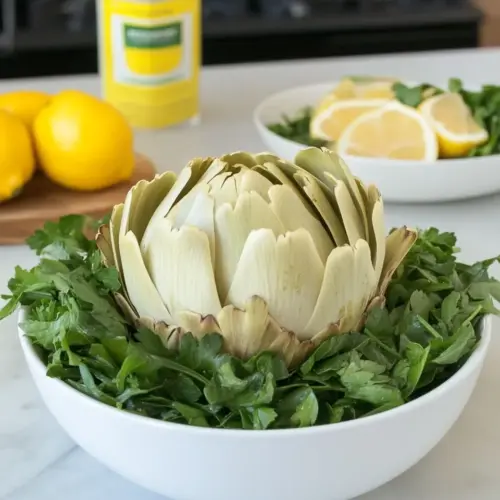
Preparing Raw Artichokes for Salad
Preparing Raw Artichokes for Salad yields crisp, nutty slices with a delicate sweetness and a bright citrus lift. This easy prep brings out a refreshing texture that works for light lunches or elegant starters, making it a lovely component for easy weeknight dinner salads. Try it for an elegant, quick way to elevate simple greens.
Equipment
- Serrated Knife
- Kitchen shears
- Vegetable Peeler
- Melon baller
- Paring knife
- Mandoline
- Bowl
Ingredients
- Artichokes Trim and prepare for raw consumption by removing tough outer leaves and the choke; describe how to halve and keep flesh from browning with acidulated water for salads.
- Lemons Acidulate and preserve color by halving and rubbing cut surfaces to prevent oxidation; explain how juice can be used in soaking liquid and as brightening dressing ingredient.
- Serrated knife, or sharp chef's knife Slice and score as a cutting tool for removing outer leaves and trimming the stem; detail safety tips and how a serrated or sharp chef's knife yields clean cuts without crushing the heart.
- Kitchen shears, or sharp, clean scissors Cut and snip away stubborn leaf tips and trim the choke base using kitchen shears or scissors; include guidance on sanitizing blades and using shears to reduce waste and speed preparation.
- Vegetable peeler Peel and remove fibrous stem skin to expose tender interior using a vegetable peeler; describe how peeling yields edible stem pieces that match heart texture in salads.
- Melon baller Scoop and hollow remaining choke fibers or create decorative balls from the heart with a melon baller; outline technique for consistent portions and attractive presentation.
- Paring knife Trim and perform fine paring tasks such as removing the inner choke and refining shapes with a small paring knife; emphasize precision work and safe handling for delicate flesh.
- Mandoline Slice and shave uniformly thin rounds or ribbons with a mandoline for even texture in raw salads; warn about using the guard and adjusting thickness for ideal bite.
Instructions
- Have a bowl of cold water with lemon juice handy, as well as some fresh lemon halves, to keep your artichoke pieces from oxidizing and turning brown. Rinse your artichokes under cold water, pulling the leaves apart gently to let the water run between them and flush out any impurities. Pat the artichokes dry with a clean kitchen towel or paper towel. Remove any stray leaves from the stem of the artichoke.: The moment you expose cut surfaces, oxidation begins, and a bowl of cold water with acid halts that process. You'll notice the difference when slices stay pale instead of greening at the edges, which improves both flavor and presentation. A common mistake is underestimating how quickly cut artichoke flesh browns, so keep everything within arm's reach to dunk pieces immediately.
- With kitchen shears, or sharp scissors, remove the thorny tips from the leaves.: Cold running water helps dislodge any dirt or grit trapped between leaves, especially near the base. The sound of water moving through the layers and the feeling of relieving stuck debris is reassuring, and you will see clearer inner leaves emerge. Avoid aggressive twisting that tears leaves, as this can bruise the flesh and make slicing uneven later on.
- With a serrated knife cut about an inch off of the top of the artichoke.: Removing excess water ensures the lemon adheres and tools do not slip while you cut, and it prevents diluted flavor in your salad. A gentle pat leaves the artichoke ready for precise trimming, and you will feel the surface change from slick to slightly tacky. Do not over squeeze, which can bruise the vegetable and release bitter juices.
- Keep a lemon handy to rub onto the exposed areas so that they do not oxidize and turn brown.: Clearing away loose, damaged leaves reveals the structure you will work with and makes the next steps neater. The visual cue of a tidy stem helps you judge where to trim and peel, and removing ragged leaves reduces the chance of stringy bits ending up in your salad. Skipping this can make the slicing step messier and less uniform.
- Remove the bitter, fibrous end of the stem with your knife, leaving about an inch left on the artichoke. Be sure to rub a lemon onto the exposed end of the stem.: Snipping off the sharp tips protects fingers and makes the trimmed artichoke more pleasant to handle and eat. The small click of the shears and the clean cut of the leaf tips leaves a softer edge that is safer for guests. A mistake here is cutting too far down the leaf, removing too much edible flesh, so aim only for the thorny tip.
- Peel the outer skin from the remaining stem. The stem can has a more bitter taste than the rest of the artichoke and removing the skin helps to take away some of the bitterness.: Slicing this top portion evens the head and removes tough outer leaf tips, revealing the fresher interior. You'll see a cross section of layered leaves and a slightly sweeter aroma once the outer, more bitter parts are gone. Use a stable cutting surface, because slipping while sawing can be dangerous and lead to uneven cuts.
- Peel off 5-6 layers of external leaves from the artichoke, snapping off the leaves and setting them aside, till you reach an inner layer of leaves that are fresh looking and white at the base.: The bright citrus scent signals that you are protecting the flesh, and the tactile act of rubbing lemon prevents unsightly discoloration. Consistent lemoning produces uniformly pale pieces that photograph and taste better. Forgetting to rub the lemon immediately is a common error that leads to blotchy brown spots.
- Use a sharp serrated knife to remove the remaining outer leaves to reveal the very light green inner leaves of the artichoke. Begin by slicing off one side of the leaves, then continue slicing around the artichoke, turning the artichoke into the blade as you go. Be sure to keep rubbing lemon onto the exposed areas to keep them from browning.: Cutting away the tough end improves texture and ensures only tender stem remains. The cut reveals a smoother interior that will be pleasant when sliced. Avoid removing too much stem, because you'll waste useful, tender flesh that can enhance the salad.
- Discard external leaves, or you can keep them and steam them for eating later. Cut artichoke in half lengthwise to create two equal halves, exposing the purple inner choke. Rub exposed stem and leaves with lemon.: Using a vegetable peeler, strip the fibrous bark to expose the mellow inner stem. The peel comes away with a satisfying ribbon, and the revealed pale core is much more palatable raw. If you skip peeling, those fibers can create unpleasant stringy bites.
- With a melon baller, remove the choke – the furry, inedible center area, as well as any of the inner purple leaves. Rub the exposed areas with lemon.: Removing these outer layers eliminates the most bitter, tough parts while exposing the fresher interior. You will notice the leaves transition from deep green to paler, more tender bases, which signals readiness for slicing. A common misstep is removing too few outer leaves, leaving residual bitterness.
- Make a 1-inch long slice through the bottom third of the artichoke; this will help when cutting on the mandoline.: Carefully slicing away the remaining tough leaves creates a cleaner profile and exposes the inner heart. The serrated edge lets you work without crushing the structure, and you'll see the artichoke take on a softer, more uniform appearance. Rushing here can tear leaves and affect the look and texture of the slices.
- Slice the artichoke using a mandoline (leaf side up, exposed stem side down). Push the stem end into the blade to slice. Be very careful when you get near the end of the artichoke, so that you do not end up cutting your fingertips as well – this is very easy to do! You can cover your hand with a clean towel for extra protection. When you near the end of the artichoke, you can turn the remaining piece on its side to help with cutting.: This turning motion yields even removal and a consistent surface for subsequent slicing, and it helps you keep the lemon rubbed surfaces protected. The rhythm of turning and cutting leads to balanced halves and makes the next steps predictable. Cutting unevenly can make the halves lopsided and harder to slice thinly.
- Place the cut pieces of artichoke into the bowl of lemon water as soon as possible.: Tossing or saving these leaves gives you options, and their texture can be repurposed instead of wasted. If you save them, lightly steaming yields tender leaves for dipping. A mistake is letting discarded leaves clutter your workspace, which invites slips and slows your progress.
- These thinly sliced raw artichoke hearts can be used uncooked in salads. They have a nutty and slightly sweet flavor. They go great over arugula, drizzled with olive oil and topped with freshly shaved parmesan.: Halving reveals the center and gives a flat surface for easier removal of the choke and for mandoline slicing. You'll see the distinct purple choke, which signals the next delicate step. Make sure your cut is steady to avoid jagged halves that are harder to work with.
- Rub exposed stem and leaves with lemon: Continuing to lemon after halving ensures all newly exposed flesh stays bright. The citrus smell will be stronger now and is part of keeping the salad visually appealing. Missing this can let small edges discolor, which shows once dressed.
- With a melon baller, remove the choke the furry, inedible center area, as well as any of the inner purple leaves: Scooping out the choke reveals the edible heart, and the melon baller lets you remove it cleanly with minimal waste. You will feel the difference between the dense heart and the fuzzy center as you scoop. Be careful to avoid gouging into the heart, which reduces usable meat.
- Rub the exposed areas with lemon: A final lemon rub at this stage seals the color and gives a bright note right at the center where the flavor is concentrated. This ensures even protection from browning and contributes a subtle citrus undercurrent to each slice. Forgetting this makes the central edges show discoloration after slicing.
- Make a 1 inch long slice through the bottom third of the artichoke this will help when cutting on the mandoline: This small cut creates a flat surface and stabilizes the artichoke on the mandoline, improving safety and producing even slices. You'll feel more control when you press the stem into the blade. Skipping this can cause the artichoke to wobble and increase the risk of slipping.
- Slice the artichoke using a mandoline leaf side up exposed stem side down: Thin, consistent slices are key for texture and dressing absorption, and using the mandoline creates uniformity so each bite is balanced. You'll hear the soft whisper of the blade and see translucent pale slices collect, which is very satisfying. Always use a hand guard or towel for protection, especially as you near the end of the piece.
- Push the stem end into the blade to slice: Applying gentle, steady pressure keeps slices even and prevents the piece from tearing, and it makes the process efficient. A steady motion avoids jagged edges and ensures each slice has the same crispness and mouthfeel. Beware of forcing the piece too hard, which can cause a sudden slip.
- Be very careful when you get near the end of the artichoke so that you do not end up cutting your fingertips as well: Safety matters most when the piece is small, and protecting your fingers is essential. Use a towel or the mandoline guard to shield your hand; the texture of the remaining piece will change as you slice through it. A frequent error is being careless at the end, which leads to nicks and abrupt stops in the workflow.
- You can cover your hand with a clean towel for extra protection: Draping a towel over your hand gives a last line of defense when guiding the piece, and it also helps you feel safer and more deliberate while cutting. This small precaution prevents accidents and keeps the rhythm going. Avoid using damp towels that can slip on the tool surface.
- When you near the end of the artichoke you can turn the remaining piece on its side to help with cutting: Turning the piece gives new angles that are easier to manage and reduces the risk to fingertips, and it helps you finish with tidy, usable slices instead of scraps. The tactile change signals care and control. If you do not rotate, you may end up with awkward small bits that are hard to dress evenly.
- Place the cut pieces of artichoke into the bowl of lemon water as soon as possible: Dunking slices instantly locks in color and texture, and the chill of cold water firms the thin pieces for handling and dressing. The visual contrast between pale slices and the lemon water reassures you that the pieces are preserved. A common mistake is leaving slices exposed on a cutting board where they will brown quickly.
- These thinly sliced raw artichoke hearts can be used uncooked in salads: Expect a nutty, slightly sweet flavor and a pleasant firmness that contrasts with tender greens, and they will absorb dressings nicely. I like them tossed with peppery leaves and a splash of oil, and they bring structure and interest to a plate. Overdressing can mask their delicate flavor, so dress lightly to let the artichoke shine.
Notes
- Use younger artichokes when possible Fresh, smaller artichokes tend to be less fibrous and slice more cleanly, producing tender, delicate pieces ideal for raw salads.
- Adjust lemon application If you prefer a milder citrus note, dilute lemon juice slightly with water before rubbing, which still prevents browning while softening the tang.
- Save outer leaves for steaming Instead of discarding them, steam the removed leaves for a rustic appetizer or to serve with a dip, reducing waste and adding another course.
- Vary slice thickness Thinner slices are great for delicate salads and dressings, while slightly thicker slices add chew and stand up well to oil based dressings.
- Protect fingers near the end Use a clean kitchen towel or mandoline guard to reduce risk when you are down to small pieces, keeping the process safe and calm.