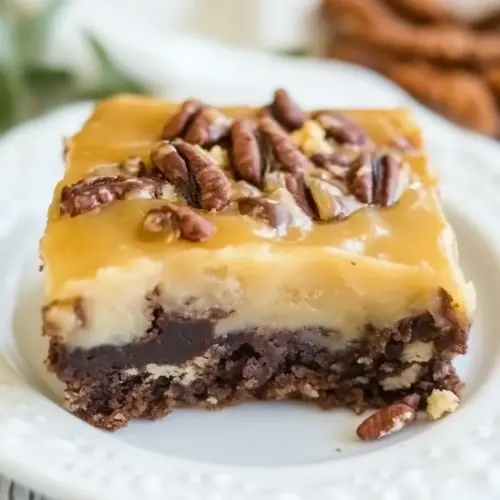
Praline Brownies
Praline Brownies are fudgy chocolate squares topped with a glossy, nut studded praline. Rich unsweetened chocolate and melted butter create a decadent base while a brown sugar and pecan topping adds crunch. Perfect for gatherings or an easy weeknight dessert, these brownies deliver creamy texture and crunchy contrast, a convincing reason to bake them today.
Equipment
- 9-inch Square Baking Dish
- Medium Saucepan
Ingredients
- 1 cup all-purpose flour Provide structure and bulk to the batter, absorbing moisture and giving the brownies their tender crumb; sift or whisk before measuring to avoid clumps and ensure even incorporation into the wet ingredients.
- 1/4 cup cake flour Lighten the texture slightly and contribute to a delicate crumb, blending with all-purpose flour to prevent toughness; measure gently by spooning into the cup and leveling for accuracy.
- 2 tablespoons unsweetened cocoa powder Contribute chocolate flavor and deepen color while balancing sweetness; sift into the dry mix to distribute evenly and intensify the cocoa profile without adding extra grit.
- 1/4 teaspoon baking powder Help give a small lift to the brownies and balance density, working with beaten eggs to create slight rise; measure precisely since too much can alter texture and cause uneven texture.
- 1/4 teaspoon salt Enhance overall flavor by balancing sweetness and intensifying other ingredients; dissolve into the batter for uniform seasoning and to highlight chocolate notes.
- 1 cup unsalted butter (2 sticks), melted and cooled to tepid Provide rich fat for tenderness, moisture, and a glossy mouthfeel while contributing to fudgy texture when cooled; melt and cool to tepid to avoid cooking eggs when combined with the batter.
- 4 ounces unsweetened chocolate, melted and cooled to tepid Deliver deep, intense chocolate flavor and contribute to fudginess and structure when melted; cool to tepid before adding to eggs to prevent scrambling and ensure smooth integration.
- 4 large eggs Bind ingredients, provide structure and lift, and contribute to richness and moisture when beaten; bring to room temperature for better incorporation and aeration when mixed with sugars.
- 2 cups granulated sugar Sweeten the batter and help create a moist, tender crumb through sugar's tenderizing effects; cream or whisk with eggs to incorporate air and support a balanced sweetness.
- 1 teaspoon vanilla extract Add aromatic depth and enhance the chocolate and brown sugar flavors with a warm vanilla note; stir in with the wet ingredients to distribute flavor evenly throughout the batter.
- 1/2 cup whipping cream Add richness and help create a smooth, creamy praline sauce when heated, contributing to satiny texture and flavor balance in the topping; warm gently before combining with butter and sugar.
- 6 tablespoons butter Contribute fat and richness to the praline topping, creating a silky mouthfeel and helping to thicken the sauce when melted and combined with sugar and cream.
- 1 1/2 cups packed brown sugar Provide caramel-like sweetness, moisture, and body to the praline topping; dissolve into the warm cream and butter mixture to form a glossy, deeply flavored sauce.
- 3/4 cup chopped pecans, toasted Add crunch, nutty flavor, and textural contrast to the praline mixture; toast gently to enhance aroma and flavor before chopping and folding into the topping or sprinkling over brownies.
- 1 1/2 cups powdered sugar, sifted to remove any lumps Sweeten and thicken the praline topping or glaze while providing a smooth finish when sifted; remove lumps before use to ensure an even, velvety texture in the final sauce.
- 1 teaspoon vanilla extract Enhance the praline's flavor with warm, aromatic vanilla, rounding out the sweetness and adding depth; stir in at the end to preserve aroma and prevent alcohol evaporation.
Instructions
- Preheat oven to 325 degrees. Spray the inside of a 9 X 9 X 2-inch baking pan with cooking spray.: When the oven warms, you will notice a dry, faintly warm smell and the light inside will glow steady, which signals it has reached temperature. Proper preheating ensures even rising and consistent bake through. Avoid placing the pan in too early since an underheated oven leads to uneven texture and a gummy center.
- Sift together the all-purpose flour, cake flour, cocoa powder, baking powder, and salt onto a piece of waxed paper.: The slight oil sheen on the pan helps the cooled brownies release cleanly, and you may feel the smooth, slick surface with your fingers. If you skip this, the edges might stick and tear when you lift them out.
- In a medium bowl, whisk together melted butter and chocolate.: As you sift, you will see a fine, even powder form and a light aroma of cocoa. Sifting prevents lumps and ensures the dry components are uniformly distributed for consistent structure. A common mistake is to dump the dry ingredients un-sifted, which can leave flour pockets in the batter.
- In a large mixing bowl, whisk the eggs for 30 seconds.: As you whisk, the two should emulsify into a glossy, syrup like mixture with a deep, bittersweet scent. This warm mix will integrate smoothly into the eggs later, creating a shiny, rich batter. Overheating the melted chocolate can scorch it, so let it cool to tepid first.
- Add sugar and whisk until pale and smooth, about 1 minute. Add in vanilla.: The eggs will lighten slightly and take on a pale sheen, which helps with the batter s texture. This quick whisking is about incorporating a touch of air so the brownies do not become too heavy. If you overbeat, you might introduce too much air and end up with a cakier texture.
- Gradually whisk in butter/chocolate mixture.: The mixture will turn glossy and more voluminous, and you may hear a faint, rhythmic whisking sound as the sugar dissolves. Achieving a pale smooth mix helps create a thin, crackly top on the baked brownies. Leaving undissolved sugar can produce a grainy mouthfeel.
- Add flour mixture and stir with a wooden spoon until no flour is visible.: Vanilla will scent the batter with warm floral notes, rounding the chocolate and adding depth. Stir gently so the aroma distributes evenly, enhancing the final complexity. Rushing this step can prevent the vanilla from fully integrating.
- Pour batter into prepared pan and use a spatula to smooth top. Bake for 35 to 40 minutes, or until set. Let brownies cool for 3 hours. Refrigerate for at least 1 hour.: As you whisk the warm chocolate into the egg mixture, you will see it transform into a satiny, cohesive batter with a rich sheen. Adding it gradually prevents the eggs from scrambling and ensures a smooth texture. If you pour it all at once while very hot, the eggs may cook and cause curdling.
- For frosting, combine whipping cream, butter, and brown sugar in a medium saucepan. Cook over medium heat, stirring frequently, until mixture comes to a boil. Cook for 1-2 minutes, stirring constantly.: You will notice the batter thicken and darken, and slight streaks will disappear as you fold. Use gentle strokes to keep the crumb tender, and stop as soon as the flour is incorporated. Overmixing at this stage builds gluten, which can make the brownies tough.
- Remove from heat and stir in pecans, powdered sugar, and vanilla. Let cool in pan 5 minutes, stirring frequently. Spread over brownies. Wait 30 minutes before slicing.: Spreading the batter evenly gives the brownies a uniform rise and consistent bake, and the surface should look glossy and level. Tap the pan gently on the counter to release any trapped air bubbles. If the batter is uneven, you may have sections that bake differently, leaving parts under or overdone.
- Bake for 35 to 40 minutes or until set: During baking the kitchen will fill with a warm chocolate aroma and you may see the edges pull slightly away from the pan. A toothpick near the center should come out with a few moist crumbs rather than wet batter, indicating the ideal fudgy set. Opening the oven frequently can cause temperature swings and a collapsed center.
- Let brownies cool for 3 hours: As they cool, the texture firms and the flavors harmonize, and the surface will lose some sheen and set. Patience here yields cleaner slices and a better mouthfeel. Cutting too soon often yields gooey, messy pieces that do not hold their shape.
- Refrigerate for at least 1 hour: Chilling further solidifies the crumb and makes slicing precise, and the cold enhances the contrast with the warm praline when you later spread it. One common error is skipping refrigeration which can make the frosting slide off during slicing.
- For frosting combine whipping cream butter and brown sugar in a medium saucepan: You will hear a gentle bubbling as the mixture warms and smell deep caramel notes forming. This combination melts into a glossy syrup that will coat the nuts and powdered sugar evenly. Using too high heat can scorch the sugars, producing a bitter taste.
- Cook over medium heat stirring frequently until mixture comes to a boil: The bubbling should become steady and the color deepen slightly, at which point the sugars have dissolved and the sauce is stabilizing. Continuous stirring prevents sticking and creates an even caramelization. Leaving it unattended often leads to burning at the pan edges.
- Cook for 1 to 2 minutes stirring constantly: This short simmer concentrates the caramel flavor and thickens the sauce slightly, giving it enough body to bind the pecans . Timing is crucial, since overcooking can make the sauce grainy and harden too much once cooled.
- Remove from heat and stir in pecans powdered sugar and vanilla: Off the heat, the mixture mellows and the powdered sugar helps thicken the praline into a spreadable texture while the toasted pecans add crunchy contrast. Stirring frequently during cooling prevents crystallization. Adding these ingredients while still too hot may cause the powdered sugar to clump.
- Let cool in pan 5 minutes stirring frequently: A few minutes of gentle cooling lets the praline thicken slightly so it will spread without running, and you will notice it go from glossy thin to a syrupy ribbon. If you wait too long and it firms, warming briefly helps make it spreadable again.
- Spread over brownies: The chocolate base will accept the warm praline and the surface will gleam as it sets, creating an even, nut studded top. Use a spatula to pull the mixture to the edges for full coverage. If the topping is too hot it may sink into the brownie, so allow that brief cooling period first.
- Wait 30 minutes before slicing: This short rest stabilizes the topping and prevents tearing when you cut, and the praline will develop a slight sheen that signals readiness. Use a sharp knife and warm the blade under hot water for clean slices, wiping between cuts to avoid dragging.
Notes
- For extra chew increase the melted unsweetened chocolate by 1 ounce, which amps richness and gives a denser, fudgier bite.
- Swap nut crunch use walnuts instead of pecans for a slightly earthier bite if you prefer a more robust nut flavor.
- Make ahead bake and freeze the uncut brownies, then thaw and add the praline topping the day you plan to serve for maximum freshness.
- Adjust sweetness reduce the granulated sugar by 1/4 cup if you prefer a less sweet base while keeping the praline unchanged.
- Sticky topping if the praline firms too quickly, warm it gently over low heat and stir until pliable before spreading.