Porridge Recipe
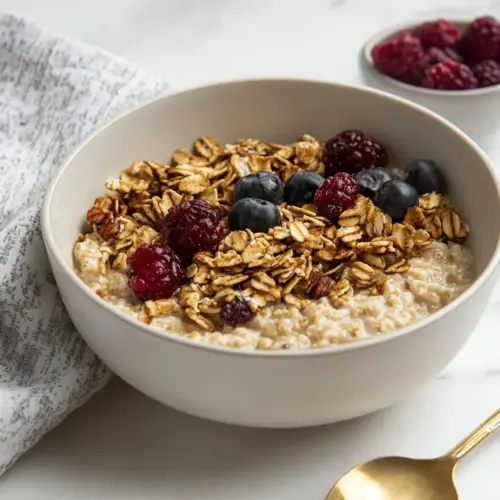
Porridge Recipe offers a creamy, comforting bowl of warm oats that is both easy and nourishing. With a touch of brown sugar and cinnamon, plus bright fresh berries and crunchy nuts, this simple breakfast feels indulgent yet wholesome, perfect for an easy weeknight breakfast or a cozy weekend morning. Try it for a reliable, satisfying start to your day.
Equipment
- Saucepan
- Spoon
- Measuring Cup
Ingredients
- 2 cups water Bring to a boil and provide the cooking medium for oats, setting porridge consistency while allowing flavors to meld; helps control final thickness and prevents scorching when stirred.
- 1/2 cup milk Enrich with creaminess and a richer mouthfeel, contributing subtle dairy flavor and smoothing the texture; can be swapped for plant-based alternatives to change fat content.
- 1 cup rolled oats Absorb liquid and swell into tender flakes, forming the bulk of the porridge and supplying fiber and whole-grain texture; cooking time and stirring determine chewiness.
- 1/8 teaspoons salt Season lightly to enhance overall flavor balance and highlight sweetness and spice; helps bring out the natural taste of oats and other mix-ins.
- 1 tablespoon brown sugar Sweeten naturally to add caramel-like depth and counterbalance oats’ earthiness; dissolves into the porridge providing uniform sweetness throughout.
- 1/2 teaspoon cinnamon Add warm, aromatic spice to boost flavor complexity and pair well with sweeteners and fruit; sprinkle to taste for a cozy, fragrant note.
- 1/2 cup fresh berries Brighten and freshen the porridge with tartness and natural sweetness, adding color and nutritional antioxidants; fold in at the end to preserve texture and vibrancy.
- 1/4 cup chopped nuts Contribute crunchy texture and nutty flavor while adding healthy fats, protein, and contrast to the soft porridge; chop size controls bite and distribution.
Instructions
- In a medium saucepan, bring water to a boil. Add oats, milk, and salt, then reduce heat to a simmer. Cook for 10-15 minutes, stirring occasionally, until the oats are soft and have absorbed most of the liquid.: You will notice the water first shimmer, then small bubbles racing across the surface, releasing a faint minerally aroma. Heating the water until it reaches a full boil ensures that when you add the oats, they hit an active cooking environment, which helps them hydrate evenly. If the water is not hot enough the oats can clump together, creating unevenly cooked pockets. Keep an eye on the pan so it does not boil over, and use a saucepan with straight sides to control bubbling.
- Stir in brown sugar and cinnamon. Continue to cook for another 2 minutes.: Immediately after the water boils, adding the rolled oats , a measured pour of milk , and a pinch of salt changes the sound in the pan to a gentle simmer and produces a comforting steam, slightly sweet from the milk. Combining the liquids and oats at this moment starts the starches softening consistently. If you add everything too soon or at too low a temperature, the oats can absorb liquid unevenly. Stir briefly to incorporate so there are no dry pockets at the bottom.
- Remove from heat. Serve hot in bowls topped with fresh berries and optional chopped nuts.: When you lower the heat, the mixture should maintain a steady, quiet bubble, and the aroma shifts to a warm oat scent. Simmering rather than boiling prevents the porridge from sticking and breaking down too quickly, which preserves a pleasant texture. A common pitfall is keeping the heat too high, which causes splattering and uneven cooking; adjust the flame until the porridge moves gently.
- Cook for 10 to 15 minutes, stirring occasionally, until the oats are soft and have absorbed most of the liquid: Over the next minutes you will see the mixture thicken, slow down from moving freely to clinging to the spoon, and release a mildly nutty smell. Stirring occasionally prevents a skin from forming and keeps the oats cooking uniformly. The exact moment to stop is when the oats are tender to the bite and the porridge is creamy but not dry. If you undercook, the oats will be toothsome and slightly chalky; overcook and the bowl can turn gluey, so aim for that sweet spot in texture.
- Stir in brown sugar and cinnamon: Adding brown sugar and cinnamon at this stage lets them dissolve and warm through, lending a soft caramel and spice aroma. As you stir, watch the porridge gloss over and take on deeper color and scent. This step layers flavor without altering the base texture. Avoid adding too much sugar, which can make the bowl cloying and mask the natural oat flavor.
- Continue to cook for another 2 minutes: Those extra minutes allow the sugar to fully integrate and the spice to bloom, slightly thickening the porridge and concentrating the flavors. You may hear a subtle change in the sound as the mixture becomes denser, and the steam becomes richer. This short finish is about harmony, creating a cohesive bowl. If you let it go much longer, the porridge can stiffen or stick, so watch closely.
- Remove from heat: As soon as you pull the pot off the stove, the bubbling stops and the steam calms, and you can see the final texture clearly. Resting off heat prevents carryover cooking that could over soften the oats. A common mistake is leaving it on residual heat, which may make the porridge thicker than intended; transfer to bowls promptly if you prefer a looser consistency.
- Serve hot in bowls topped with fresh berries and optional chopped nuts: The contrast of warm, creamy porridge with bright berries and crunchy nuts is immediate and joyful. The berries add a pop of color and a slight tartness, while the nuts introduce a toasty mouthfeel. Add the toppings just before serving so the berries keep their shape and the nuts remain crisp. If you add them too early, the berries may break down and the nuts will soften, losing the intended contrast.
Notes
- Swap liquid ratios to adapt texture, using more milk for creaminess or more water for a lighter bowl.
- Layer flavors by stirring in the cinnamon early for an infused profile or finishing with it for a fresher spice note.
- Vary sweeteners by using different amounts of brown sugar to control caramel depth without changing cooking times.
- Change toppings by rotating seasonal berries and different chopped nuts to add texture and color contrasts.
- Make ahead and reheat by storing cooled porridge in the fridge, then adding a splash of milk when reheating to refresh the creaminess.