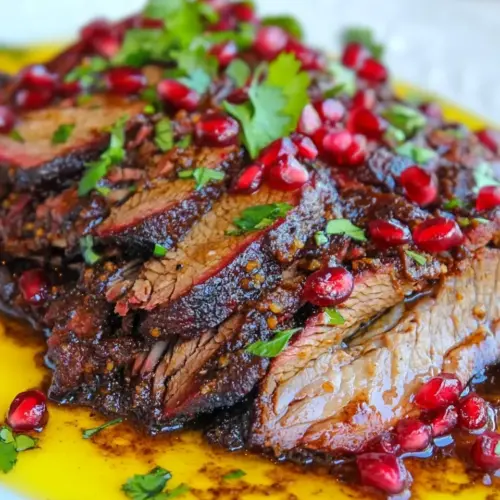
Pomegranate Molasses Brisket
Pomegranate Molasses Brisket is a tangy, savory slow roasted beef with a glossy, spiced glaze and caramelized onions. This easy weeknight dinner or special occasion roast yields tender, flavorful slices that pair beautifully with rice or roasted vegetables, delivering warm cinnamon notes and bright pomegranate finish, perfect for fall entertaining and comforting family meals.
Equipment
- Ceramic or glass roasting dish
- Large Skillet
- Plastic Wrap
- Immersion Blender
Ingredients
- 4 -5 pounds beef brisket Cook until fork-tender and richly flavored; provides the primary protein and hearty texture that anchors the dish, absorbing braising liquids and seasonings over long cooking times.
- 1/2 cup pomegranate molasses Add a tangy, concentrated sweet-tart glaze that balances richness; helps form a sticky, caramelized coating on the brisket while infusing deep pomegranate aroma throughout the braise.
- Extra virgin olive oil Use sparingly to sauté and brown aromatics; imparts fruity, peppery notes and helps conduct heat for proper searing and caramelization of the meat and onions.
- 4 cloves garlic, minced Mince finely and distribute evenly to deliver pungent, savory depth; mellows during cooking and contributes aromatic complexity to the sauce and meat.
- 2 teaspoons cinnamon Sprinkle to provide warm, aromatic sweetness; complements the pomegranate and savory elements while adding subtle earthy spice to the overall flavor profile.
- 1 teaspoon salt Season to enhance and balance flavors; promotes savory depth and ensures the brisket and sauce are properly seasoned throughout the long cooking process.
- 1/8 teaspoon cayenne pepper Pinch to introduce controlled heat and a lively finish; offers a bright, spicy lift that cuts through richness without overpowering the other flavors.
- 2 large sweet onions, sliced Slice and caramelize to add sweet, mellow layers; softens and releases natural sugars during cooking, contributing body and a savory-sweet counterpoint to the molasses.
- Fresh mint leaves (optional, for garnish) Garnish lightly to provide a fresh, herbal contrast; adds bright color and a cooling lift that complements the rich, spiced brisket when scattered on top before serving.
- Pomegranate seeds (optional, for garnish) Sprinkle over the finished dish to lend bursts of juicy sweetness and vibrant color; seeds add a pleasant textural pop and reinforce the pomegranate theme.
Instructions
- Rinse the brisket and pat dry, then place in a ceramic or glass oven-safe roasting dish. In a small mixing bowl, whisk together pomegranate molasses, 1/4 cup olive oil, minced garlic cloves, cinnamon, salt, and cayenne pepper.: At this stage you should notice the raw beef is cool to the touch and slightly glossy. Patting it dry helps the marinade adhere better, which improves browning later. A common mistake is leaving surface moisture, which can steam the meat instead of allowing a good sear.
- Pour half of the marinade over the top of the brisket, making sure the entire surface is covered in an even layer. Turn the brisket over and pour the other half of the marinade over the brisket so both sides are evenly coated. Cover the dish with plastic wrap and marinate in the refrigerator overnight, or up to two days.: As you whisk, the mixture will thicken slightly and take on a deep reddish brown color with warm spice aromas. This emulsion helps carry flavors into the meat and creates a slick glaze during roasting. Avoid under mixing which can leave uneven seasoning pockets.
- When ready to cook, preheat your oven to 300 degrees F. Heat 2 tbsp of olive oil in a large skillet over medium heat. Take the brisket out of the marinade, scraping any excess marinade back into the roasting dish. Place the brisket into the skillet. Brown the brisket on both sides (about 5 minutes per side).: You should feel the sticky syrup coating the meat and see it shine; the even coverage ensures consistent flavor penetration. Turning the meat and pouring the remainder lets both sides soak. One error is skimping on coverage, which leads to uneven flavor.
- While brisket is browning, stir 1/4 cup of water into the marinade at the bottom of the roasting dish to make it more liquid.: After turning, press the marinade gently to help it adhere and get into crevices. The aroma will become richer as the garlic and cinnamon mingle with the molasses. If you rush this step you might miss pockets that need coating.
- Transfer brisket back to the roasting dish on top of the liquid marinade, making sure the fatty layer is on top. Place sliced onions into the hot skillet. Saute the onions for 10-15 minutes, scraping up the brown bits as the onions cook.: During this rest the marinade penetrates and the spices mellow, yielding deeper complexity. You will notice the meat firms slightly and the juices at the bottom become colored by the molasses. A frequent mistake is insufficient marinating time, which yields a less pronounced pomegranate note.
- When onions are nicely browned and caramelized, pour them over the top of the brisket along with the brown bits and oil from the skillet. Use a spoon to scoop up some of the marinade from the bottom of the dish; spoon marinade over the top of the onions.: The oven should come to a steady, even heat so the meat cooks low and slow. A preheated oven ensures gentle, uniform breakdown of connective tissue. Putting the brisket into a cold oven can extend cooking time and alter the texture.
- Cover the roasting dish with foil. Place brisket in the oven and let it slowly roast for 4-5 hours. It will take about 1 hour per pound of meat (leaner cuts of meat may take longer—test for doneness). If your cut of brisket is very lean, you may need a little more water to keep it moist while it cooks. Check halfway through cooking and add more water to the bottom of the dish, if needed. The brisket will shrink by about 1/3 in size as it cooks. Brisket is ready when it flakes tenderly. You can let it cook even longer if you like a soft, shredded texture.: The oil should shimmer slightly when ready and give off a faint fruity scent without smoking. This temperature creates an ideal surface for browning, producing a savory crust that enhances flavor. Overheating the oil will burn it, imparting bitterness.
- Scrape the cooked onions off the top of the brisket. Reserve.: As you lift the meat you will notice the underside is heavy with sticky marinade; scraping it back preserves those concentrated flavors for later. Leaving too much wet marinade on the meat prevents a strong sear from forming.
- Remove brisket from the pan and place it on a cutting board. Cover the brisket with foil to keep it warm. Let it rest for 20-30 minutes before slicing; this will allow the juices to distribute through the meat.: Lay the meat away from you so hot oil does not splatter toward your hands. You should hear a lively sizzle as the surface makes contact, and after a few minutes a deep brown crust will develop. If the pan is overcrowded the meat will steam instead of browning, so give it space.
- Strain pan drippings from the roasting pan into a saucepan and allow to cool.: Listen for a steady sizzle and watch for rich mahogany color, indicating good Maillard reaction. Browning locks in savory notes and builds flavor foundation for the braise. Rushing this step or flipping too often prevents proper crust formation.
- Once the pan drippings have cooled slightly, you will see the clear fat rise to the surface of the liquid. Skim as much of this fat off of the surface as you can.: As you stir the marinade will loosen, releasing the concentrated juices into a pourable braising liquid. This thinned mixture will baste the meat during roasting and keep it moist. Forgetting to loosen it can leave a thick, uneven base that does not distribute flavors well.
- Use an immersion blender to blend the reserved onions into the cooking liquid. This will thicken the sauce and add flavor. If you'd like a stronger, more pronounced pomegranate flavor, you can also blend in an additional 1 tbsp of pomegranate molasses (optional). Warm the sauce in a small saucepan on the stovetop. Season with salt and pepper to taste.: Positioning the fat cap up allows fat to baste the meat as it renders, adding moisture and richness. You should hear a soft hiss as the warm meat meets the cooler braising liquid. Placing fat down wastes its self basting benefit.
- Cut fat cap off the brisket, then cut the brisket in thin slices against the grain.: When the onions hit the skillet they will hiss and begin to soften, releasing sweet aromas. The fond they create captures browned meat flavors that will be returned to the roast. A common error is crowding the pan, which prevents proper caramelization.
- Place brisket slices into a serving dish. Pour the warmed sauce over the brisket slices.: You will notice the onions progressively soften, then turn a deep golden brown and smell sweet and nutty. Scraping the fond lifts concentrated flavor that enriches the final sauce. Not cooking them long enough leaves them sharp and underdeveloped.
- My favorite way to serve this brisket is sliced over freshly cooked saffron rice. I like to garnish it with fresh pomegranate seeds (arils) and fresh mint for a colorful and aromatic presentation.: As the onions join the roast you will see strands of sweet, glossy onion nestle into the braising liquid. These caramelized bits amplify overall richness. Dumping raw onions instead would miss this depth.
- Use a spoon to scoop up some of the marinade from the bottom of the dish; spoon marinade over the top of the onions: Spoon basting distributes concentrated flavor across the onions and meat evenly, creating an integrated profile. You should see the sauce glisten and smell tangy sweet with spice. Forgetting to baste yields uneven seasoning.
- Cover the roasting dish with foil: Tenting with foil traps steam and ensures a moist environment for the long roast. You should notice gentle condensation on the foil as the internal temperature rises. Leaving the dish uncovered will dry the meat out.
- Place brisket in the oven and let it slowly roast for 4 to 5 hours: Over this period the kitchen fills with rich aromas, and you can observe the meat shrinking and becoming visibly tender. The low oven allows collagen to break down slowly, producing melt in your mouth texture. A key mistake is not checking for enough liquid, which can dry the roast.
- Check halfway through cooking and add more water to the bottom of the dish, if needed: Midway you may see the liquid reducing; add a splash to maintain braise level so the meat remains moist. The sound is quiet bubbling, and the visual cue is consistent simmering. Ignoring this can lead to an overly reduced sauce and dry meat.
- Scrape the cooked onions off the top of the brisket. Reserve: As you lift them you will sense their sweet, concentrated aroma and silky texture. Reserving them lets you blend them later into the sauce for body and flavor. Leaving them in place when slicing can make cutting messy and uneven.
- Remove brisket from the pan and place it on a cutting board: The meat should feel tender and yield slightly when pressed. Cover with foil to retain heat while juices redistribute, preventing dry slices. Cutting too soon makes juices run out and leaves the meat less moist.
- Cover the brisket with foil to keep it warm. Let it rest for 20 to 30 minutes before slicing: Resting allows the internal juices to redistribute so slices remain succulent. During this rest the surface relaxes and becomes easier to slice neatly. Skipping rest causes the juices to pool on the cutting board.
- Strain pan drippings from the roasting pan into a saucepan and allow to cool: The strained liquid will be glossy and fragrant, a perfect base for your sauce. Letting it cool briefly separates fat that can be skimmed off for a cleaner sauce. Pouring hot drippings without skimming leaves grease floating in the final pan sauce.
- Once the pan drippings have cooled slightly, you will see the clear fat rise to the surface of the liquid. Skim as much of this fat off of the surface as you can: Removing excess fat clarifies the sauce and prevents greasiness on the plate. Use a spoon or skimmer until the surface looks clean. Leaving too much fat makes the final sauce heavy.
- Use an immersion blender to blend the reserved onions into the cooking liquid: Blending will create a thicker, silkier sauce with deeper onion flavor and a smooth body that coats the brisket . You should see the sauce turn uniform in color and texture. Overblending can make the sauce too thin, so pulse carefully.
- Warm the sauce in a small saucepan on the stovetop. Season with salt and pepper to taste: Gently heating brings the flavors together and concentrates aromas, and a final seasoning lift helps balance sweetness and acidity. Taste and adjust slowly so you do not over salt. High heat can reduce the sauce too quickly.
- Cut fat cap off the brisket, then cut the brisket in thin slices against the grain: Slicing against the grain gives tender bites and helps the meat feel tender in the mouth. The slices should reveal moist interiors and a glossy glaze on the outside. Cutting with the grain yields stringy, chewier pieces.
- Place brisket slices into a serving dish. Pour the warmed sauce over the brisket slices: As you ladle sauce it will gleam and coat each slice, adding moisture and intensified flavor. The presentation should look jewel like with sauce pooling attractively. Serving with cold, unheated sauce feels mismatched.
- My favorite way to serve this brisket is sliced over freshly cooked saffron rice: The rice absorbs the sauce and provides a fragrant base, while garnishes of pomegranate seeds and mint add freshness and color. Each forkful should present a mix of tender meat, aromatic rice, and bright pops of seed.
Notes
- Switch the garnish: Try a mix of chopped fresh herbs for a brighter finish, adding contrast to the rich glaze and creating a fresher mouthfeel.
- Extend the marinade time: For even deeper flavor, marinate up to two days, which helps the acids and spices penetrate the meat more fully.
- Layer additional sweetness sparingly: If you love a sweeter glaze, add one tablespoon more molasses to the blended sauce, but taste first to maintain balance.
- Adjust the heat: Increase or omit the cayenne slightly depending on your tolerance, just remember a little goes a long way against the molasses.
- Serve over different starches: While saffron rice is my favorite, you can place slices on plain steamed rice or a neutral grain to absorb the sauce.