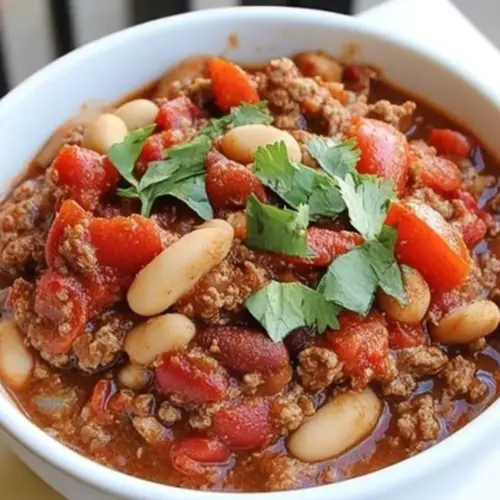
Plant Based Slow Cooker Chili
Plant Based Slow Cooker Chili is a creamy, comforting, easy to make, plant based chili that fills the kitchen with warm spices and roasted pepper aroma. This hearty, protein packed dish makes an excellent easy weeknight dinner or crowd friendly meal, and it reheats beautifully making it perfect for meal prep and leftovers.
Equipment
- 6 quart slow cooker
- Colander
- Mixing Spoon
Ingredients
- 3 cups pinto beans dry Soak and cook to provide a hearty, protein-rich base that absorbs flavors and adds creamy texture to the chili; requires long simmering to become tender and meld with spices. Rinse and sort before soaking to remove debris, and use cooking liquid or broth for extra depth.
- 3 yellow onions small, chopped (sub with 2 medium or 1 large) Sauté and soften to build a sweet, aromatic foundation that releases natural sugars and complements the tomatoes and spices. Chop smaller pieces for even cooking and stir frequently to prevent burning and ensure caramelization.
- 3 bell peppers chopped (red, yellow, and green) Chop and add bright, sweet, and slightly bitter notes while contributing color and varied texture; peppers mellow when cooked and pair well with onions and tomatoes. Use a mix of colors for balanced flavor and visual appeal.
- 8 green jalapeno peppers large, dice after removing seeds by scraping out Deseed and dice then sauté to introduce sharp heat and a fresh, grassy chili flavor; adjust quantity for desired spiciness and remove seeds to control intensity. Wear gloves when handling if sensitive to capsaicin and cook briefly to preserve brightness.
- 29 ounces diced tomatoes cans, or equivalent Open and add to supply acidic, savory tomato body and juicy liquid that helps create the sauce; diced form provides texture and releases moisture during long cooking. Use high-quality canned tomatoes for consistent flavor and reduce if a thicker chili is desired.
- 1 tablespoon chili powder Measure and blend in to contribute warm, smoky, and slightly sweet chile flavor that ties together the chili profile; add early to bloom in oil for full aroma. Balance with other spices to avoid overpowering the dish.
- 2 tablespoons oregano flakes Sprinkle and stir in to lend earthy, slightly minty herbal notes that enhance savory components and complement oregano-friendly Mexican flavors. Use dried flakes for convenient long-cook applications where fresh herbs would fade.
- 1 tablespoon cumin powder Add and toast briefly to introduce warm, nutty, and citrusy undertones that deepen the overall spice profile; cumin pairs well with chili powder and tomatoes. Grind fresh if possible for stronger aroma and add during sautéing for best results.
- 1 tablespoon garlic powder Sprinkle and incorporate to provide concentrated savory garlic flavor without the texture of fresh cloves, helping distribute garlic evenly throughout the chili. Use sparingly and adjust to taste since powdered garlic is potent.
- 3 bay leaves freshly ground Tuck in whole to impart subtle, aromatic bay notes that add depth and a slightly floral, herbal complexity during slow cooking; remove before serving. Use fresh bay leaves for the most pronounced and clean flavor.
- 1 teaspoon ground black pepper Grind and season to introduce subtle heat and sharpness that lifts other spices and balances richness; freshly ground black pepper offers brighter flavor than pre-ground varieties. Add gradually and taste toward the end to fine-tune.
- 1 tablespoon ea salt Measure and mix to season and enhance all flavors while managing the overall saltiness of the chili; distribute evenly to avoid salty pockets. Adjust amount to dietary preference and consider adding late to control concentration.
Instructions
- Soak beans overnight, covered by at least 3 inches of water.: Softness and hydration happen here, the beans will swell and feel slightly plump to the touch, and the soaking water becomes cloudy with released starches, which is normal. This soak reduces overall cooking time and helps prevent beans from breaking down too early, giving a better texture in the final chili. A common mistake is not covering them with enough water, which lets the top layer dry out, so ensure at least three inches of water above the beans to allow full expansion.
- Drain and rinse beans well, then cook in a 6-quart slow cooker with 1 tablespoon salt covered by 2 inches of water. Cover and cook on high setting for six hours. The beans will cook faster in the slow cooker if you use less beans, or slower if you use a higher ratio of water.: After rinsing, the beans should look clean and feel supple; the rinse removes loose skins and debris so the pot stays clear. Adding 1 tablespoon of salt early seasons the beans internally, so the finished chili is more evenly flavored. Place enough water to sit two inches above the beans so they remain submerged during the initial cook. If you skip rinsing, you may end up with excess foam or scum which can affect clarity and texture.
- After cooking for six hours, drain beans, mix in other ingredients well, and cook in the slow cooker for an additional 3 hours on high setting, until beans reach desired firmness.: Over these hours the cooker will move from a faint simmer to a steady gentle bubble, and the kitchen will begin to smell faintly of cooked beans. The six hour interval gives the beans a thorough tenderizing without turning them to mush if your slow cooker runs true to temperature. If your cooker runs hot, check an hour early, since overcooking will make beans fall apart and the chili overly thick.
- If desired, serve with brown rice and garnish with salsa, avocado, cilantro, fresh-cut lime, red onions, and serve with warm tortillas.: Look for visual cues, the beans should be plump and nearly creamy when pressed between two fingers, not mealy or chalky. More beans in the pot shorten the time because there is less water to heat, while extra water extends the simmer time. A common oversight is assuming fixed time always applies; always check the tactile doneness of beans rather than relying on a timer alone.
- One (11 oz package) Beyond Beef Feisty Crumbles, by Beyond Meat Plant Based Protein: At this stage you will notice a richer aroma as the bell peppers , onions , jalapeno peppers , and diced tomatoes meld with the beans. Stir thoroughly so spices and vegetables distribute evenly, which helps consistent flavor in every spoonful. The additional three hours on high gives the flavors time to knit; avoid lifting the lid frequently, because heat loss slows cooking and can lengthen the process.
- If desired, serve with brown rice and garnish with salsa, avocado, cilantro, fresh cut lime, red onions, and serve with warm tortillas: The finished chili should be slightly thick, with tender beans and soft vegetables; steam will rise in aromatic waves and the surface will glisten with a hint of spice oil. Serving with warm brown rice adds a nutty counterpoint and makes it heartier for meals. A trap I see is over thinning the chili with extra liquid when serving; instead, reheat gently and adjust thickness by simmering uncovered to concentrate flavors.
- One (11 oz package) Beyond Beef Feisty Crumbles, by Beyond Meat Plant Based Protein: If you choose to incorporate the plant based crumble, it should be added after the initial bean cook and stirred in so it warms through, absorbing spice and adding meaty texture. When heated, the crumble gives a satisfying bite and a savory note that complements the beans. Avoid adding it too early or cooking it excessively, as it can dry out and lose its pleasant chew.
Notes
- Brighten with citrus: Add fresh squeezed lime at the end to lift the whole pot and balance acidity.
- Adjust heat: Remove more seeds from the jalapeno peppers to tame spice, or include them for a bolder finish.
- Make it meaty: Stir in the Beyond Beef crumbles toward the end for added texture and protein.
- Thicken naturally: Mash a small cup of beans and stir back into the chili to naturally thicken without added starches.
- Double the batch: The slow cooker loves big quantities, just increase seasoning proportionally and cook in a large capacity cooker.