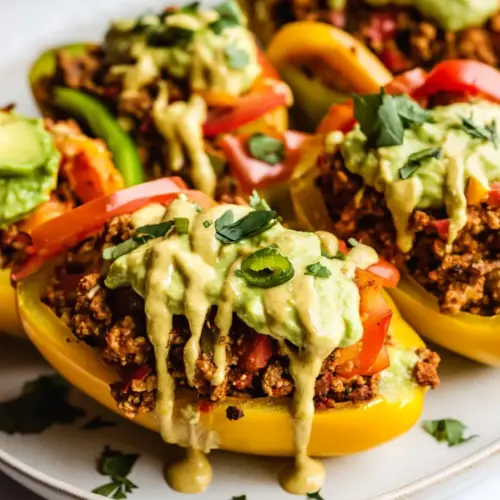
Plant Based Bell Pepper Nacho Boats
Plant Based Bell Pepper Nacho Boats deliver creamy avocado sauce and smoky cashew queso over warm, colorful pepper cups. This easy weeknight dinner is creamy, crispy, and bursting with savory Mexican inspired flavor, perfect for casual gatherings or family meals. Try it for a bright, plant based twist on nachos that’s satisfying and simple to make.
Equipment
- Blender
- Baking Sheet
- Small Saucepan
- Medium sized bowl
Ingredients
- 1 avocado medium Use mashed to add a creamy, rich texture and healthy fats that balance spicy and acidic flavors in the dish; provide silkiness to sauces and a cooling contrast to heat.
- 1/4 cup cilantro leaves Provide chopped leaves to add a bright, herbal lift and fresh citrusy aroma; sprinkle into mixtures and as garnish to brighten overall flavors without overpowering.
- 2/3 cup water plus additional as needed Add measured to thin blended sauces or adjust consistency for dressings and cheeses; incorporate incrementally to reach desired creaminess while keeping flavors balanced.
- 1/2 teaspoon kosher salt Season measured to enhance overall savory balance and amplify other spices; dissolve into wet components to ensure even distribution and proper seasoning throughout.
- 1 teaspoon ground cumin Season ground to contribute warm, earthy, slightly bitter notes that complement other spices; blend into savory fillings to reinforce Mexican-inspired flavors.
- 2 tablespoons lime juice Squeeze fresh to add bright acidity and a tangy citrus note that lifts and balances fatty and spicy elements; use to finish sauces or dressings for brightness.
- 1 cup water hot Pour hot to rehydrate and loosen dried or thick components and to help blend cashews into a smooth sauce; provide necessary heat to soften nuts for pureeing.
- 1 cup cashews raw Soak raw to form the creamy base of plant-based cheese or sauce when blended; supply a neutral, nutty richness and body for smooth texture in dairy-free recipes.
- 3 tablespoons nutritional yeast Sprinkle nutritional to introduce umami and cheesy flavor notes while contributing B vitamins and savory depth; use to mimic dairy cheese in vegan preparations.
- 1 teaspoon chipotle chili powder Add smoky to bring a warm heat with smoky undertones that deepen flavor; combine with other spices to create a layered, robust profile.
- 1/2 teaspoon smoked paprika Sprinkle smoked to lend a sweet smoke aroma and depth that enhances roasted and grilled flavors; pair with chili powder to emphasize charred notes.
- 1/2 teaspoon kosher salt Measure to season while ensuring not to over-salt; integrate into blended or cooked elements to achieve balanced savory taste.
- 1/2 teaspoon garlic powder Sprinkle powder to add a savory, slightly pungent garlic flavor without moisture; use in dry rubs or blended sauces to boost aromatic profile.
- 1/2 teaspoon ground cumin Season ground to echo earlier cumin notes and reinforce warm, earthy spice throughout the dish; sprinkle into fillings and sauces for cohesive flavor.
- 3 bell peppers Slice halved or cored to serve as edible vessels that hold fillings; provide crisp, sweet, and slightly bitter vegetal contrast and colorful presentation.
- 1 full recipe of Mexican-seasoned plant-based ground beef Prepare full to supply a meaty, savory, protein-rich filling with Mexican seasoning; use as the primary hearty component inside the bell pepper boats.
- 3/4 cup salsa no-sugar-added Spoon no-sugar-added to add tangy tomato-based flavor, moisture, and a fresh, slightly spicy element without added sugars; spoon over filling to keep dish lighter.
- pickled jalapeno slices, cilantro leaves, chopped red or green onions, and/or olives, for garnish Garnish with pickled jalapeno slices, cilantro leaves, chopped red or green onions, and/or olives to provide texture, acidity, herbaceousness, and briny contrast for finishing.
Instructions
- To make the avocado sauce, combine the ingredients in a blender. Blend until smooth, adding additional water as needed. Cover the sauce and store it in the refrigerator until ready to use.: The aroma of fresh cilantro and bright lime juice hits you immediately as the blender whirls, and you should see the mixture transform into a vivid green emulsion. This texture matters because a silky sauce coats each bite without overpowering the filling, so blend until the avocado is completely smooth and no stringy bits remain. If the sauce seems too thick, add a tablespoon of the lukewarm water at a time until it pours easily. A common mistake is over thinning it, which dilutes the flavor, so stop adding liquid once it just reaches a drizzly consistency. Cover and chill to allow flavors to meld, which keeps the sauce bright and reduces any raw edge from the herbs.
- To make the cashew queso, combine the ingredients in a blender. Blend until smooth, adding additional water as needed to create sauce thin enough to drizzle over the nachos. If you accidentally add too much water and the sauce becomes too thin, add additional cashews. Cover the sauce and store it in the refrigerator until ready to use.: As the blender works, pause and scrape down the sides to ensure even texture, then run it again to get a velvety finish. You should hear a consistent hum rather than heavy clanks, signaling the avocado and cilantro are fully incorporated. If you underblend you risk small bits that interrupt the silky mouthfeel, while overblending can warm the sauce slightly and change its color. Keep the sauce cool for best presentation and flavor.
- To make the nacho boats, preheat the oven to 375 degrees Fahrenheit. Line a baking sheet with parchment paper or aluminum foil and set aside.: Chilling the avocado sauce firms it slightly and helps the flavors harmonize, producing a cleaner lime and herb profile. Store in an airtight container to prevent oxidation and browning, and press a piece of plastic wrap directly on the surface if you want extra protection from air. A typical pitfall is leaving it uncovered which causes a duller color and slightly off flavors.
- Remove the core and seeds from the bell peppers and slice each one into 6 pieces, paying attention to where the natural curve creates a cup.: When you begin blending soaked hot cashews with nutritional yeast and spices, a nutty, savory scent emerges that foreshadows a creamy, cheese like sauce. The goal is a glossy, uniform texture so it can be warmed and drizzled without separating. If your blender struggles, let the cashews soak longer or add a touch more hot water to help the blades move, but add liquid cautiously to avoid thinning too much.
- In a medium-sized bowl, combine the plant-based ground beef and salsa. Evenly distribute the mixture into the bell pepper boats.: You're aiming for a pourable consistency that clings slightly to the filling, not a watery syrup. As it blends, pause to check the texture by spooning a little out; it should coat the back of a spoon and fall in a ribbon. If it becomes too thin, blend in extra cashews to thicken it back up. Over thinning is the most common issue here and results in a runny queso that won’t stay on the peppers.
- Bake on the prepared baking sheet for 10 minutes, until the peppers are hot and lightly softened.: Restoring body with more cashews brings back the rich mouthfeel and ensures the sauce clings to the plant based ground beef and peppers. After adding, blend fully until the texture smooths out again. Be cautious with heat when reheating later; gentle warming prevents separation and preserves the creamy structure.
- Meanwhile, heat the cashew queso in a small saucepan over medium-high heat until it’s warmed through.: Keeping the cashew queso chilled lets flavors settle and makes reheating gentle and predictable. Store in a sealed container to maintain its neutral scent and prevent it from absorbing other fridge aromas. A frequent mistake is overheating it later at high heat which can lead to graininess, so warm it gently when ready to use.
- Arrange the peppers on a plate. Drizzle them with the warm cashew queso and avocado sauce, and add any additional toppings, like pickled jalapeno slices, cilantro leaves, chopped red or green onions, and/or olives, for garnish.: Preheating ensures the peppers soften uniformly and the filling warms through without drying. You should feel a pleasant whoosh of warm air when opening the oven, indicating it has reached temperature. If you skip preheating the texture will be uneven, with some peppers remaining too crisp while others become limp, so always wait for the indicator or thermometer reading.
- Line a baking sheet with parchment paper or aluminum foil and set aside: This step keeps cleanup simple and helps the peppers roast evenly, reflecting heat beneath them for a gentle, consistent finish. The surface should not stick, and the parchment will help prevent the salsa in the filling from causing any burning. A common oversight is using an unlined pan which can make cleanup tedious and increase the chance of sticking.
- Remove the core and seeds from the bell peppers and slice each one into 6 pieces, paying attention to where the natural curve creates a cup: As you slice, notice which parts naturally cradle the filling most effectively, and orient them with that curve up on the baking sheet. Fresh bell peppers will snap crisply when cut, and their interior walls should be intact to hold the mixture. Avoid cutting pieces that are too narrow to contain the filling, as they will likely tip or spill during baking.
- In a medium sized bowl, combine the plant based ground beef and salsa: Mixing these by hand releases a tangy, savory aroma and ensures every boat gets an even portion of seasoned filling. The salsa adds moisture and pockets of tomato brightness that keep the mixture lively. Take care not to overmix, which can break down the texture of the plant based meat and make the filling pasty rather than chunky.
- Evenly distribute the mixture into the bell pepper boats: Spoon the filling into each pepper cup until it is comfortably full but not overflowing, which helps maintain a neat bake and makes for easier eating. You should see a contrast between the colorful pepper and the rich filling at this point. Overstuffing causes spills and uneven cooking, so aim for balance to keep presentation tidy.
- Bake on the prepared baking sheet for 10 minutes, until the peppers are hot and lightly softened: When done, the peppers should be tender but still hold their shape, and you may notice the filling steaming and bubbling slightly at the edges. This short bake warms the filling through without turning the peppers mushy, preserving textural contrast. A common error is baking much longer which yields limp, waterlogged peppers, so follow the timing closely and check for a gentle give when pressed.
- Meanwhile, heat the cashew queso in a small saucepan over medium high heat until it’s warmed through: Gently warming the queso releases its aromas and makes it silky enough to drizzle, and you should see small wisps of steam and a glossy sheen. Stir constantly to prevent sticking and to maintain an even temperature, which keeps the texture smooth. Avoid boiling, which can separate the sauce and produce a grainy mouthfeel, so use medium high heat and remove as soon as it is warmed.
- Arrange the peppers on a plate: Place the warmed boats carefully so they maintain their form, and consider spacing them so each one gets an even drizzle. The visual contrast of the bright bell peppers against the warm filling makes for an inviting presentation. Crowding the plate can lead to sauce spills and an uneven look, so give them room to shine.
- Drizzle them with the warm cashew queso and avocado sauce: The sizzling contrast of warm cashew queso meeting the cool avocado sauce is delightful, and you should see the queso cling to the filling while the green sauce pools slightly in the pepper crevices. This dual temperature adds complexity to each bite and keeps flavors vibrant. Apply sauces sparingly at first, then add more if desired to avoid sogginess.
- Add any additional toppings, like pickled jalapeno slices, cilantro leaves, chopped red or green onions, and/or olives, for garnish: The final garnishes introduce texture and flavor pops, from acidic pickles to crisp onions, and they make each serving visually appealing. Scatter them just before serving so they retain their freshness. A last minute garnish is best because adding them too early can make them wilt or lose brightness.
Notes
- Add more heat by increasing the chipotle chili powder in the queso or by adding extra pickled jalapeno slices as a garnish for a smoky kick.
- Make it milder by reducing the chipotle chili powder and offering the pickled jalapenos on the side so guests can control the spice level.
- Swap the garnish to suit your pantry, like using additional chopped cilantro or sliced olives for a briny contrast that brightens each bite.
- Prep ahead by making both sauces a day in advance, storing them in airtight containers, and assembling the boats right before baking for easy entertaining.
- Adjust texture by pulsing the plant based ground beef mixture lightly if you prefer a finer filling, or leave it chunkier for more chew and contrast.
- Control salt by seasoning the sauces gradually, tasting as you go, and remembering the salsa and packaged plant based products may already contain salt.