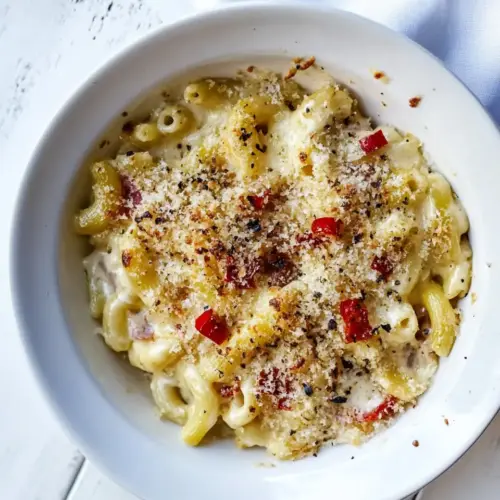
Pizza Supreme Mac and Cheese
Pizza Supreme Mac and Cheese blends creamy, melty cheeses with bold pizza style toppings for an irresistibly comforting casserole. This easy weeknight dinner combines stretchy mozzarella, sharp cheddar, and nutty parmesan with roasted peppers, pepperoni, and olives for a crowd pleasing bake. Make it for casual gatherings or lazy weekends, it promises crispy topping and saucy bites that everyone will love.
Equipment
- Saucepan
- Large Pot
- 9 x 13 inch baking dish
- Whisk
Ingredients
- 1 pounds piral-cut pasta cooked (mine above is called spirali by delallo foods) Cooked al dente to provide a sturdy, toothsome base that holds sauce and mix-ins without becoming mushy; spirali’s twisted shape traps cheese and toppings for even distribution across every bite.
- 1 (12 ounce) jar roasted red peppers, drained, chopped and patted dry Drained and chopped to add sweet, smoky roasted pepper flavor and vibrant color; patted dry to prevent excess moisture from thinning the cheese sauce and making the casserole soggy.
- 3 tablespoons butter Melted to form the fat component of a classic roux and to contribute rich, silky mouthfeel; butter also helps brown the breadcrumb topping and adds a subtle buttery aroma.
- 3 tablespoons all-purpose flour Whisked into melted butter to create a smooth roux that thickens the milk into a creamy béchamel-style sauce; flour also stabilizes the cheese so it melts evenly without separating.
- 3 cups milk Heated and slowly incorporated into the roux to form a velvety cheese sauce; milk provides the dairy base that carries flavor and creates a cohesive, creamy texture for the mac and cheese.
- 2 garlic cloves, minced Sautéed briefly or added to the sauce to infuse a gentle savory garlic note that complements cheeses and pizza-style toppings; minced form disperses evenly so flavor reaches every forkful.
- kosher salt and pepper Seasoned sparingly to balance and enhance flavors, with kosher salt emphasizing cheese and pepper adding brightness; adjusted to taste to avoid over-salting from salty cheeses and olives.
- 8 ounces freshly grated mozzarella cheese, or an italian blend cheese Shredded and folded into the warm sauce to deliver gooey, stretchy melt and a mild milky flavor reminiscent of pizza; mozzarella contributes to the stringy texture classic to a pizza-style mac.
- 8 ounces freshly grated white cheddar cheese Grated and blended into the sauce for a sharp, creamy cheddar backbone that deepens flavor and adds richness; white cheddar brings tang and color contrast to the overall cheese blend.
- 2 ounces freshly grated parmesan cheese Finely grated and stirred into the sauce for an umami-rich, nutty finish and to heighten savory depth; parmesan also aids in tightening the sauce and boosting overall flavor complexity.
- 1 green bell pepper, sliced Sliced and lightly cooked or tossed in to add crisp-tender vegetal sweetness and a slight crunch; green bell pepper introduces classic pizza-style flavor and fresh color contrast.
- 1/2 cups sliced black olives Sliced and sprinkled to introduce briny, slightly bitter olive flavor and a tender, slightly chewy texture; black olives add a distinctive savory note that complements cheese and cured meats.
- 1/3 cups sliced pepperoni, any size, any variety works Sliced and added as a savory, oily cured-meat topping to bring salty, spiced pork flavor and a pleasing bite; pepperoni contributes classic pizza character and a touch of grease that enriches the dish.
- 1/3 cups sliced banana peppers, (I like the ones in brine) Sliced and incorporated for tangy, vinegary heat and a bright punch that cuts through the richness; banana peppers lend acidity and moderate spiciness to balance creamy cheese.
- 1/4 cups seasoned bread crumbs Sprinkled over the top to provide a crisp, seasoned contrast with toasted texture and herb-forward flavor; seasoned breadcrumbs create a crunchy finish that contrasts the creamy interior.
- finely grated parmesan, for sprinkling Finely grated and dusted on top to add an extra salty, umami lift and a delicate gritty texture that complements melted cheeses; a light sprinkle enhances aroma and presentation.
- crushed red pepper flakes, for topping Sprinkled sparingly to introduce adjustable heat and a visual pop of color; crushed red pepper flakes allow diners to control spiciness and sharpen the overall savory profile.
Instructions
- Preheat the oven to 350 degrees F. Spray a 9 x 13 inch baking dish with nonstick spray.: You will notice a warm, dry smell as the oven comes up to temperature, and preheating ensures even baking so the top can turn golden without the center staying cold. Preparing the dish ahead prevents scrambling when the pasta and sauce are ready. One common mistake is skipping preheating, which can lead to uneven baking and a soggy center.
- Bring a pot of salted water to a boil and cook the pasta according to the directions. I like to cook it al dente since we are baking the mac and cheese.: The water should roar when it reaches a boil and smell faintly of salt. Cooking the pasta al dente means it will have a slight bite and hold its shape during baking, absorbing sauce without turning mushy. Overcooking here is the usual error, leaving you with a soft, gluey texture after the oven step.
- Heat the butter in a saucepan over medium heat. Once melted, whisk in the flour to create a roux. Cook for 2 to 3 minutes, until golden brown and fragrant. Slowly pour in half of the milk, whisking constantly so the mixture can thicken, about 5 minutes. Slowly pour in the other half of the milk and whisk until thickened. Stir in the garlic and a pinch of salt and pepper. Reduce the heat to low and add most of the cheese (the mozz, cheddar and parm) - I reserve a few ounces of the mozzarella and cheddar for topping. Stir the cheese sauce until smooth and silky. At this point, you can taste and season the sauce with more salt and pepper if needed.: As the butter melts and the flour cooks, you will detect a gentle nutty aroma and the mixture will take on a pale golden tint, which indicates the raw flour flavor has cooked out. This step builds the foundation for a silky sauce, so patience is key. If you rush or let the roux burn, you will introduce bitterness into the final sauce.
- Place the cooked pasta in the baking dish and stir in the chopped roasted red peppers. (As a note, you can add more toppings INSIDE the mac and cheese - I prefer to keep mine on top.) Pour the cheese sauce all over the pasta and toss it well to combine. Add your toppings on next! The green peppers, olives, pepperoni, banana peppers, etc. Sprinkle with the breadcrumbs.: Adding milk gradually lets the starches hydrate and prevents lumps. You should hear soft bubbling and see the mixture thicken to a custard like consistency, smooth and glossy. If you pour too quickly, the sauce can develop lumps or a separated texture that is hard to fix later.
- Bake for 30 to 35 minutes, until golden and bubbly on top. Top with extra grated parmesan and red pepper flakes before serving.: The sauce will deepen in aroma as the garlic releases its fragrance into the warm milk, lending a savory backbone. Keep the heat gentle so the sauce does not scorch, and taste before adding more salt because the cheeses will add saltiness. A common slip is turning heat too high, which can scald the milk and leave an unpleasant cooked taste.
- Reduce the heat to low and add most of the cheese (the mozz, cheddar and parm) - I reserve a few ounces of the mozzarella and cheddar for topping.: On low heat the cheeses will melt into a glossy, stretchy sauce without separating, releasing a warm, cheesy aroma that fills the kitchen. Take your time so the emulsion stays smooth and cohesive. Adding cheese to an overly hot sauce often causes it to separate into oily, grainy curds.
- Stir the cheese sauce until smooth and silky. At this point, you can taste and season the sauce with more salt and pepper if needed.: The sauce should glide off the spoon in a ribbon and cling to the back of a spoon, with a deep, layered cheese flavor and a velvety mouthfeel. Adjust seasoning carefully, since the parmesan adds salt and umami. Over seasoning at this point is easy, so taste and add in small increments.
- Place the cooked pasta in the baking dish and stir in the chopped roasted red peppers.: As you fold the pasta with the peppers, you will see bright flecks of red against the pale pasta, and you may smell a sweet roasted aroma. The peppers introduce an acidic lift that balances the richness of the sauce. If the peppers are too wet, they can release moisture while baking and make the casserole watery.
- Pour the cheese sauce all over the pasta and toss it well to combine.: The sauce will cling to the spirali grooves, creating a glossy finish and ensuring each forkful is well coated. Toss gently to avoid breaking the pasta, and make sure the sauce reaches the bottom of the dish. Uneven distribution is a common problem, leaving pockets that are dry or overly saucy.
- Add your toppings on next! The green peppers, olives, pepperoni, banana peppers, etc. Sprinkle with the breadcrumbs.: Layering toppings on top lets them brown and crisp in the oven, producing a mosaic of colors and textures. You should hear a slight sizzle as the pepperoni warms and see the breadcrumbs begin to toast. Crowding the surface or piling toppings too thickly can prevent even browning.
- Bake for 30 to 35 minutes, until golden and bubbly on top.: As the dish bakes you will see the edges bubble and the top develop a golden brown color, releasing a complex aroma of melted cheeses and toasted crumbs. Baking melds flavors and crisps the surface for contrast. Removing the casserole too soon can result in a loose sauce that has not set, while overbaking can dry it out.
- Top with extra grated parmesan and red pepper flakes before serving.: Finishing with finely grated parmesan adds a bright, savory sprinkle and the crushed red pepper flakes deliver heat that wakes up the palate. The final garnish also gives a lovely visual finish. Adding garnishes too early can cause them to lose potency or burn in the oven.
Notes
- Freshly grate your cheeses to ensure smooth melting and a cohesive sauce, avoiding the gritty texture pre shredded cheeses sometimes cause.
- Dry jarred ingredients like roasted peppers and banana peppers with paper towels to prevent the casserole from becoming watery as it bakes.
- Cook pasta al dente so it retains structure after baking, absorbing sauce without falling apart into a mushy texture.
- Whisk milk in slowly when making the roux based sauce to avoid lumps and to create a glossy, stable emulsion that clings to the pasta.
- Reserve part of the cheese for the top so the finish melts into a golden, stretchy layer that browns attractively under heat.
- Toast breadcrumbs briefly in a pan with a little butter before topping if you want an extra crunchy, flavorful crust.
- Let the dish rest for 5 to 10 minutes after baking to let the sauce settle and make serving cleaner and easier.