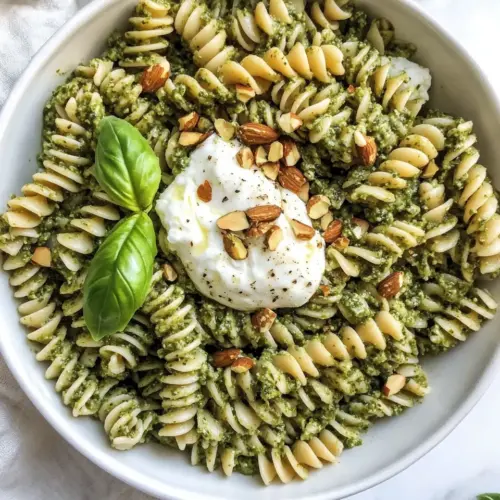
Pistachio Pesto Pasta Salad with Burrata
Pistachio Pesto Pasta Salad with Burrata is a creamy, nut forward pasta salad with bright herbal notes and crunchy texture. This easy summer recipe blends fresh basil and peppery arugula into a vibrant pistachio pesto that clings to corkscrew fusilli pasta, finished with luscious burrata for an indulgent yet approachable dish, perfect for easy weeknight dinners and gatherings.
Equipment
- Food Processor
- Large Pot
- Colander
- Large Mixing Bowl
Ingredients
- 1 cups helled pistachios Provide a crunchy, nutty base for the pesto, contributing rich flavor and a slightly creamy texture when blended; toast lightly to intensify aroma and remove any papery skins for smoother consistency.
- 1 1/2 cups loosely packed fresh basil leaves torn Add bright, herbaceous freshness and aromatic lift to the pesto; tear leaves to release essential oils and pack loosely to avoid bruising while preserving vibrant green color.
- 1/2 cup fresh arugula Bring a peppery, slightly bitter note that balances the sweetness of the basil and richness of the nuts; use fresh leaves to add depth and a subtle green color to the sauce.
- 2 tablespoons fresh oregano Introduce aromatic, savory undertones with a slight minty-citrus character that complements basil; chop or bruise the leaves to release oils and enhance complexity in the pesto.
- 3 garlic cloves Deliver pungent, spicy sharpness that cuts through the richness of the nuts and cheese; mince or crush to evenly distribute flavor throughout the pesto.
- 1/3 cup finely grated pecorino romano cheese Contribute sharp, salty, and tangy umami that deepens the pesto’s savory profile; grate finely so it melts into the mixture and helps thicken the sauce.
- 1/3 to 1/2 cup extra virgin olive oil Provide silky mouthfeel and richness to emulsify the pesto into a cohesive sauce; add gradually while blending to achieve desired consistency between 1/3 and 1/2 cup.
- 1/4 teaspoons salt Enhance and balance flavors while rounding out the pesto; add sparingly and taste as you go to avoid oversalting the sauce.
- 1 pound fusilli pasta Supply hearty texture and a neutral base to carry the pesto coating; cook until al dente, then toss hot pasta with pesto so the sauce clings to the spirals.
- 1 ball burrata cheese Offer a creamy, luscious centerpiece with rich milky interior that contrasts with the pasta and pesto; tear open and nestle onto the salad just before serving for maximum creaminess.
- 1/4 cup parmesan cheese Add a salty, nutty finish and a touch of umami when sprinkled over the salad; grate or shave to distribute small bursts of savory flavor across the dish.
- 2 tablespoons chopped pistachios Provide a final crunchy garnish and visual contrast to the blended pistachios in the pesto; chop coarsely and sprinkle on top for texture and color.
- 1 handful fresh basil for tossing Introduce fresh herbal brightness and a pop of color when tossed with the finished pasta; use a generous handful to lightly wilt into the warm pasta for aroma and visual appeal.
Instructions
- Place the pistachios, basil, arugula, oregano, garlic and cheese in a food processor. Pulse and blend until the nuts are coarsely chopped, then with the processor on, stream in 1/3 cup of olive oil. Add a little more if necessary, depending on how “spreadable” you want your pesto to be. Taste the pesto and add in the salt, blending once more. This will make a little extra pesto than needed, so store it sealed tightly in the fridge for up to a week.: Close your eyes to appreciate the immediate burst of herbaceous aroma when you first pulse the basil and arugula , a bright green scent that signals freshness. As the processor moves, listen for the change in pitch as the nuts break down, and watch for a coarse paste forming, studded with tiny pistachio pieces. The olive oil stream is crucial because it emulsifies the mixture, creating a glossy texture that will cling to the pasta rather than pool on the plate. If the mixture feels too dry, add bit by bit until it reaches a spreadable consistency; the right balance ensures the pesto both coats and flavors each spiral of fusilli pasta . A common mistake is overprocessing, which can make the pesto pasty rather than pleasantly textured. Another trap is adding all the oil at once, which can make it slippery and prevent proper integration of the herbs. Taste and adjust salt at the end because the pecorino romano cheese already contributes saltiness, and refrigerating leftover pesto in a tight container will preserve its fresh flavor for several days.
- Cook the pasta according to the directions on the package. Once you drain the pasta, immediately toss it with the olive oil and a few scoops of the pesto – as much as you’d like! You can use all of it or just a few tablespoons. Pull apart the burrata cheese and toss it into the pasta over and over. Toss in the parmesan cheese. At this point, you can serve it warm, but I love to stick the whole bowl in the fridge and let it cool down for a few hours. The flavor is unreal!: As the pot of water comes to a rolling boil, add a generous pinch of salt so the fusilli pasta absorbs flavor from within. Stir gently to prevent sticking and watch the timer closely to reach al dente, where the pasta is tender but still offers a subtle resistance. Drain the pasta promptly and do not rinse, because the residual starch helps the pesto adhere to each spiral. The steam rising from the colander should still smell faintly of wheat and salt, and that warmth will help the burrata meld into the dish when you add it. Overcooking is the usual misstep here, as soft pasta will not provide the textural contrast needed against the creamy burrata and crunchy pistachios . If your water boils over or the pasta clumps, use a fork to separate pieces and adjust heat and stirring frequency next time.
- Before serving, top with the extra pistachios and fresh basil leaves.: Right after draining, transfer the steaming fusilli pasta into a large bowl and drizzle extra virgin olive oil to coat each piece. The oil prevents sticking and acts as glue for the pesto. When you add the pesto, do so gradually so the pasta is evenly dressed and has a glossy sheen rather than clumps of sauce. Smell the bowl as you toss; you should get a layered scent of herbs, nuts, and savory cheese. Texturally, you want each spiral to feel coated, not saturated, because the burrata will add additional creaminess later. A frequent error is overdressing, which makes the salad heavy; adjust in small increments and taste as you go.
- Pull apart the burrata cheese and toss it into the pasta over and over: Tear the burrata into pieces and fold them gently into the warm, pesto dressed fusilli pasta , allowing the creamy center to soften and coat nearby pasta strands. You will see small pockets of milky richness forming, and the texture will become luxuriously silky. Folding carefully protects the delicate curd from breaking down completely, which keeps textural contrast. If you add the cheese while the pasta is piping hot, some melting will occur and the dish will feel more cohesive; chilling it later produces a different, firmer finish. One mistake to avoid is overmixing, which will dissolve the burrata completely and remove those delightful cream pockets.
- Toss in the parmesan cheese: Sprinkle the parmesan cheese and fold it through so the nutty, salty shards integrate and cling to the pasta. The fine dust of cheese brings umami that deepens the overall flavor, and you can slightly vary the amount to your taste. I prefer finely grated for an even distribution, but small shards also make for a pleasing textural contrast. If you find the mixture too dry after adding cheese, a light additional drizzle of extra virgin olive oil will smooth it out. Avoid using pre grated powdery versions, which lack texture and fresh flavor.
- At this point, you can serve it warm, but I love to stick the whole bowl in the fridge and let it cool down for a few hours: Chilling the salad allows the flavors to marry and the pesto to settle into the pasta, producing a more integrated profile in each bite. When you open the bowl after refrigeration, the aroma will be calmer and deeper, and the texture will firm slightly, making each chew satisfying. If you prefer warm service, let it rest just a few minutes to encourage the burrata to soften without melting away. A common misstep is refrigerating in a shallow container uncovered, which dries out the surface; keep it covered to maintain moisture and flavor.
- Before serving, top with the extra pistachios and fresh basil leaves: Right before plating, scatter the chopped pistachios and torn fresh basil over the chilled or room temperature salad to reintroduce crunch and bright herbal notes. The contrast between the crisp nuts and soft cheese is essential for a balanced mouthfeel, and the basil provides an aromatic lift that feels festive. Serve immediately so the topping stays crisp. A common error is adding crunchy toppings too early, which causes them to lose texture in the fridge.
Notes
- Swap greens sparingly by adjusting the proportion of arugula to basil to tune the pepperiness, using more basil for a sweeter aroma.
- Adjust pesto texture by pulsing less for chunkier bits of pistachio, or longer for a creamier, more spreadable sauce that cloaks the fusilli pasta.
- Control salt by adding the salt gradually and tasting; the pecorino romano cheese and parmesan cheese already contribute sodium.
- Make it ahead by preparing the pesto first and refrigerating, then tossing with freshly cooked fusilli pasta before adding the burrata.
- Enhance crunch by increasing the final chopped pistachios or lightly toasting them for extra aroma and bite.