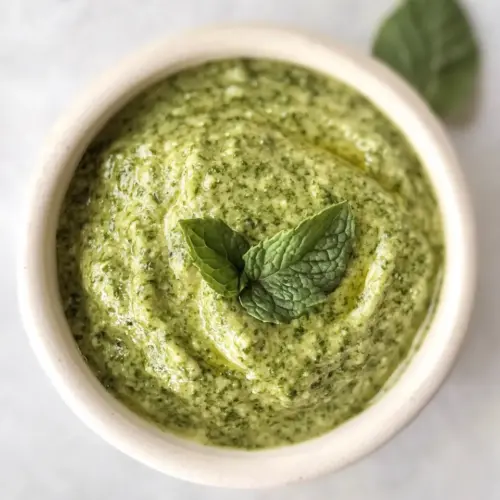
Pistachio Mint Pesto
Pistachio Mint Pesto is a bright, creamy and nutty sauce that lifts simple meals. This easy, fresh herb pesto blends crunchy pistachios with vibrant mint and dill for an easy weeknight dinner topper or spread. Make a batch for sandwiches, pasta, or roasted vegetables, it keeps well and adds instant springtime flavor.
Equipment
- Food Processor
- High Speed Blender
- Measuring Cups
- Jar with Lid
Ingredients
- 1/4 cup whole raw pistachios Provide a toasty, nutty backbone to the pesto and add richness; pulse until coarsely ground to release oils and create texture. Support the sauce with protein and healthy fats, balancing bright herbs and citrus while contributing a pleasant bite.
- 2 cups packed mint leaves washed well Add a bright, cooling herbaceous lift that defines the pesto's fresh flavor profile; gently pack and wash leaves to remove grit before processing. Combine with other herbs to create a vibrant green color and aromatic top note that complements the pistachios and lemon.
- 1/2 cup packed dill Introduce a fragrant, slightly anise-like depth that rounds out the herb flavors and enhances complexity; tightly pack and chop or pulse to release aromatic oils. Work with mint to provide savory herbaceousness and a nuanced background that keeps the pesto balanced.
- 2 green onions chopped Contribute a mild allium sharpness and subtle sweetness that adds savory depth without overpowering; chop finely to distribute flavor evenly. Help brighten the sauce and meld the herbs and nuts together, offering a gentle oniony undertone.
- 2 teaspoons lemon juice Provide a bright, acidic counterpoint to the richness of the nuts and oil; add gradually and taste to balance. Help lift and freshen the overall flavor, preventing the pesto from tasting too heavy while preserving herbal brightness.
- 1 teaspoon lemon zest Deliver intense citrus aroma and concentrated lemon flavor that boosts freshness; grate finely to avoid bitter pith and stir into the mixture. Enhance the pesto's brightness and complement the lemon juice without adding more acidity, amplifying overall fragrance.
- Big pinch salt Season and enhance all flavors by bringing out the herbs' and nuts' natural tastes; sprinkle in a large pinch and adjust to preference. Help balance acidity and richness, ensuring the pesto is well-rounded and savory rather than flat-tasting.
- Pinch of ground black pepper Add a subtle warming note and mild bite that sharpens the pesto's profile; include a small pinch and taste to avoid overpowering. Complement the salt and acidity while providing a classic finishing seasoning that rounds out the sauce.
- 1/4 cup olive oil Create a silky mouthfeel and carry flavors while melding ingredients; drizzle in gradually as you process to reach desired consistency. Provide healthy fat that smooths the pesto, helps it cling to pasta or bread, and preserves flavor by suspending aromatic compounds.
- Hot water if needed Adjust consistency by loosening the pesto without diluting flavor when it becomes too thick; add sparingly until smooth. Serve to achieve the ideal spreadable or sauce-like texture, especially useful if the mixture tightens during blending or chilling.
Instructions
- Add all of the ingredients except the olive oil to a food processor or a high speed blender. Pulse until finely chopped.: The first aroma you will notice is the sharp, herbaceous scent of mint and dill that fills the kitchen, which signals the herbs are breaking down and releasing their essential oils. The pulsing action gives you control, creating small, even pieces of pistachio and green onion without turning everything into a puree. Listen for a change from leafy rustle to a denser, fuller sound, and watch for a uniformly chopped mixture with no large chunks of herb. This technique matters because overblending warms the herbs and turns the texture too smooth, losing the lively mouthfeel. A common mistake at this stage is blending continuously instead of pulsing, which can produce a pasty result and a slightly bitter cooked flavor.
- With the motor running, drizzle in the olive oil. If needed you can add in a tablespoon of hot water as needed to make a smooth pesto. Taste and adjust seasoning.: As you drizzle olive oil with the motor running, you will see the mixture begin to come together into a glossy, emusified sauce, and the scent becomes more rounded and less sharp. The oil binds the tiny chopped pieces into a cohesive texture, giving a satiny sheen and carrying the flavors. If the mixture feels too thick, add hot water a tablespoon at a time until it loosens, being careful not to overshorten the flavor intensity. I always taste for salt and acid at this stage, adjusting with another pinch of salt or a touch more lemon juice to brighten. One frequent error here is adding too much liquid too quickly, which dilutes the herbal punch and results in a watery pesto.
- Use immediately or store for up to 1 week in a tightly sealed container.: Fresh pesto has a vivid green color and a lively herbal aroma that fades over time as oxidation sets in, so using it right away gives the best sensory experience. If you are storing it, pour it into a clean jar and press the surface down so there are minimal air pockets, then float a thin layer of olive oil on top to slow browning. Refrigerated, the pesto will maintain good flavor for several days, and you can also freeze it in small portions for longer storage. A common mistake is leaving air trapped under the lid which accelerates discoloration and flavor loss, so make sure the surface is sealed.
Notes
- Prep the herbs properly: Pat mint and dill dry after washing so they chop cleanly rather than becoming slippery and watery, which can dilute the pesto.
- Control texture with pulsing: Use short pulses in your processor to retain small pieces of pistachio for pleasant crunch, rather than running the machine until everything is completely smooth.
- Use room temperature oil: Slightly warmed olive oil blends more readily and helps the sauce emulsify into a glossy consistency without clumping.
- Taste before adding salt: The natural oils from pistachios can make the pesto seem rich, so add salt gradually and adjust at the end to avoid oversalting.
- Seal for storage: When refrigerating, press the surface down and pour a thin layer of olive oil on top to reduce oxidation and keep the green color.