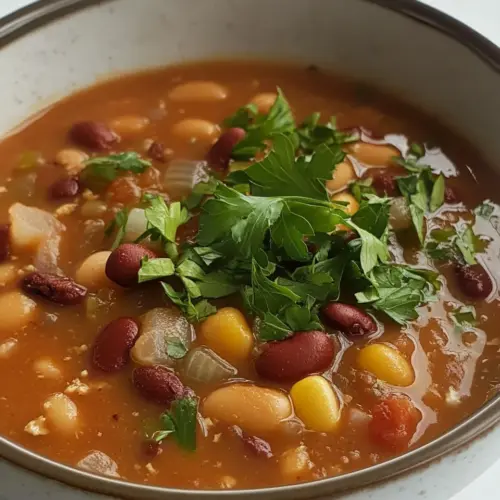
Pinto Bean Soup
Pinto Bean Soup is a creamy, smoky, and easy weeknight dinner that combines tender pinto beans, fire roasted tomatoes, and warm spices for a comforting bowl. With simple pantry ingredients and quick simmering, you get hearty texture and satisfying depth in under an hour. Make it when you want something budget friendly and crowd pleasing, perfect for cozy nights and casual gatherings.
Equipment
- Large Pot
- Wooden Spoon
Ingredients
- 1 1/2 tablespoons olive oil Sauté gently to develop a fragrant base and help bloom spices; provides healthy fat and a silky mouthfeel to the soup. Use medium heat to avoid burning and add at the start to coat aromatics evenly.
- 1 medium onion diced Caramelize slowly to release natural sugars and add sweetness; offers body and texture when softened and diced. Cook until translucent for balanced depth without overwhelming the beans.
- 3 cloves garlic minced Mince finely to distribute pungent, aromatic flavor throughout the broth; lifts savory notes and complements the onion. Add toward the end of sweating the aromatics to prevent bitterness from overcooking.
- 3/4 teaspoon ground cumin Toast briefly to awaken warm, earthy notes and enhance the overall Mexican-inspired profile; aids in tying together the bean and tomato flavors. Sprinkle in after the aromatics are softened to release maximum aroma.
- 3/4 teaspoon dried oregano Crumble and add to introduce herbal, slightly bitter undertones that brighten the broth; complements cumin and tomatoes for a layered flavor. Use dried oregano sparingly to avoid overpowering fresher garnishes like cilantro.
- 1/2 teaspoon smoked paprika Stir in to contribute a smoky, mildly sweet warmth that deepens the soup's savory character; pairs well with beans and roasted tomatoes. Add with the spices so the oil captures and disperses its flavor.
- 2 1/4 cups vegetable broth Pour in as the cooking liquid to simmer and meld flavors; adds savory base and controls final consistency of the soup. Use low-sodium broth if you plan to adjust seasoning later.
- 3 cans pinto beans 15 ounces each, drained and rinsed Drain and rinse before adding to provide creamy texture, protein, and hearty body while reducing excess sodium. Stir in after the broth simmers so beans heat through without losing shape.
- 1/2 cup fresh corn kernels Fold in for occasional bursts of sweet, fresh crunch and seasonal brightness; balances the richness of beans and broth. Add near the end to preserve texture and color.
- 1 can fire-roasted diced tomatoes 15 ounces Stir in to contribute tangy, charred tomato pieces that add depth and subtle sweetness; balances the earthy beans and spices. Include with the broth so flavors integrate during simmering.
- Salt and pepper to taste Season gradually to adjust and enhance overall flavor balance; allows control over saltiness and brings out other ingredients. Taste toward the end of cooking and after additions like cheese or sour cream.
- Fresh chopped cilantro for garnish Garnish liberally to introduce fresh herbal brightness and a cooling contrast to the warm, smoky soup; adds color and a lively finish. Chop just before serving to preserve aroma and texture.
- Shredded cheese for garnish Sprinkle as desired to add creamy, salty richness and a melty topping that contrasts with the broth; enhances mouthfeel and comfort-factor. Choose a melting variety and add just before serving for best texture.
- Sour cream for garnish, optional Dollop optionally to provide tangy creaminess and a cooling counterpoint to spices; can mellow heat and add richness to each spoonful. Offer on the side for diners to customize their bowl.
Instructions
- Add oil to a large pot over medium heat. When the oil is hot, add diced onion and cook until softened, about 5 minutes. Add minced garlic and cook for another minute.: The moment the pan heats and the olive oil begins to shimmer you will smell its mild fruitiness, which signals it is ready to receive the onion . The oil acts as a flavor conductor for the aromatics, ensuring they release their essential oils rather than burning. You should hear a gentle sizzle when the onion hits the pan and see glossy translucence as it softens. Avoid turning the heat too high, because that scorches the oil and imparts a bitter note.
- Stir in cumin, oregano, and smoked paprika, cooking for about 1 minute, until fragrant.: As the onion sweats, steam will rise and the kitchen will fill with a sweet, savory smell that signals the base is forming. Watch for translucency and soft edges rather than deep browning, because you want the onion to melt into the broth. If you notice browning too soon, lower the heat and stir more frequently to prevent a burnt flavor. Patience here builds a mellow backbone for the soup.
- Add vegetable broth, pinto beans, corn, and fire-roasted tomatoes to the pot. Bring to a boil, then reduce heat and simmer for 20 minutes, allowing flavors to meld.: When the garlic hits the warm pan it will release an inviting, pungent aroma that becomes sweeter as it softens. This step is brief because garlic can go from golden to bitter quickly, so keep it moving in the pan and watch closely. If it begins to brown at the edges, reduce the heat immediately. Properly cooked garlic adds a rounded savory note without harshness.
- Season the soup with salt and pepper to taste. Serve hot, garnished with fresh cilantro and a sprinkle of your favorite cheese. Add a dollop of sour cream on top, if desired.: Toasting the spices in the residual heat unlocks their oils and amplifies aroma, producing warm, smoky, and herbal notes that will echo throughout the soup. You should smell a fragrant lift almost immediately, which indicates the spices are blooming. Stir continuously for the minute to prevent any burning, and avoid skipping this step because raw spices can taste flat and underwhelming in the finished dish.
- Add vegetable broth, pinto beans, corn, and fire-roasted tomatoes to the pot: As you add the vegetable broth the pan will deglaze, lifting any browned bits and mixing them into the liquid. The contrasting textures of whole and mashed pinto beans , along with the pop of corn and the acidity of fire roasted diced tomatoes , create an inviting stew like consistency. Stir gently to combine so the tomatoes and beans distribute evenly. A frequent error is adding everything and walking away immediately, which can lead to uneven heat and flavor distribution.
- Bring to a boil, then reduce heat and simmer for 20 minutes, allowing flavors to meld: When the pot reaches a boil you will see lively bubbles and a rising steam that carries the seasoned aroma. Reducing to a gentle simmer encourages the ingredients to integrate, softens the beans, and allows the spices to marry into the broth. You want small, consistent bubbles rather than a rolling boil, as vigorous boiling can break down textures too aggressively. Occasionally skim any foam or scum that appears to keep the broth clear and clean tasting.
- Season the soup with salt and pepper to taste: After simmering, taste the soup while it is hot and add salt and pepper in small increments, stirring and tasting between additions. Salt amplifies existing flavors and brings balance, while pepper adds a gentle bite. Take care not to oversalt, because canned ingredients may already contribute sodium. If you oversalt slightly, a splash of additional vegetable broth or a couple spoonfuls of mashed pinto beans can help mellow it out.
- Serve hot, garnished with fresh cilantro and a sprinkle of your favorite cheese: Right before serving, scatter chopped cilantro for bright herbal contrast and add a light dusting of shredded cheese that melts into warm pockets on the surface. If desired, place a small dollop of sour cream for creaminess and cooling effect. Serve promptly so the textures remain distinct, because letting the soup sit too long can soften the garnishes and dull the flavors.
Notes
- Make it smokier by increasing the amount of smoked paprika slightly, which will intensify that charred note without adding heat, and be sure to toast it briefly with the aromatics to release more aroma.
- Boost creaminess by smashing a portion of the pinto beans against the pot wall or using an immersion blender on low for a few pulses, doing this slowly to preserve some whole beans for texture contrast.
- Keep it fresh with extra chopped cilantro and a squeeze of lime if you like a brighter finish, adding them at the end so their flavor pops rather than melts into the broth.
- Adjust the heat by omitting spicy components and leaning on smoked paprika for warmth, or adding a small pinch of cayenne if you prefer a more assertive kick.
- Stretch it further by serving over a scoop of cooked rice, which is great for feeding a crowd and adds body without changing the core recipe.