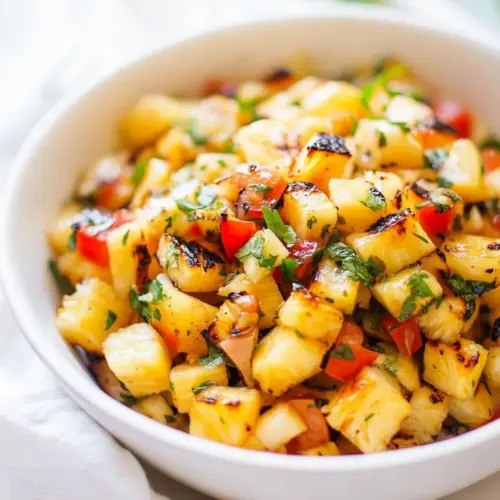
Pineapple Salsa Recipe
Pineapple Salsa Recipe brings smoky grilled pineapple together with crisp red bell pepper and a touch of jalapeño for a sweet spicy, easy summer condiment. This bright, crunchy salsa is perfect for easy weeknight dinners, backyard barbecues, or as a lively party dip. Make it for gatherings to add layered flavor and a refreshing contrast to savory mains.
Equipment
- Grill
- Grill spatula or tongs
- Mixing Bowl
- Whisk
- Cutting board and knife
Ingredients
- 1 large pineapple, peeled, cored, and cut into 1/2-inch thick slices Provide juicy sweet-tart fruit that forms the salsa base; grilling caramelizes sugars and adds a smoky depth, while dicing ensures a balanced texture for scooping.
- 1 red bell pepper, halved lengthwise, seeds removed Add crisp, sweet, and slightly vegetal flavor when charred or finely diced; halving and removing seeds readies it for grilling and chopping to complement the pineapple.
- 1 jalapeño pepper Bring bright heat and pungency that livens the salsa; seeding and charring mellow the spice while chopping disperses the kick throughout the mix.
- 1 lime, halved Supply fresh acidic brightness and aromatic citrus oils; juicing and zesting balance sweetness and heat while enhancing overall freshness.
- 1 tablespoon extra-virgin olive oil, plus extra for grilling Impart a light fruity richness and help prevent sticking during grilling; a tablespoon tossed with pineapple and pepper promotes even caramelization.
- 1 teaspoon honey Introduce mild sweetness to balance the salsa's acidity and heat; a small amount blends easily into the dressing to round flavors.
- 1/2 to 3/4 teaspoons ground cumin (to taste) Offer warm, earthy warmth to deepen flavor complexity; add gradually to taste so it enhances without overpowering the fruit-forward profile.
- 1/2 cup chopped red onion Contribute sharp pungency and crisp bite for contrast; chopping small creates textural interest and a counterpoint to the soft pineapple.
- 1 tablespoon chopped cilantro Provide bright herbaceousness and a fresh, citrusy lift; chopping and mixing in late preserves color and aromatic oils for maximum impact.
- kosher salt Season to taste to enhance and balance flavors; sprinkling gradually and tasting prevents over-salting while accentuating sweetness and heat.
- freshly ground black pepper Add pungent, peppery notes and subtle heat to brighten the salsa; freshly grinding ensures more aromatic, flavorful seasoning than pre-ground pepper.
- tortilla chips, for serving Serve as the crunchy vehicle for the salsa; offering tortilla chips lets the mixture be scooped and enjoyed as an appetizer or snack.
Instructions
- Heat grill with a medium-high flame. Oil grates or line with a nontoxic, nonstick grilling mat.: The air should smell faintly warm and metallic as the grates heat up, and you will see a slight shimmer on the metal when it is ready; heating properly ensures immediate sear marks and prevents sticking. If the grill is too cool, the fruit will warm without caramelizing, producing a bland result, while too hot a surface risks burning the sugars before the interior softens. A common mistake is not oiling the grates, which causes the pineapple and peppers to stick and tear, losing precious caramelization.
- Lightly brush pineapple slices, peppers, and the cut side of the limes with olive oil. Season with a few pinches of kosher salt and freshly ground black pepper.: The oil will start to glisten and the salt will draw out surface moisture, helping the grill develop darker, glossy char lines; when you brush the pieces you might smell the bright fruit oils and faint green pepper aroma. This simple seasoning helps create a seasoned crust while the heat begins the Maillard changes. Avoid over-oiling, because excess oil can cause flare ups and impart a bitter, burnt oil taste.
- Grill, placing limes cut side down, until grill marks appear and pineapple and peppers have begun to soften; 3-4 minutes total for the limes, 3-4 minutes per side for the peppers, and 5-8 minutes per side for the pineapple (watch the pineapple carefully so it doesn't burn). Remove from grill and let stand until cool enough to handle.: You will hear a soft sizzle as the juices interact with the hot metal, and visually, the pineapple edges will turn golden and translucent while the peppers will show blistered blackened skin. The lime's cut face should show deep lines and a fragrant, slightly caramelized scent. This resting period allows carryover heat to finish gentle cooking. A common pitfall is leaving pieces unattended, causing charred bitterness instead of sweet caramel notes.
- Cut grilled jalapeño pepper in half lengthwise and remove seeds (if you prefer a spicy salsa, you can leave the seeds in). Chop grilled pineapple and peppers into bite-sized pieces. You should have about 2 cups of pineapple and 1/2 to 3/4 cup of red pepper.: As you slice, you will notice the soft yield of the pineapple and the smoky, softened flesh of the pepper; the aroma will be a rounded mix of sweet fruit and smoky pepper skin. Removing seeds reduces the heat and keeps the texture pleasant; leaving seeds adds assertive spice. Avoid chopping too finely, which can make the salsa pasty rather than textural and vibrant.
- In a medium bowl, whisk together 1 tablespoon extra virgin olive oil, 1/2 tablespoon grilled lime juice, honey, 1/2 teaspoon ground cumin, 1/2 teaspoon kosher salt, and 1/4 teaspoon pepper. Add pineapple, peppers, red onion, and cilantro, tossing to combine. Season to taste with additional salt, pepper, and cumin, if desired.: The dressing should feel silky and slightly thick when whisked, and it will coat the diced pieces with a glossy sheen; the aroma will lift as citrus and honey mingle. Tossing distributes the flavors evenly, and tasting at this stage helps you judge whether more acid, salt, or warmth is needed. A typical error is overseasoning early, which can overpower the delicate fruit notes; season gradually and adjust after resting.
- Let stand, covered, for about an hour to allow flavors to meld, stirring before serving.: During this hour you will observe the salsa slightly relax as the juices mingle, mellowing sharp edges and marrying smoky and sweet characteristics; the scent becomes more integrated, less like separate pieces. This waiting time enhances depth and makes the salsa taste more thoughtful than rushed preparations. Do not skip the rest, because serving immediately can result in disjointed flavors; also avoid leaving it unrefrigerated for too long in warm weather to prevent spoilage.
Notes
- Timing trick Use the minute range for grilling as a guide, then rely on visual cues like deep golden edges on the pineapple to know you're done.
- Oil sparingly A light brush of the extra virgin olive oil is enough to promote caramelization without causing flare ups or greasy char.
- Season gradually Add kosher salt and ground pepper in stages so you can control the final balance after the salsa rests.
- Chill briefly before serving If the salsa seems too warm after resting, a short chill tightens flavors and firms the texture slightly.
- Chip choice matters Serve with sturdy tortilla chips to avoid sogginess and ensure a satisfying crunch with each bite.