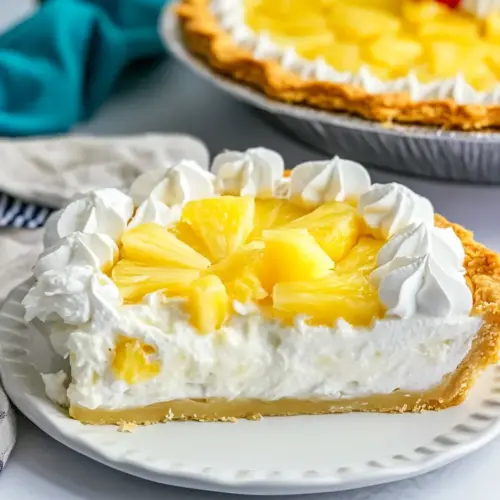
Pineapple Pie
Pineapple Pie is a creamy, airy dessert with bright tropical pineapple and a smooth cream cheese filling, perfect for an easy summer treat. This no bake pie is quick to assemble and yields a light, refreshing slice that works for potlucks or weeknight desserts. Try it when you want a simple, crowd pleasing finale with minimal fuss.
Equipment
- Hand Mixer
- Large Bowl
- Fine-mesh strainer
- Spatula
- Refrigerator
Ingredients
- 1 (20 oz) can crushed pineapple, drained and dried Provide tropical sweetness and moisture; drained and dried crushed pineapple contributes bright flavor without excess liquid that would sog the filling. Use the canned form for consistent texture and easy preparation while retaining natural acidity to balance richness.
- 8 ounces (226 g) softened cream cheese Add smooth, tangy creaminess and body; softened cream cheese creates a rich, stable base that helps set the filling when whipped together. Ensure it is at room temperature for easier incorporation and a silky mouthfeel.
- 1/4 cup (50 g) granulated sugar Sweeten and slightly stabilize the filling; granulated sugar balances the pineapple’s acidity and enhances overall flavor. Measure precisely to avoid overly sweet results and dissolve it into the cream cheese for uniform sweetness.
- 18 ounce container whipped topping, thawed Lighten and aerate the filling; whipped topping adds fluffy volume and a smooth, cloudlike texture while keeping the pie easy to slice. Fold it gently to preserve air and maintain a delicate consistency without making the filling heavy.
- 1 graham cracker pie crust Provide a buttery, crunchy vessel and defined shape; graham cracker pie crust holds the filling and offers a contrasting crumbly texture. Use a pre-made crust for convenience and even baking-free assembly.
Instructions
- Drain pineapple in a strainer. Let drain for a few minutes then use a spatula to press the pineapple against the sides of the strainer to get as much liquid out as possible.: The aroma of canned pineapple will be bright and slightly syrupy as you begin, and you should notice quite a bit of liquid when you first pour it into a fine mesh strainer. Pressing the fruit gently with a spatula helps release trapped juices, and you will see the liquid collect below. This step prevents the filling from becoming watery, which would make the textures collapse; if you skip or rush this, the crust and filling can become soggy. A common mistake is shaking the can into the crust, which adds too much moisture. Instead, let gravity and gentle pressure do the work until the fruit looks relatively dry and no longer drips.
- Place cream cheese and sugar in a large bowl. Mix with a hand mixer until smooth.: When you combine the softened cream cheese and sugar , the initial scent is creamy and slightly sweet. Use a hand mixer on medium speed to coax the two together, and you will see the texture transition from lumpy to smooth. This creates the stable base for the whipped topping. If the cream cheese is still cold, you will battle lumps; conversely, overbeating for too long can incorporate too much air, making the filling overly light and less stable. Scrape the bowl occasionally so all the cream cheese is evenly blended.
- Add whipped topping and mix until smooth on low speed.: The cool, billowy whipped topping will fold into the sweetened cream cheese and mellow the tang, producing a pale, cloud like filling. Use low speed to avoid deflating the topping's structure, and watch for a uniform, velvety appearance. The sound is quieter now, more of a soft whir as the mixer blends the two components. A pitfall here is using high speed, which can break down the whipped topping and make the filling dense; mix just until homogeneous and stop.
- Fold in drained pineapple.: As you introduce the drained pineapple , you will notice flecks of gold suspended throughout the creamy mixture. Folding by hand or at the lowest speed preserves the airy texture while distributing the fruit evenly. The contrast between the silky filling and the tender fruit is what gives the pie its appeal. If you stir too aggressively, you may crush the pieces and lose that pleasant bite; fold gently until the pieces are incorporated.
- Place pie filling in pie crust. Chill at least 2 hours before serving.: Spoon the filling into the chilled graham cracker pie crust , and use a spatula to smooth the top so it is evenly distributed. The filling should mound slightly but settle as it chills, and the visual cue of an even surface indicates good distribution. Pressing too hard can compress the structure, so be gentle. For neat slices, chill the pie fully before cutting; slicing immediately often leads to messy portions.
- Garnish pie as desired, with more whipped cream, crushed pineapple, and/or cherries.: The refrigerator will quiet down the filling as it firms, and after two hours the texture will be noticeably creamier and more sliceable. Cooling allows the fats in the cream cheese to set, which stabilizes the shape. If you rush this step, the pie will be soft and weepy on the plate. Plan ahead and give it the necessary time so each slice holds together cleanly.
- Store in refrigerator for up to 3 days. It’s not recommended to freeze the pie.: A final flourish makes the presentation inviting and adds flavor contrasts. Extra whipped topping offers creaminess, a sprinkle of crushed pineapple amplifies the fruit note, and cherries add a bright pop of color. When garnishing, avoid heavy additions that weigh the topping down, and place decorations just before serving to keep them fresh. Over decorating can distract from the clean, tropical profile of the pie.
- Store in refrigerator for up to 3 days: Wrapped lightly in plastic or kept in an airtight container, the pie will retain its texture and flavor for several days. Refrigeration keeps the cream cheese firm and the pineapple fresh tasting. Freezing is not recommended because the whipped topping and fruit will change texture once thawed. A common error is leaving the pie out at room temperature too long, which can soften it excessively and affect quality.
Notes
- Fresh pineapple garnish Use finely diced fresh pineapple on top for a brighter, less syrupy fruit note, as I sometimes do for a more vibrant presentation.
- Swap whipped topping Substitute with freshly whipped cream, whipped to stiff peaks, folded in by hand to keep the filling airy and slightly less sweet.
- Extra texture Sprinkle crushed graham crackers or toasted coconut on top for a toasty contrast that complements the graham cracker pie crust.
- Make mini pies Fill small tart shells instead of a whole crust for individual servings that are easy to plate at parties.
- Presentation tricks Pipe a ring of whipped topping around the edge before adding a cherry or a small pile of crushed pineapple, for a classic diner style look.