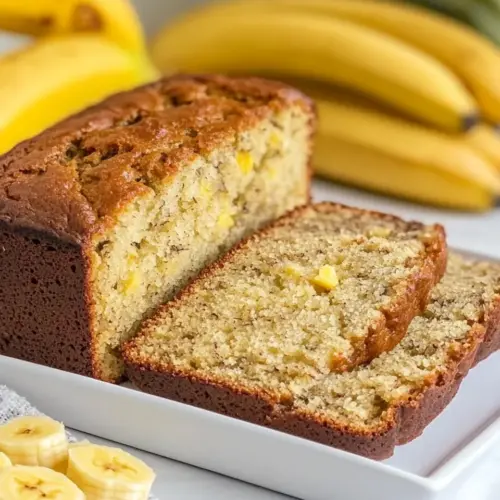
Pineapple Banana Bread
Pineapple Banana Bread is a moist, tropical twist on classic banana loaf, creamy from mashed bananas and studded with bright, well drained crushed pineapple. This easy quick bread bakes into a tender, slightly caramelized crust that works for easy weeknight breakfasts or relaxed brunch gatherings, offering a fragrant, crowd pleasing reason to bake today.
Equipment
- 10×5-inch Loaf Pan
- Cake Testers
Ingredients
- 1 cup granulated sugar Sweetens the batter and helps create a tender crumb while aiding in browning during baking; dissolve granulated sugar with fats and liquids for even texture and caramelized flavor.
- 1/2 cup lightly packed light brown sugar Adds moisture, depth, and a hint of molasses-like flavor while contributing to the cake’s chewiness; lightly pack brown sugar to measure accurately and mix until incorporated for consistent sweetness.
- 2 cups all-purpose flour Provides the structural base and bulk for the quick bread; sift or whisk flour with leaveners to ensure even distribution and avoid dense spots in the loaf.
- 1 teaspoon baking powder Acts as a primary leavening agent to help the bread rise and develop a light crumb; measure carefully and combine with dry ingredients to activate properly with eggs and liquids.
- 3/4 teaspoon baking soda Works alongside baking powder to balance acidity and contribute lift and texture; use the specified amount to prevent an overly metallic or soapy flavor while ensuring proper rise.
- 1 teaspoon fine sea salt Enhances overall flavor by balancing sweetness and strengthening gluten structure slightly; use fine sea salt to evenly season and improve the perception of other flavors.
- 1/2 teaspoon grated nutmeg Adds warm, aromatic spice that complements banana and pineapple flavors; grate fresh nutmeg for the best fragrance and fold into the dry mix for uniform flavor distribution.
- 3 large eggs Provides structure, richness, and emulsification to bind the batter while contributing to tenderness; beat large eggs briefly before incorporating to ensure even color and lift.
- 1 1/2 teaspoons pure vanilla extract Imparts aromatic complexity and enhances the sweetness of the loaf; use pure vanilla extract to deepen flavors and stir into the wet ingredients for cohesive taste.
- 2 cups mashed ripe bananas from about 4 large bananas Contributes natural sweetness, moisture, and banana flavor that defines the loaf; mash ripe bananas well and fold gently to retain some texture and moisture throughout the bread.
- 14 tablespoons unsalted butter melted and cooled Adds richness and moisture while promoting a tender crumb through fat content; melt and cool unsalted butter to incorporate without cooking the eggs and maintain an even batter.
- 1 can crushed pineapple 20 ounces, drained very well Provides bright, tropical moisture and acidity that balances sweetness; drain crushed pineapple very well to avoid excess liquid that could make the loaf gummy.
- 3/4 cup shredded or flaked coconut sweetened or unsweetened (optional) Introduces chewy texture and coconut flavor that pairs with banana and pineapple; choose sweetened or unsweetened coconut and fold in gently to distribute without weighing down the batter.
- Coarse sugar for sprinkling on top (optional) Creates an attractive, crunchy finish and subtle extra sweetness on the crust; sprinkle coarse sugar on top before baking for sparkle and textural contrast if desired.
Instructions
- Preheat the oven to 350°F. Grease a 10" x 5" x 3 1/2" loaf pan and set aside.: When the oven temperature reaches 350°F you should notice a subtle warmth and faint oven odor, a reliable signal that the environment is steady for rising. Greasing the pan ensures the loaf releases cleanly, and I often line the pan with parchment for extra insurance. A common mistake is skipping the grease or lining, which can make removal difficult and tear the crust. If your oven runs hot, use an oven thermometer to confirm accuracy, because an overheated oven will brown the exterior too fast while leaving the center underdone.
- In a large bowl, whisk together the sugars, flour, baking powder, baking soda, salt, and nutmeg. Set aside.: As you whisk, you will see the dry mix transform into a homogenous, pale mixture with flecks of nutmeg. This step disperses leaveners evenly so the loaf rises uniformly. If you skip thorough mixing you may find pockets of baking soda or powder, which can create uneven rise or small metallic spots. A whisk or sift works fine; aim for even color and texture in the bowl.
- In a separate large bowl, whisk together the eggs and vanilla and combine with the mashed bananas.: Whisking the eggs and vanilla creates a smooth, glossy base that the bananas will blend into. When the mashed bananas join, the mixture becomes thick and fragrant, with visible banana strings and a sweet aroma. If your bananas are overly cold, the mixture may feel lumpy; bring them to room temperature for a smoother emulsion. Overbeating here is less risky than overmixing once flour is added, but aim to combine until uniform.
- Pour the wet ingredients over the dry ingredients and mix together until just combined. Stir in the melted butter until fully incorporated. Fold in the well-drained pineapple and coconut (if using) until fully incorporated.: After combining the bowls, you will notice the batter change from floury to glossy, with streaks disappearing as you fold. The goal is a unified batter with some texture from the fruit, not a perfectly smooth cake batter. Adding the cooled melted butter smooths and enriches the batter, while folding in the drained pineapple and optional coconut distributes moist pockets and chew. A frequent error is overmixing at this stage, which develops gluten and yields a tough loaf; stop when you no longer see dry streaks.
- Pour the batter into prepared pan and sprinkle the top with coarse sugar. Bake until golden brown and a cake tester inserted in the center of the loaf comes out clean, about 1 hour and 10 minutes. Allow to cool for 20 minutes before slicing.: As the loaf bakes you will see the top turn from pale to golden and small cracks appear, a sign of even rise. The aroma will shift from sugary to toasty, with tropical notes wafting from the oven. Insert a cake tester in the center near the end of the bake; a clean tester indicates the crumb has set. Avoid opening the oven repeatedly early on, because temperature shifts can cause sinking. If the top browns too quickly, tent with foil to finish baking without burning.
- Allow to cool for 20 minutes before slicing: Cooling lets the crumb set and redistributes steam so slices are neat and not gummy. You will notice the bread relax and the aroma mellow in this period. Cutting too soon can compress the loaf and create a dense texture, so patience pays off. After cooling, invert or lift the loaf from the pan and rest on a rack for the best slicing experience.
Notes
- Swap for browned butter to deepen the flavor profile, giving the loaf a nutty, caramel like note that pairs beautifully with pineapple and bananas.
- Toast the coconut before folding it in to add toasted aroma and a crunchier texture contrast to the soft interior.
- Use alternate sugars like a mix of granulated and light brown sugar to tweak sweetness and moisture while preserving the recipe balance.
- Add citrus zest such as a little orange or lime zest to brighten the tropical flavors without altering texture.
- Make mini loaves by dividing the batter into smaller pans for faster baking and portable gifts, adjusting bake time accordingly.
- Skip the coconut if you prefer a simpler bread that highlights the bananas and pineapple more directly, keeping the recipe more classic.