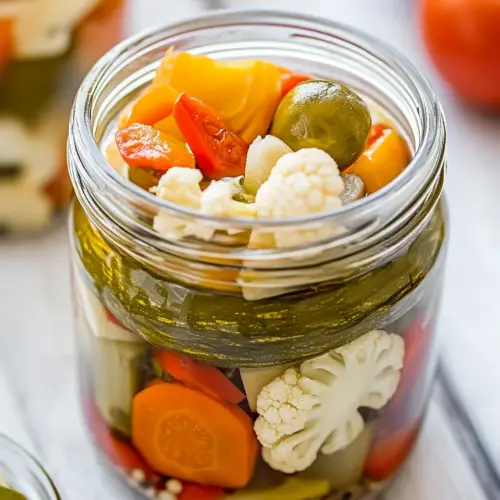
Pickled Vegetables Giardiniera
Pickled Vegetables Giardiniera delivers crisp, tangy, and slightly spicy jars of preserved vegetables that brighten sandwiches, boards, and weeknight meals. This easy, refrigerator style giardiniera balances crunchy cauliflower, sweet carrots, and briny green olives in a clean white vinegar brine for an effortless, make ahead condiment you will reach for again and again.
Equipment
- Medium Saucepot
- 4 pint jars
- Knife
- Cutting Board
Ingredients
- 3 cups small cauliflower florets Provide delicate crunch and mild, slightly sweet flavor while absorbing pickling brine; helps build texture contrast in giardiniera and holds up well during fermentation or quick pickling.
- 1 1/2 cups sliced carrots Add firm bite and natural sweetness that balances acidity; sliced shape allows even pickling and contributes vibrant color and a crisp mouthfeel to the mix.
- 1 1/2 cups sliced celery Contribute a crisp, watery crunch and subtle vegetal flavor that brightens the overall profile; sliced stalks help disperse savory notes throughout the jar.
- 1 1/2 cups sliced red bell pepper Bring sweet, tangy, and slightly fruity tones plus a tender-crisp texture; sliced pieces impart vivid red color and enhance visual appeal of the pickled medley.
- 1 cup pitted green olives Introduce briny, savory depth and a slightly bitter, tangy note; pitted olives add umami complexity and pack concentrated olive flavor without seeds.
- 4 tablespoons olive oil Provide a smooth, fruity fat that rounds flavors and adds a glossy finish; oil helps carry aromatics and can mellow sharp vinegar bite when drizzled in.
- 4 cloves garlic smashed Offer pungent, aromatic intensity and a garlicky bite that infuses the brine; smashing releases juices and oils to permeate vegetables with savory depth.
- 4 bay leaves Impart a subtle herbal, slightly floral background aroma and gentle bitterness; bay leaves slowly release savory, rounded notes during pickling.
- 2 -4 serrano chiles Deliver variable heat and bright, fresh chile flavor that can be adjusted to taste; serrano chiles infuse the brine with capsicum smokiness and spicy warmth.
- 2 teaspoons dried oregano Contribute concentrated Mediterranean herbaceousness and earthy top notes; dried oregano complements other spices and enhances overall savory balance.
- 1 teaspoon celery seeds Add warm, celery-like bitterness and aromatic complexity; celery seeds reinforce vegetal flavors and echo the celery vegetable for cohesion.
- 1 teaspoon fennel seeds Provide sweet-aniseed aroma and a subtle licorice note that lifts the brine; fennel seeds add fragrant complexity and pair well with mustard and oregano.
- 1 teaspoon yellow mustard seeds Introduce sharp, pungent, and slightly bitter bursts of flavor; yellow mustard seeds pop when brined, releasing tangy, spicy oils into the pickling liquid.
- 3 cups water Serve as the primary diluent for the brine, moderating vinegar strength and aiding salt and sugar dissolution; water balances acidity and controls concentration.
- 3 cups white vinegar Deliver bright acidity and preserving power while imparting tangy flavor; white vinegar preserves the vegetables, inhibits microbial growth, and shapes overall taste.
- 2 tablespoons salt Provide essential saline seasoning that enhances flavor and aids preservation; salt draws moisture from vegetables and helps create a stable brine.
- 2 tablespoons sugar Contribute subtle sweetness to counterbalance vinegar bite and round flavors; sugar softens sharp acidity and helps achieve harmonious taste in the pickling brine.
Instructions
- Prep work: Chop all the fresh produce into small bite pieces. Cut the serrano chiles in half. Drain the green olives. Set out 4 pint jars.: The kitchen will smell fresh and vegetal as you chop the produce into bite sized pieces, the knife tapping rhythm on your board creating a steady pace. You want uniformly sized pieces so the brine penetrates evenly, and the sound of a firm cauliflower floret slicing cleanly and the bright orange of the carrots giving way under the blade are reassuring signs. If your pieces are irregular, some will pickle faster than others, causing uneven texture. Keep a clean, dry workspace and place the cut serrano halves and drained green olives nearby so assembly moves smoothly.
- To each jar add: 1 tablespoon olive oil, 1 smashed garlic clove, 1 bay leaf, 1/2 – 1 serrano pepper, 1/2 teaspoon oregano, 1/4 teaspoon celery seeds, 1/4 teaspoon fennel seeds, 1/4 teaspoon mustard seeds.: When you add a tablespoon of olive oil , one smashed garlic clove, a bay leaf , half to one serrano, and measured spices to each jar, you should notice the aroma of crushed garlic and the herbaceous lift from oregano and fennel. These aromatics layer into the vegetables rather than overwhelming them, and arranging them consistently ensures every jar tastes balanced. A common misstep is unevenly distributing spices which leads to one jar being too spicy or herb forward.
- Divide the cauliflower, sliced carrots, celery, red bell pepper, and olives between the four jars. Fill them to the top.: As you pack the cauliflower, sliced carrots , celery , red bell pepper, and olives into the jars, press gently so the pieces nest without crushing. You should see bright contrasting colors through the glass, and a light squeeze should not force juice out. Overpacking or smashing will create a mushy texture once brined, so leave small pockets of air for the brine to circulate.
- Set a medium saucepot over high heat. Add the water, vinegar, salt, and sugar. Bring to a boil. Stir well, then carefully pour the boiling brine into each jar.: When the pot begins to sing with steam and the brine comes to a rolling boil, the mixture of water , white vinegar , salt , and sugar will smell sharply acidic with a faint caramel edge from the sugar. Boiling helps dissolve the salt and sugar and releases aromatics from the seeds, which is key for consistent flavor. If the brine does not reach a proper boil, the sugar or salt may not dissolve fully, creating an uneven balance in the finished jars.
- Allow the pickled vegetables to cool at room temperature. Then cover with a lid, shake, and refrigerate for 36-48 hours before serving.: After pouring the boiling brine carefully into each jar, the immediate hiss and steam should smell tangy and bright, and you may see small bubbles rise as the glass cools. Letting the jars cool at room temperature before sealing and refrigerating prevents jar lids from warping and allows flavors to settle. Rushing to seal while too hot can create excess pressure or condensation, which may dilute the brine with water droplets.
Notes
- Refrigeration extends freshness Allow jars to chill fully before long term storage; properly refrigerated giardiniera keeps well for up to four months as noted, which means you can make large batches and rely on them for weeks.
- Adjust heat gradually Start with fewer serrano chiles and increase on future batches; heat tends to intensify slightly as the jars age so conservative amounts avoid overwhelming the other flavors.
- Even spice distribution matters Measure and divide mustard, fennel, celery seeds, and oregano into small bowls before jar assembly to ensure each jar gets the same aromatic profile and no single jar is overly spiced.
- Drain oily ingredients If your olives are packed in oil, drain them well before adding to jars to maintain the proper brine balance and prevent excess oil from floating and insulating vegetables from the brine.
- Try small jar tests If you plan to tweak salt or sugar, make a single pint jar first and taste after 48 hours, so you can refine the next batch without altering all the jars at once.