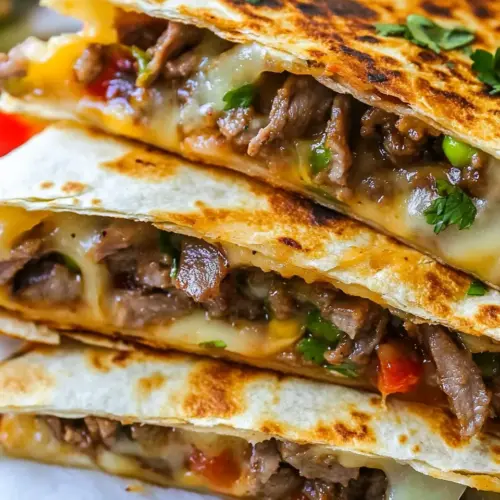
Philly Cheesesteak Quesadilla
Philly Cheesesteak Quesadilla delivers savory, melty beef, sautéed onion, mushrooms, and bell peppers folded into a crisp flour tortilla. This easy weeknight dinner is crispy, cheesy, and full of rich umami, perfect for when you want a quick, satisfying meal. Make it for a casual gathering or a solo comfort dinner for an effortless crowd pleaser.
Equipment
- Skillet
- Spatula
- Cutting Board
- Knife
Ingredients
- 2 flour tortillas, medium/burrito-sized Provide a soft, flexible base that holds fillings together and crisps when toasted, offering a neutral flavor that complements the savory beef and vegetables. Can be warmed in a skillet or on a griddle for a golden exterior while keeping the interior melty. Choose medium/burrito-sized tortillas to ensure even distribution of ingredients for easy folding and slicing.
- 1/2 lb beef, (ribeye or top round), thinly sliced or diced Supply tender, flavorful protein that is the star of the filling when thinly sliced or diced, quickly searing to develop savory brown bits. Contribute rich beefy juices that meld with peppers, onions, and mushrooms to create the classic Philly flavor profile. Opt for ribeye for more marbling or top round for a leaner option depending on desired richness.
- 1/2 medium onion, chopped Add sweet and savory aromatics that soften and caramelize when cooked, enhancing overall depth and balancing the meat's richness. Release moisture that helps meld the fillings together while providing pleasant texture contrast. Chop finely enough to cook through quickly alongside the peppers and mushrooms.
- 1/2 red pepper, diced Introduce mild sweetness and bright color that soften when sautéed, complementing the onion and beef with a slightly crisp-tender bite. Offer a fresh vegetal note that helps cut through richness and adds visual appeal. Dice uniformly for even cooking and consistent texture throughout the quesadilla.
- 1/2 green pepper, diced Bring a slightly bitter, grassy note and vibrant green color that pairs well with the red pepper and onion, softening as it cooks. Provide balance to the savory beef and mushrooms while contributing a contrast in texture. Use even dicing so pieces cook at the same rate as other vegetables.
- 6 oz mushrooms, diced Contribute earthy, umami-rich flavor and a meaty texture that enhances the overall savory profile when diced and sautéed. Absorb seasoning and browning nicely, adding depth and moisture to the filling without overpowering other components. Cook until reduced and slightly caramelized for best flavor concentration.
- 3 slices provolone cheese, (avoid aged cheese), sliced in half Create gooey, melty pockets of mild, creamy dairy that bind fillings together without dominating the sandwich with strong aged flavors. Provide a classic Philly-style cheese presence that stretches and softens when heated, offering a smooth mouthfeel. Slice in half to distribute evenly across the tortillas for balanced coverage.
- 1 tbsp light olive oil, divided Offer a light, fruity cooking fat used to sauté vegetables and sear the beef, helping to prevent sticking and promoting even browning. Divide the tablespoon between steps to control heat and carry flavors without making the filling greasy. Use light olive oil for a neutral profile that complements rather than competes with the fillings.
- 1 garlic clove, minced Deliver a warm, pungent aromatic that brightens the savory filling and integrates with the beef and vegetables when minced. Infuse quick-cooking dishes with depth and a subtle sharpness without overwhelming other flavors. Add toward the end of sautéing to preserve its fragrant qualities.
- 1/4 tsp sea salt, or to taste Provide a baseline seasoning to enhance natural flavors of the beef and vegetables, encouraging caramelization and balancing the dish. Allow adjustment to taste so the overall filling remains savory without being excessively salty. Sprinkle evenly during cooking for consistent seasoning.
- 1/8 tsp ground black pepper, or to taste Offer a mild heat and aromatic warmth that complements the salt and enhances the overall savory profile without overpowering other flavors. Allow for personal preference by adjusting quantity to suit taste while keeping balance with the salt and other seasonings. Grind freshly if possible for brighter pepper flavor.
- 2 tsp mayonnaise, optional Add a touch of creamy tanginess that can be spread inside the warm tortilla for extra moisture and flavor, optional for those who prefer a richer bite. Provide a subtle emollient that helps bind fillings and prevents dryness if desired. Use sparingly to complement rather than mask the classic cheesesteak flavors.
Instructions
- In a large skillet, heat 2 tsp oil, once hot add the chopped meat. Season with salt and pepper and cook until meat is fully cooked. Remove from skillet and cover to keep warm.: The moment the oil shimmers and forms thin ripples, the pan is ready, and you should hear the beef sizzle as it hits the surface. That sizzle is the key audible cue that you are building browning and flavor through the Maillard reaction. As the meat sears you will see edges darken and juices begin to bead, releasing a rich, roasted aroma. Cook until brown and just no longer pink, stirring occasionally to develop color on multiple faces. A frequent mistake is moving the meat too often which prevents good browning; allow contact with the pan so a crust forms. If the pan smokes excessively, lower the heat slightly to avoid burning the exterior while the interior finishes.
- Meanwhile, finely chop the onion, dice the mushrooms, and peppers. Sautee vegetables in the same skillet until tender, adding another teaspoon of oil if needed.: When seasoning, sprinkle the sea salt and ground black pepper evenly so the flavor distributes. As the meat cooks fully, it will change from raw red to browned and firm, and the aromas will deepen into savory notes. Taste a small piece for seasoning if unsure. Overcooking will dry the thin slices very quickly, so aim to remove them from direct heat as soon as they are cooked through. If you see little puddles of fat smoking, you may have overheated the pan; reduce heat and add the vegetables immediately to absorb flavors.
- Add the beef back to the skillet with minced garlic, stir and cook until meat is reheated.: After transferring the cooked beef to a plate, cover it loosely to retain warmth and juices. This rest keeps the meat tender while you prepare the vegetables. The trapped steam helps redistribute juices, so the meat stays juicy when folded into the tortilla. Leaving the meat uncovered too long in a cool place can make it lose heat rapidly and become less pleasant in texture.
- Spread mayo (if using) on the tortillas. Divide the filling between the tortillas, adding them to one side of the tortilla. Top the filling with sliced cheese and close the tortilla.: The size and uniformity of your chops impact cooking time and texture. Finely chopped onion softens quickly and can caramelize slightly, while diced mushrooms and bell peppers release moisture and develop concentrated flavors. When you chop evenly, everything softens at a similar rate, which prevents under or overcooked pieces in the filling. A common slip is mixing very different sized pieces that do not cook uniformly, leaving some crunchy and some mushy.
- Heat a skillet over med heat. For a crisper tortilla, add a little oil to the pan. Place the tortilla in the hot pan and sautee until the cheese is melted and the outside is golden and crisp, flipping once. Slice and serve.: Cooking the vegetables in the meat flavored pan helps them soak up any browned bits left behind, creating unified flavors. You should hear a gentle sizzle and see the vegetables soften and become glossy as moisture evaporates. The onion will turn translucent and develop sweetness, the mushrooms will shrink and intensify, and the bell peppers will soften but still hold shape. If the pan seems dry, add the reserved teaspoon of oil to prevent sticking and to encourage even browning. Avoid crowding the pan which can trap steam and make the vegetables limp.
- Add the beef back to the skillet with minced garlic, stir and cook until meat is reheated: Reintroducing the warm meat into the vegetables allows flavors to mingle as the minced garlic becomes aromatic. The garlic should be added late so it releases fragrance without burning. You will notice a unified steam and a layered aroma when everything comes together; that signals readiness. Stir briefly until the meat is warmed through, which takes only moments. Beware of leaving it too long over high heat because the thin meat can toughen and dry out.
- Spread mayo (if using) on the tortillas: A thin smear of mayonnaise on the tortilla adds fat and helps the surface brown beautifully in the pan. You should feel a slight slickness and see a subtle sheen on the tortilla. This step also creates a small barrier that prevents sogginess from the filling. If you do not use mayonnaise, consider brushing the tortilla lightly with oil for similar browning. Applying too much can make the outside greasy rather than crisp.
- Divide the filling between the tortillas, adding them to one side of the tortilla: Spoon the hot filling onto one half of each tortilla, leaving a border for sealing. The warm filling will slightly steam the tortilla, making it pliable and easier to fold. Aim for an even distribution so each quesadilla cooks uniformly. Overfilling risks spills and uneven crisping, so keep the portion moderate for the best structural result.
- Top the filling with sliced cheese and close the tortilla: Arrange the sliced provolone cheese over the filling so it melts into the pockets between ingredients. The cheese acts as a glue, binding the mixture when warmed. As it softens you should see it melt and become glossy. Close the tortilla and press slightly to encourage contact. If the cheese is not distributed evenly, some bites may be less cohesive.
- Heat a skillet over med heat: Place the pan over medium heat until it is evenly hot, but not smoking, which gives you the ideal environment for crisping without burning. You can test readiness by flicking a drop of water which should dance and evaporate. A properly heated pan ensures the tortilla will toast to an even golden color while the interior reaches melting temperature. Too low and the tortilla will become chewy, too high and it may char before the cheese melts.
- For a crisper tortilla, add a little oil to the pan: A light brush or small splash of oil produces a satisfying crisp and a slight golden brown finish. Heat the oil briefly so it shimmers but does not smoke before adding the filled tortilla. The sizzling sound when the tortilla hits the pan indicates good contact and browning. Using too much oil will produce an oily result rather than a crunch.
- Place the tortilla in the hot pan and sautee until the cheese is melted and the outside is golden and crisp, flipping once: As the quesadilla cooks you will hear a steady crisping and see the edges take on an even golden tone, while the cheese inside transforms into a molten binder. Flip once when the underside is deeply golden, and press gently after flipping to promote even melting. The finished quesadilla should be crisp on both sides with a gooey interior. A mistake is flipping too often which interrupts heating and prevents the cheese from fully melting.
- Slice and serve: When the exterior is crisp and the interior is molten, transfer to a cutting board and slice immediately so the cheese remains stringy and appealing. Letting it sit too long allows the filling to set and lose that fresh, melty quality. Serve while hot for the best texture and mouthfeel.
Notes
- Choose the right cut of beef - For juiciness and quick cooking, thinly slice ribeye if you want extra flavor, or top round if you prefer leaner meat; slice against the grain for tenderness.
- Dry the mushrooms - Pat the mushrooms with paper towel before cooking to reduce steaming and encourage browning, which intensifies their flavor.
- Even dice for even cooking - Keep the onion, mushrooms, and peppers similar in size so they soften at the same rate, preventing raw bits.
- Control the heat - Use medium to medium high heat for browning; too hot and the tortilla can char before the interior melts, too low and you lose crispness.
- Mayo cheat for browning - A thin smear of mayonnaise on the outside of the tortilla helps achieve an even, golden crust if you want a deeper color quickly.
- Keep a warm plate - If making multiple quesadillas, keep finished ones on a warm plate covered lightly so they stay melty while you finish the rest.