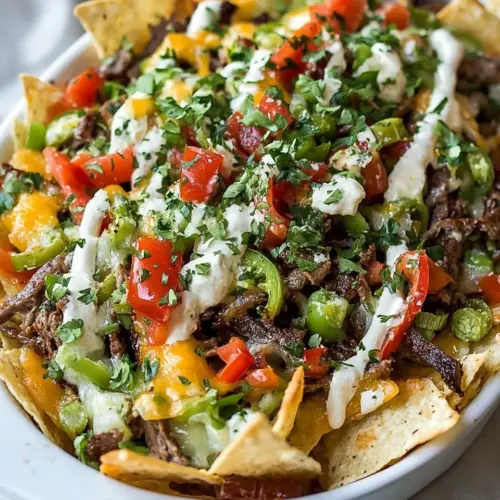
Philly Cheesesteak Nachos
Philly Cheesesteak Nachos layer crispy waffle fries with tender, thinly sliced flank steak and gooey white American cheese for a creamy, crispy, easy party centerpiece. Bright bell peppers add sweet crunch while hot, savory meat brings depth for an easy weeknight dinner or game day snack that disappears fast.
Equipment
- Large Skillet
- Oven
- Oven proof skillet
Ingredients
- 1 lb . flank steak, thinly sliced Season and sear thinly sliced to build rich, savory flavor and tender texture; cooking quickly over high heat preserves juiciness. Help provide the meaty backbone of the nachos and soak up sauces and melted cheese for cohesive bites.
- 2 tablespoons oil Heat and coat the pan to prevent sticking and promote even browning; use at medium-high temperature to achieve a crisp exterior on steak and vegetables. Contribute subtle richness and help carry fat-soluble flavors throughout the dish.
- salt and pepper to taste Season to enhance and balance flavors, bringing out the natural taste of the steak and vegetables; adjust to personal preference during cooking. Act as a simple but essential finishing touch that sharpens overall savory profile.
- 1/2 cup sliced green pepper (about 1 green pepper) Slice thinly and sauté to add bright, slightly sweet vegetal notes and tender-crisp texture; cook until softened but still retaining some bite. Provide color contrast and a classic Philly-style pepper element that pairs with the steak and cheese.
- 1/2 cup sliced yellow pepper (about 1 yellow pepper) Slice thinly and sauté to contribute mild sweetness and vibrant color, creating a layered pepper flavor with the green peppers. Add visual appeal and a complementary sweet note that mellows when cooked under cheese.
- 1 1.25 lb waffle cut fries, cooked according to instructions Bake or fry until golden and crisp to form the sturdy, salty base for the nachos; follow package instructions for optimal texture. Offer a familiar, crunchy potato foundation that holds toppings and contrasts with gooey melted cheese.
- 2 cups shredded white American cheese Shred and melt over hot components to create a creamy, salty, and slightly tangy blanket; use plenty to ensure even coverage and gooey pulls. Serve as the binding element that transforms fries and steak into indulgent, cohesive nachos.
Instructions
- Heat oil in large skillet over medium high heat. Add meat, stir and cook until no longer pink; salt and pepper to taste. Transfer cooked meat to a plate; set aside. Add peppers to skillet and cook until just soft; transfer to plate with meat to cool slightly.: The pan should snap softly when the meat hits it, releasing an initial sizzle that tells you the surface is hot enough. You should smell the oil warm and the pan should shimmer slightly, but not smoke. A high heat is needed to get quick browning on the flank steak , which creates those caramelized bits that taste like umami gold. If the oil smokes, reduce the heat slightly to avoid burnt flavors. One mistake people make is crowding the pan, which causes the meat to steam rather than brown, so cook in batches if needed. Listen for consistent sizzling and watch the edges of the meat turn darker, those are your visual cues for moving meat in the pan.
- Heat oven to 385 degrees.: As the flank steak hits the skillet you will notice the smell deepen and fine ribbons of moisture evaporate. Stirring keeps pieces from clumping and ensures even exposure to the hot surface so every strip gets a bit of crust. You want the interior to lose its raw color while the exterior shows golden brown flecks, that contrast is critical for texture. Seasoning during this window helps the salt cling to the meat and enhances browning. The common pitfall is over stirring, which prevents crust formation, or overcooking, which makes the flank steak dry. Remove to a plate once mostly done so residual heat does not keep cooking it too far.
- Assemble nachos: Layer an oven proof skillet with waffle fries, cheese, meat and peppers. Serve with sliced green onions.: When you move the meat off the heat you will notice the sizzling subside and the aroma relax into a roasted, beefy note. Resting briefly allows juices to redistribute, keeping the flank steak tender when you reheat during assembly. Leaving it in the pan risks overcooking, which is why I always transfer it out. A typical error is skipping this step and returning the meat to high heat later, resulting in tough bites, so give it that short pause.
- Add peppers to skillet and cook until just soft; transfer to plate with meat to cool slightly: As you introduce the sliced green pepper and yellow pepper , they will hiss and exhale a sweet vegetal perfume. Cook them until they yield to a gentle press but still retain bright color, that balance keeps textural contrast with the fries. Tossing them in the same skillet captures any browned fond left by the meat, tying flavors together. Overcooking softens them too much and blurs the color and snap, so watch carefully and remove when tender crisp. Letting them cool slightly prevents the cheese from becoming overly watery when assembled.
- Heat oven to 385 degrees: Preheating the oven establishes a consistent environment for melting the white American cheese evenly and warming the assembled dish through. You will sense a dry, warm air and the oven light will create a gentle glow as it comes up to temperature. Placing the assembled skillet into an unpreheated oven can yield uneven melt and soggy fries, so always wait until it reaches the proper heat. If using a broiler to finish, keep a close eye to prevent too much browning in a short time.
- Assemble nachos: Layer an oven proof skillet with waffle fries, cheese, meat and peppers : The act of layering should be deliberate so each forkful has balance. Start with the crisp waffle cut fries arranged in a single even layer so you have a solid base. Scatter shreds of white American cheese in pockets, then dot with warm strips of flank steak and the sautéed green pepper and yellow pepper . The oven will transform the cheese into a glossy, binding layer that tethers toppings to the fries. Listen for a soft bubbling and look for cheese to become glossy and slightly fluid, that indicates readiness. Avoid piling everything too deep or the center may not heat through, a mistake that leaves cold pockets in the middle.
- Serve with sliced green onions: When you remove the skillet from the oven you will be greeted by a rich, toasty aroma and the surface will be hot and inviting. Sprinkle sliced green onions right before serving to inject a fresh, oniony brightness that cuts through the richness. This finishing touch offers a crisp, cool contrast to the warm, gooey cheese and the salty flank steak . A common misstep is adding delicate garnishes too early, which lets them wilt, so add them at the last moment for maximum impact.
Notes
- Double up on peppers: Increase the ratio of green pepper and yellow pepper for a brighter, slightly sweeter profile and more volume from vegetables.
- Make it spicier: Add sliced fresh chiles or a pinch of cayenne to the meat while cooking for a warming heat that complements the creamy white American cheese.
- Crispier base: Bake or air fry the waffle cut fries until very crisp before assembling to ensure maximum crunch beneath the toppings.
- Cheese distribution: Layer half the white American cheese under and half over the toppings so you get melted glue and a top veil of cheesy goodness.
- Rest meat briefly: Let the cooked flank steak rest off heat before assembly to keep strips juicy when reheated in the oven.
- Presentation twist: Serve portions directly from the skillet for a rustic effect, or transfer to a platter if you prefer a more composed look.