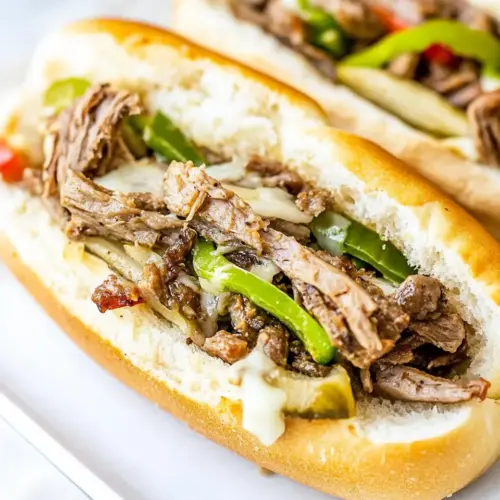
Philly Cheesesteak
Philly Cheesesteak is a creamy, savory sandwich with thinly sliced rib eye, sweet sautéed onion and bell pepper, and melted provolone for an easy weeknight dinner. The toasted hoagie roll and garlic butter add crisp, aromatic depth while the seared steak brings rich, beefy flavor. Make it for a quick family meal that tastes indulgent and is simple to pull together.
Equipment
- Large Baking Sheet
- 12-inch Cast Iron Skillet
Ingredients
- 4 tablespoon butter (unsalted, melted) Melted and used to enrich and brown the rolls and sauté vegetables, adding a rich mouthfeel and helping ingredients caramelize; contributes a subtle creamy flavor that complements the beef and cheese. Heat gently to avoid burning and brush onto the cut sides of the hoagies for a buttery finish. Also useful for kicking off the pan-searing process to develop golden edges on peppers and onions.
- 1 clove garlic (minced) Minced and incorporated to impart a sharp, aromatic background note that enhances the savory profile of the steak and vegetables. Add early to the pan or mix with melted butter to evenly distribute its flavor without overwhelming the sandwich. Provides a familiar garlicky lift that balances richness from the cheese and meat.
- 4 Hoagie rolls (sliced almost through) Sliced almost through to hold all fillings while allowing heat to penetrate and melty cheese to pool inside, creating the classic handheld format of the sandwich. Toast the cut sides briefly after buttering to add texture and prevent sogginess from juices. Serves as the structural base that contains steak, peppers, onions, and cheese.
- 2 tablespoon olive oil (divided) Divided between steps to control cooking: one portion used for browning the steak to develop a flavorful crust, and the other used for sautéing peppers and onions to achieve tender, caramelized vegetables. Provides a neutral fruity flavor and a higher smoke point than butter, helping achieve proper searing temperatures. Use sparingly to prevent greasiness while ensuring even cooking.
- 1 pound rib eye steak (one big 1 or 2 8 oz steaks, cut into thin strips) Cut into thin strips to maximize surface area for quick, even searing and to produce tender, juicy bites that meld with melted cheese. Season before or during cooking to develop savory crusts via the Maillard reaction, which enhances umami and overall depth. Use high heat and minimal handling to avoid overcooking and to preserve tenderness.
- 1/4 teaspoons salt (or to taste) Added sparingly to season the steak and vegetables and to enhance overall flavors without making the sandwich taste salty; adjust to personal preference. Sprinkle during cooking to help the meat release its juices and to build a balanced savory profile. Combine with pepper for a classic steakhouse seasoning.
- 1/2 teaspoon black pepper (or to taste) Ground and used to add mild heat and a fragrant spice that complements the richness of the beef and butter; helps lift and define other flavors. Apply during cooking to meld into the meat and vegetables for consistent seasoning throughout. Adjust quantity to taste to avoid overpowering the sandwich.
- 1 medium bell pepper (sliced) Sliced and sautéed to provide sweetness, bright color, and a tender-crisp texture that contrasts with the meaty filling and melted cheese. Cook until slightly caramelized to bring out natural sugars that balance savory components. Select firm peppers and slice uniformly for even cooking.
- 1 large onion (sliced) Sliced and caramelized to contribute sweet, savory depth and soft texture that pairs perfectly with seared steak and melted cheese. Cook low and slow or until browned to maximize sweetness and reduce sharpness, creating a rich layer of flavor. Also helps absorb some of the steak juices for added cohesion inside the roll.
- 8 slices provolone cheese Placed over the cooked steak and vegetables to melt into a creamy, stringy layer that binds the filling and adds milky, slightly salty flavor. Lay slices on top of the hot filling and cover briefly to encourage even melting. Choose provolone for its mild profile that won’t overpower the beef or peppers.
Instructions
- Prep the rolls: Combine the butter with the garlic and then spread on both cut sides of the Hoagie rolls. Place them on a baking sheet with cut side up and transfer them to the oven under the broiler setting until the buns are toasted. Flip them over and toast on the other side, about 2 min per side.: Combine the butter with the garlic and then spread on both cut sides of the Hoagie rolls. Place them on a baking sheet with cut side up and transfer them to the oven under the broiler setting until the buns are toasted. Flip them over and toast on the other side, about 2 min per side. : As the broiler warms the buttered surfaces, you should smell the toasty garlic aroma and see the edges turn golden brown, which gives the sandwich a warm, savory foundation. This step matters because a well toasted roll resists sogginess from the filling while adding crisp contrast to the tender meat. Listen for a faint popping of butter as it hits the hot tray, and beware of overbrowning a few seconds too long can quickly go from golden to burnt. If your broiler runs hot, move the tray slightly farther from the element to control color.
- Cook the veggies: Heat 1 tbsp of the olive oil in a large skillet over medium heat. Add the sliced onion and peppers, season with salt and pepper and sauté for 5-7 minutes until the onions are translucent and start to brown. Transfer to a plate and set aside.: Heat 1 tbsp of the olive oil in a large skillet over medium heat. Add the sliced onion and peppers, season with salt and pepper and sauté for 5-7 minutes until the onions are translucent and start to brown. Transfer to a plate and set aside. : Youll notice a gentle sizzling as the onion and bell pepper hit the pan and a sweet fragrance as the sugars begin to caramelize, signaling deepening flavor. Achieving light browning is essential because it creates the sweet savory base that complements the beef. A common mistake is crowding the pan, which causes steaming rather than browning, so give the vegetables space to color and stir occasionally for even cooking.
- Cook steak: Add the remaining tbsp of olive oil to the skillet and the steak. Season with salt and pepper and cook for 2 to 4 minutes until the steak is cooked through. Add the onion/pepper mixture back to the skillet and toss. Turn the heat down to low.: Add the remaining tbsp of olive oil to the skillet and the steak. Season with salt and pepper and cook for 2 to 4 minutes until the steak is cooked through. Add the onion/pepper mixture back to the skillet and toss. Turn the heat down to low. : When the rib eye steak hits the hot skillet you should hear a pronounced sizzle and see seared edges develop quickly, creating rich, brown crust and intense beefy aroma. This crust locks in juices and builds savory depth that defines the sandwich. If you keep the heat too low, the steak will steam and lose that desirable caramelized flavor, while too high heat risks burning and toughness. After adding the vegetables back in, the mingled aromas tell you the flavors are marrying, so reduce the heat to avoid overcooking.
- Add cheese: Divide the mixture into 4 using a spatula in the skillet. Place 2 slices of cheese over each quarter, cover the skillet with a lid and leave it for about a minute until the cheese melts.: Divide the mixture into 4 using a spatula in the skillet. Place 2 slices of cheese over each quarter, cover the skillet with a lid and leave it for about a minute until the cheese melts. : As the lid traps heat, the provolone cheese will soften into a glossy, stretchy blanket, and youll see it gently ooze around the meat and vegetables, visually cueing the right moment to assemble. Melting the cheese this way ensures even coverage and prevents the sandwich from being dry. A frequent misstep is lifting the lid too soon, which prevents uniform melting; be patient for that cohesive, molten texture.
- Finish and serve: Using a spatula, spoon cheesesteak mixture into the toasted Hoagie rolls. Serve warm.: Using a spatula, spoon cheesesteak mixture into the toasted Hoagie rolls. Serve warm. : When you transfer the glossy filling into the toasted rolls, notice how the warm bread absorbs and amplifies the mixtures juices while keeping the exterior crisp. Serving immediately preserves the contrast between textured bread and tender filling. If you wait too long, the rolls can soften and lose the textural balance, so plan to serve right away for the ideal experience.
Notes
- Watch the broiler: Keep the rolls a few inches from the element and watch closely because the buttered surface can go from golden to burnt within seconds.
- Slice steak thin: For tender results, partially freeze the steak for 15 to 20 minutes before slicing to make thin, uniform strips that cook quickly and evenly.
- Divide oil usage: Using one tablespoon of oil for vegetables and one for the steak helps each component brown properly without becoming greasy.
- Layer cheese last: Place the provolone cheese over warmed filling and cover briefly so it melts evenly and creates that creamy binding texture.
- Keep components separate for storage: Store the filling and the hoagie rolls separately in the fridge to prevent sogginess and reheat the filling on the stove for best texture.