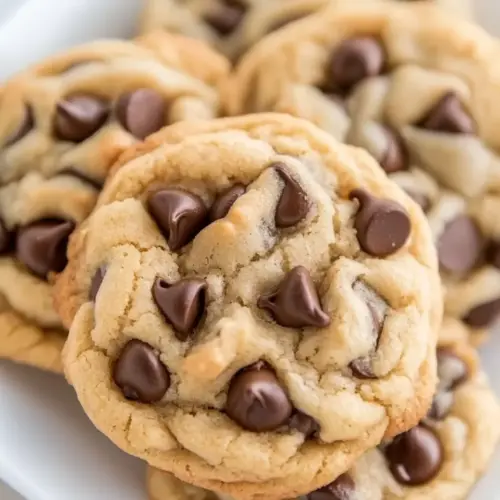
Peter Pan Neverland Chocolate Chip Cookies
Peter Pan Neverland Chocolate Chip Cookies are soft centered and slightly crisp edged, marrying creamy peanut butter with melty semi sweet chocolate chips for an irresistible treat. This easy cookie recipe uses pantry staples and a chill step to deliver consistent results, ideal for casual gatherings or quick weeknight baking. Try them once and you will see why they are perfect for sharing and keeping on hand.
Equipment
- Stand mixer
- Paddle attachment
- electric hand mixer
- Cookie Scoop
- Baking Sheet
- Silpat or cooking spray
Ingredients
- 1 large egg Beaten to bind the dough, providing structure and moisture while contributing to a tender crumb and helping leaven as it interacts with baking soda.
- 1/2 cup unsalted butter Softened to cream with sugars, adding rich dairy fat that enhances flavor, creates a smooth texture, and helps cookies spread and brown evenly.
- 1/2 cup light brown sugar, packed Packed and creamed to add deep caramel sweetness and moisture, contributing chewiness and a complex molasses note that complements peanut butter and chocolate.
- 1/4 cup granulated sugar Granulated and creamed to provide crispness and lift, helping to aerate the dough for lighter texture while balancing sweetness.
- heaping 3/4 cup Peter Pan Simply Ground Original Peanut Butter® Spoon-measured generously as the primary nut butter, supplying bold peanut flavor, fat for tenderness, and a dense, chewy texture that defines these cookies.
- 2 teaspoons vanilla extract Extracted and added to enhance aromatic complexity, rounding flavors and elevating the sweetness while harmonizing peanut and chocolate notes.
- 1 1/4 cups all-purpose flour Sifted or stirred in as the dry structure, supplying gluten and bulk to form the cookie matrix and balance moisture for proper texture.
- 1/2 teaspoon baking soda Measured and combined to react with the egg and create lift, subtly contributing to spread and tender crumb by neutralizing acidity.
- 1/2 teaspoon salt, or to taste Seasoned to taste to balance sweetness and enhance overall flavor, tightening the dough's taste profile and highlighting peanut and chocolate elements.
- 1 1/2 cups semi-sweet chocolate chips Folded into dough to deliver rich pockets of melted chocolate, providing sweetness, texture contrast, and bursts of semi-sweet flavor in every bite.
Instructions
- To the bowl of a stand mixer fitted with the paddle attachment (or large bowl and electric hand mixer), add the egg, butter, sugars, and cream on medium-high speed until light and fluffy, about 3 to 4 minutes.: The moment you start creaming, listen for a soft rhythmic hum and watch the mixture lighten to a pale, billowy mass, signifying air has been incorporated. You should smell a sweet, toffee like note as the butter and sugars aerate, and the sound will change as the mixture smooths out. This aeration traps tiny bubbles that later expand in the oven, delivering lift and tenderness. If you see streaks of unmixed butter, stop and scrape the bowl, because leaving pockets of uncreamed butter will cause uneven texture and unpredictable spreading.
- Stop, scrape down the sides of the bowl, and add the peanut butter, vanilla, and mix on medium-high speed until incorporated, about 1 minute.: When you fold in the peanut butter and vanilla , breathe in the warm, nutty perfume that should bloom instantly. The mixture will go from fluffy to glossy and slightly thicker, which is the right visual cue. This addition enriches the batter with fat and flavor, ensuring each bite has a pronounced peanut character. Avoid over mixing at this stage, because excessive agitation breaks down the aeration you created, resulting in a denser cookie.
- Stop, scrape down the sides of the bowl, and add the flour, baking soda, salt, and mix on low speed until just incorporated, about 1 minute; don’t overmix.: As you add the dry ingredients, the sound will quiet and the dough will begin to pull away from the bowl, forming a cohesive mass. The flour absorbs moisture, so watch that the dough is neither crumbly nor overly wet; it should hold together but feel slightly soft. Gentle mixing preserves tender gluten development, which is why we keep the speed low. The main mistake is vigorous mixing, which creates a tougher cookie due to excess gluten formation.
- Add the chocolate chips and mix on low speed until just incorporated.: When the chocolate chips go in, you'll see dark flecks studding the dough, and the aroma will become chocolaty and inviting. Mixing briefly prevents breaking the chips and keeps them nicely distributed. If you overmix, chips can break and create streaks rather than pockets of melted chocolate, changing the intended texture.
- Using a two-tablespoon cookie scoop form approximately 18 equal-sized mounds of dough. Tip – strategically place a few chocolate chips on top of each mound of dough by taking chips from the underside and adding them on top.: Forming uniform mounds ensures even baking, and the tactile process of scooping gives you a sense of dough consistency. Pressing a couple of chips on top creates glossy, photogenic domes and helps the cookie look finished after baking. If your scoops vary widely, you will end up with unevenly baked cookies, so take the extra minute to size them consistently.
- Place mounds on a large plate or tray, cover with plastic wrap, and refrigerate for at least 3 hours, up to 5 days. Do not bake with unchilled dough because cookies will bake thinner, flatter, and be more prone to spreading.: Chilling is transformative; the dough firms, flavors meld, and the fat solidifies so the cookies spread less and develop a better texture. When you smell the dough after chilling, it will be deeper and more integrated. A common misstep is skipping chill time to save time, but that often yields flat, greasy cookies that lack the chewy center you want.
- Preheat oven to 350 F, line a baking sheet with a Silpat or spray with cooking spray. Place dough mounds on baking sheet, spaced at least 2 inches apart (I bake 8 cookies per sheet).: Preheating is critical so the oven environment is stable; the initial heat causes the dough exterior to set while the interior remains soft. Lining with a Silpat or using spray prevents sticking and encourages even browning. If you cram cookies too close together, they will merge into each other, losing their rounded shape, so maintain spacing for best results.
- Bake for about 11 minutes, or until edges have set and tops are just set, even if slightly undercooked, pale, and glossy in the center; don’t overbake. Cookies firm up as they cool.: During baking you will notice the edges deepen in color and the centers remain pale and glossy which is the cue to remove them. The olfactory change is subtle but present, a toasted peanut and caramel note rising from the oven. Because heat carries on after removal, underbaking slightly ensures a soft center once cooled. Overbaking yields a uniformly dry cookie, so resist the urge to wait for full browning.
- Allow cookies to cool on baking sheet for about 10 minutes before serving. I let them cool on the baking sheet and don’t use a rack.: Cooling on the sheet lets the cookies finish setting gently and avoids breakage from moving them too soon. You will feel the surface firm while the center retains a tender give. A mistake here is transferring while too warm, which can cause them to collapse or tear, so give them those ten minutes to stabilize.
Notes
- Storage guidance Cookies will keep airtight at room temperature for up to 1 week or in the freezer for up to 6 months; to revive frozen cookies, let them come to room temperature or warm briefly in a low oven.
- Dough make ahead Unbaked cookie dough can be stored in an airtight container in the refrigerator for up to 5 days or frozen for up to 4 months so you can bake fresh batches on demand.
- Chilling window Refrigerate dough for at least 3 hours, but you can safely chill it up to 5 days, giving you flexibility to bake when convenient without sacrificing texture.
- Freezing dough portions Scoop dough onto a tray, freeze until solid, then transfer to a sealed container so you can bake single batches from frozen with minimal thawing time.
- Tray strategy I bake eight cookies per sheet for even heat distribution; overcrowding slows air circulation and leads to inconsistent browning.