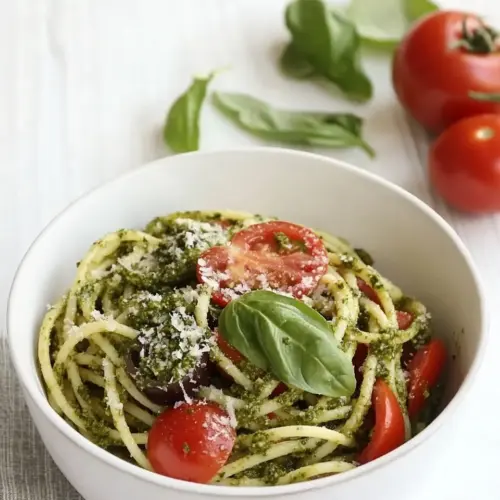
Pesto Spaghetti with Heirloom Tomatoes
Pesto Spaghetti with Heirloom Tomatoes is a creamy, herb forward bowl that bursts with sweet tomato pops and fresh basil aroma. This easy weeknight dinner uses simple ingredients for a bright, light meal that feels both comforting and elegant. Quick to make and full of texture, it is perfect when basil and tomatoes are ripe and plentiful.
Equipment
- Food Processor
- Large Bowl
- Skillet
- Spiralizer
Ingredients
- 3 cups fresh basil leaves Provide bright, aromatic flavor and form the herbaceous base for a classic pesto; gently packed basil leaves release essential oils when processed and help balance richness from oils and cheese. Use fresh, tender leaves for the best fragrance and vibrant green color, and avoid bruising them excessively to keep the sauce vivid. Basil also adds a subtle sweetness that complements tomato acidity and rounds out the pasta dish.
- 3 tablespoons pine nuts Add a rich, buttery texture and subtle pine-like nuttiness that deepens the pesto’s flavor profile when lightly toasted. Grind or pulse pine nuts with the basil and garlic to create a creamy emulsion that helps bind the oil and cheese together. Pine nuts also contribute body and a slight crunch when left coarser in the sauce.
- 1/4 cup olive oil Create a smooth, glossy emulsion and carry fat-soluble flavors across the pasta; olive oil binds the basil, nuts, and cheese into a cohesive pesto. Use a good-quality extra-virgin olive oil for fruitiness and a pleasant finish, but avoid overpowering bitterness by measuring carefully. Olive oil also helps coat the zucchini spirals and tomatoes, enhancing mouthfeel.
- 1/2 teaspoon sea salt Enhance and balance flavors by elevating the herbaceous basil and savory cheese while taming any bitterness from olive oil. Dissolve sea salt into the pesto gradually and taste as you go to avoid oversalting, particularly because Parmesan contributes additional saltiness. Salt also helps draw out moisture from tomatoes and zucchini, concentrating their natural sweetness when combined.
- 1 garlic clove, minced Introduce a sharp, pungent anchor that brightens the pesto and contrasts the rich nuts and cheese; minced garlic should be finely chopped or crushed to release its full aroma. Add garlic incrementally and pulse with basil to prevent raw harshness, tasting to reach a pleasant bite that complements the tomatoes. Garlic also integrates with olive oil to form a more rounded, savory backbone for the dish.
- 3 tablespoons grated parmesan cheese Provide salty, umami richness and a creamy texture that thickens the pesto while adding nutty, savory depth. Grate Parmesan finely to ensure it blends smoothly into the sauce, melting slightly when mixed with oil and warm pasta to create a silky coating. Parmesan’s savory notes help balance the sweetness of basil and tomatoes and enhance overall flavor complexity.
- 2 medium zucchini, spiralized with Blade C Offer a tender, slightly crisp vegetable element and a low-carb pasta alternative texture when spiralized; zucchini spirals add freshness and bulk to the dish. Use Blade C to produce consistent, long spirals that hold the pesto well and warm briefly to retain structure without becoming mushy. Zucchini also soaks up flavors from the pesto and provides a light, hydrating contrast to tomatoes.
- 3/4 cup mixed heirloom grape tomatoes Supply concentrated bursts of sweetness, acidity, and visual color contrast that brighten every bite and cut through the richness of pesto. Mix heirloom grape tomatoes halved or whole into the finished pasta to release juice and enhance flavor pockets; their varied sweetness complements basil and Parmesan. Tomatoes also add appealing texture and freshness, balancing the dish’s richness.
Instructions
- Combine the basil, pine nuts, olive oil, salt, pepper, garlic, and parmesan in a food processor and pulse until creamy.: You will notice the basil releasing its aroma immediately as the blades chop, sending a fragrant, herbaceous scent through the kitchen. The sound should be a steady whir, and you will see the mixture transform from leaves and nuts into a glossy, verdant paste. I like to pulse rather than run the processor continuously so the texture stays slightly rustic, not overworked into a greasy paste. While blending, drizzle the olive oil slowly so it emulsifies and gives a silky body to the sauce. If the pesto seems too thick, add a touch more olive oil spoon by spoon until it moves easily. Watch for overheating in the processor, which can cause the basil to darken and lose vibrancy, and avoid over pulsing, which can make the nuts release too much oil and change the flavor.
- Place the zucchini noodles and tomatoes in a large bowl, pour the pesto on top, and toss to combine.: As you toss, you will hear a soft rustle from the spiralized zucchini and see the bright green pesto cling to the strands while the little heirloom grape tomatoes glisten with juice. The visual cue you want is even coating, with drops of tomato juice dotting the noodles, signaling freshness. Toss gently so you do not crush the tomato skins, and use tongs to lift and fold for even distribution. This step keeps the textures intact, ensuring the zucchini stays slightly crisp rather than soggy. A common mistake here is over mixing, which bruises the tomato and makes the dish watery, so be gentle and patient.
- Note: If you prefer a hot dish, heat the zucchini noodles in a large skillet over medium heat for 2 to 3 minutes, when they are al dente, add the tomatoes and pesto, and toss for another 1 to 2 minutes, until heated through.: If you prefer a hot dish, heat the zucchini noodles in a large skillet over medium heat for 2 to 3 minutes, when they are al dente, add the tomatoes and pesto, and toss for another 1 to 2 minutes, until heated through : When warming in a skillet, you will hear a light sizzle as the moisture from the zucchini hits the pan, and steam will rise as the strands soften just enough. Aim for an al dente bite, where the zucchini still resists slightly, and watch the color deepen a touch without collapsing. Add the tomato after the zucchini is nearly ready so they maintain their juicy pop, then fold in the pesto off heat or on very low heat so the sauce warms without losing its fresh aroma. This technique preserves the bright flavors while offering a comforting warmth. Avoid high heat, which will release too much water and turn the skillet into a simmer, leaving the final dish soft and diluted.
Notes
- Pick tender basil leaves for the brightest flavor, avoid woody stems, and wash and thoroughly dry the leaves to prevent a watery pesto.
- Toast pine nuts sparingly to boost their flavor, stirring constantly for one to two minutes until they are golden and aromatic, then cool immediately.
- Add olive oil slowly while pulsing the food processor so the pesto emulsifies smoothly and does not separate into oil and solids.
- Mince garlic finely or press it to integrate evenly, tasting as you go to avoid an overpowering raw garlic note in the finished sauce.
- Grate parmesan fresh for a creamier texture and stronger umami, and fold it in last to preserve its delicate melt into the pesto.
- Handle tomatoes gently when tossing to keep them intact, which maintains the dish's visual appeal and texture contrast with the zucchini.
- Warm gently if desired by tossing briefly in a skillet on medium low heat to prevent wilting or releasing too much moisture from the zucchini.