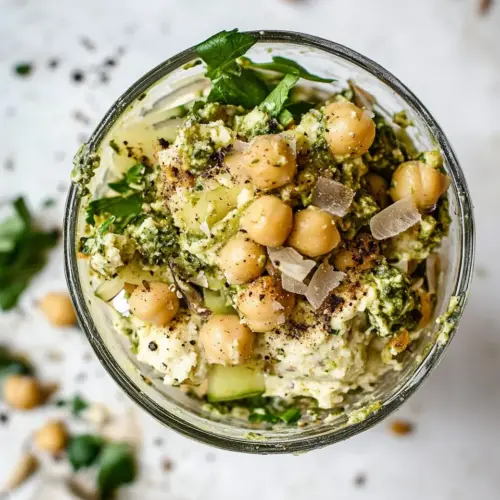
Pesto Smashed Chickpea Salad
Pesto Smashed Chickpea Salad is a creamy, herb forward, and easy salad that combines smashed chickpeas with pesto, crunchy red pepper, and a touch of plain greek yogurt. It makes a quick lunch, an easy weeknight dinner topper, or a make ahead spread that stays vibrant for days, perfect when you want bold flavor without fuss.
Equipment
- Large Bowl
- Potato Masher
- Spoon
Ingredients
- 1 15-ounce can chickpeas, drained and rinsed Provide hearty texture and protein while acting as the main base when lightly smashed; adds creaminess and a nutty flavor that binds with pesto and mayo.
- 1 shallot, diced Add sharp aromatic bite and mild sweetness when diced finely; brightens the salad and balances richer components while softening when mixed.
- 1/2 cup sweet corn Contribute juicy sweetness and a pop of color; bring a summer flavor contrast and pleasant texture against the creamy chickpeas.
- 1/3 cup diced red pepper Offer crunchy, sweet pepper notes and vibrant color; enhance mouthfeel and provide a fresh vegetal contrast to mashed elements.
- 1/4 cup pesto Introduce concentrated basil, garlic, and oily richness to coat chickpeas; unify flavors and supply herbaceous depth and savory umami.
- 2 tablespoons chopped fresh basil Provide extra fresh herbal lift and vibrant green aroma; layered with pesto, they amplify basil character and add flecks of freshness.
- 2 tablespoons plain greek yogurt Deliver tangy creaminess and a lighter, protein-rich binder; mellow the pesto’s oiliness and add a refreshing yogurt tang.
- 2 to 3 tablespoons mayo Contribute additional richness and a smooth, velvety binder; adjust creaminess level and help hold the smashed salad together.
- 1 teaspoon fresh lemon juice, plus extra for spritzing Add bright acidity to brighten and balance fats; a small amount lifts flavors while extra spritz prevents oxidation and keeps freshness.
- kosher salt and pepper Season to taste with mineral salt and ground pepper to enhance flavors; balance sweetness, acidity, and richness for finished seasoning.
- toast for serving Serve as a base toasting vehicle that adds crunch and warm contrast; provide a vehicle for scooping and enjoying the salad.
- sprouts or greens, for serving Offer a fresh, crisp finishing element that adds color and lightness; serve atop toast or alongside to add herbaceous, peppery notes.
Instructions
- Place the chickpeas in a large bowl. Use a potato masher to smash about half of the chickpeas.: When you dump the drained chickpeas into a spacious bowl you should hear a low clatter as they tumble together, and the beans will look glossy from their rinse. I like a bowl with plenty of room because it gives you space to mash and fold without spilling. Use a potato masher or the back of a fork to press down on the beans; the goal is to break about half of them so there is a pleasing contrast between creamy base and intact beans. A tactile cue to watch for is when the mixture starts to feel slightly tacky and cohesive, not wet or soupy. If you overmash, the salad becomes pasty and loses bite, so stop when you still see whole beans among the smashed bits. Also avoid using a blender which will pulverize the beans too finely and remove their texture.
- Add in the shallot, corn, red pepper, pesto, basil, yogurt, lemon juice and mayo. Add in a big pinch of salt and pepper. Mix everything together until combined. Taste and season with more salt and pepper if needed.: As you compress the chickpeas , you will notice a faint nutty scent release and the bowl will thrum as beans shift under pressure. The mashed portion should be coarse, not puréed, giving the salad body that clings to dressing components like pesto and yogurt . The reason for smashing is structural, it creates creaminess without needing extra fat, and it helps the flavors marry into the beans. A common error here is applying too little pressure, leaving most beans whole, which makes the salad loose and harder to bind; conversely, mashing too much makes it gluey. Aim for a mix of textures for ideal mouthfeel.
- Eat the salad as you wish! On toast, on salad, in lettuce wraps, on crackers, etc. This stays great in the fridge for 3 to 4 days.: When you add the diced shallot , sweet corn , and red pepper , vibrant colors will contrast with the pale beans, and the first scent to arrive should be the herbal note of the pesto . Fold these into the bowl gently so the smashed chickpeas stay partly intact while the dressing coats each piece. The yogurt and mayo provide silk and slight tang, while the lemon juice brightens the whole mix. Stir until components are evenly distributed but stop before everything becomes uniform paste. If you mix too aggressively you can break the remaining whole beans, diminishing texture. Also be mindful of the pesto's salt, sample before adding additional salt.
- Add in a big pinch of salt and pepper: After the ingredients are joined, bring in kosher salt and pepper slowly and taste as you go. The salt amplifies the savory notes in the pesto and the natural sweetness of the corn , and pepper adds a gentle bite. The right seasoning makes the salad sing; too little leaves it flat, too much can mute the basil and lemon. A helpful technique I use is to add a modest amount, mix, then lift a small spoonful to taste at eye level so you can evaluate balance. If the salad tastes dull, a few drops of extra lemon juice usually brightens it more effectively than more salt.
- Mix everything together until combined: As you fold the salad, listen for a soft scraping sound as the spoon moves through the mixture, and watch for a uniform sheen where the dressing clings to chickpeas and vegetables. The visual cue for readiness is when pieces are coated without being swimming in liquid, and the aroma will be a balanced chorus of herb, lemon, and bean. This stage matters because it ensures every bite has both flavor and texture. A common slip is overmixing, which can pulverize the whole beans, so use gentle strokes and stop when distribution looks even. If the mixture seems dry, a teaspoon of reserved olive oil or a touch more yogurt can smooth it without diluting flavor.
- Taste and season with more salt and pepper if needed: Final seasoning is about nuance. Take a spoonful and note whether the salad tastes bright, creamy, and herb forward. If it needs lift, add a small squeeze of lemon juice ; if it is flat, a pinch of kosher salt will deepen the flavors. This is the moment to correct any imbalance before plating. Avoid the temptation to chase flavor with too much mayo which can make the salad heavy; instead adjust acid and salt incrementally. If you find it overly salty, a dollop of extra plain greek yogurt can calm it down while preserving texture.
- Eat the salad as you wish: The finished salad should offer a chorus of textures from creamy to crisp, and the scent should be herbaceous with a lemon lift. I like to spoon it onto warm toast where the crunch meets creamy beans, but it also shines on greens or in wraps. When serving, a quick spritz of extra lemon juice brightens flavors right before a bite. For storage, place it in an airtight container in the fridge and use within three to four days; beyond that the raw vegetables can soften and the textures will change. A common mistake is leaving it at room temperature for too long, which can dull the flavors and affect safety.
Notes
- Make it creamier: Increase the amount of plain greek yogurt by a tablespoon and add a touch more mayo for a silkier texture that clings to the chickpeas.
- Add a citrus twist: Stir in a bit of extra fresh lemon juice and a pinch of lemon zest to heighten brightness, making each bite more vibrant.
- Boost the herb flavor: Fold in additional chopped fresh basil just before serving to maximize aroma and fresh green notes.
- Adjust the crunch: If you want more snap, finely dice the red pepper larger or fold in chopped celery for extra texture contrast.
- Serve warm or cold: Let the salad sit at room temperature for 10 minutes before serving to soften flavors, or keep chilled for a crisper experience; both are delicious.