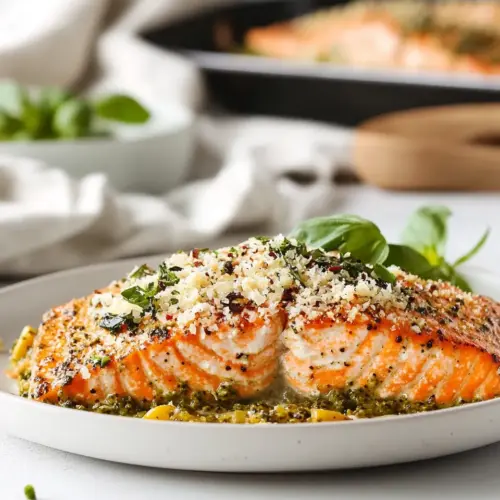
Pesto Salmon
Pesto Salmon delivers a crisp, herbed topping over tender, flaky fish, combining creamy herbal notes and crunchy texture for an easy weeknight dinner. Bright basil pesto and toasty panko breadcrumbs transform salmon into a restaurant worthy meal that comes together quickly. Make it for a simple family dinner or a small gathering when you want big flavor without fuss.
Equipment
- Rimmed Baking Sheet
- Air Fryer
Ingredients
- 1 1/2 pounds wild caught salmon fillets with skin Provide rich, omega-3 packed protein and a meaty texture that crisps at the skin when seared; offers a savory base for the pesto topping and holds together well during cooking. Handle gently and cook to medium doneness to preserve moisture and flaky texture while ensuring food safety.
- 1/4 cup basil pesto store-bought or homemade Add bright, herbaceous flavor and a creamy, oily binder that infuses the fish with basil, garlic, and cheese notes; can be spooned or spread onto the fillets to create a flavorful crust. Choose a high-quality store-bought jar or a fresh homemade batch for the clearest basil flavor and best aroma.
- 1/4 cup panko breadcrumbs could be GF Provide a light, crunchy topping that gives pleasant texture contrast to the tender salmon and pesto; can be substituted with gluten-free crumbs while maintaining crispness. Mix with oil or press lightly into the pesto layer to help form a golden crust during baking or broiling.
- 1 tablespoon olive oil Coat the breadcrumbs for browning, help prevent sticking, and add subtle fruity flavor; use to moisten the crumbs or to oil the pan for even crisping. Select extra-virgin olive oil for better flavor and drizzle sparingly to control richness and caloric content.
- Salt and pepper Season to taste and enhance the natural flavors of the fish and pesto while balancing richness; use sparingly at first and adjust after cooking. Grind fresh pepper for aromatic heat and salt to bring out umami while avoiding over-salting delicate salmon.
Instructions
- Place a large salmon fillet, or smaller individually cut salmon fillets, on a rimmed baking sheet. Sprinkle generously with salt and pepper.: You will feel the cool, slightly slick surface of the salmon as you arrange it, and the sound of the fillets settling on the sheet should be gentle. Laying the fillets skin side down helps protect the flesh and keeps moisture in. Make sure the fillets are spaced so air can circulate, otherwise they steam instead of roast, which prevents a crisp top. A common mistake is crowding the pan, which lengthens cook time and leads to uneven doneness.
- Brush the tops of the salmon fillets with pesto. Then sprinkle the tops with Panko breadcrumbs. Drizzle olive oil over the panko.: The grains of salt should be visible, and the pepper gives a light speckled look. Salt draws out moisture briefly, then seasons the flesh so the flavor penetrates. I usually use a moderate hand with the salt, especially if using a salty pesto. Avoid dumping too much seasoning at once, because you can always add more after cooking but you cannot remove excess.
- In the oven: Preheat the oven to 400°F. Once hot, place the salmon in the oven and bake for 10 to 12 minutes, until the top is golden.: As you spread the basil pesto , you will notice its glossy, herb studded texture and bright green color. Brushing helps the pesto cling to the fish and form a flavorful barrier during cooking. Go for an even thin layer so it heats through without burning. A mistake to watch for is applying a heavy paste that sits like a mound, which can insulate the fish and prevent even cooking.
- In the air fryer: Preheat the air fryer to 400°F. Once hot, carefully lower the salmon into the air fryer basket. Air fry for 5 to 7 minutes until the top is crispy.: Lightly scatter the panko breadcrumbs so they create a loose, airy coat over the pesto. The crumbs will sit on top and, once oiled and cooked, turn to a golden crust. Pressing the crumbs too firmly will compress them and make the texture dense instead of crisp, so keep the application gentle.
- Drizzle olive oil over the panko: The thin stream of olive oil should just moisten the crumbs enough to promote browning. The oil sizzles when it meets heat, and that first scent of toasting crumbs is a cue the crust will be successful. Use only a small amount, since excessive oil will pool and make the topping greasy rather than crisp.
- Preheat the oven to 400°F: The oven should be hot and steady at four hundred degrees before the fish goes in, which ensures quick set of the crust and gentle cooking of the interior. You will feel the blast of heat when you open the oven, and the preheated environment keeps cook times consistent. Skipping this preheat extends the time the fish spends in warming air, which can dry it out.
- Once hot, place the salmon in the oven and bake for 10 to 12 minutes, until the top is golden: The air in the oven will smell faintly of toasted crumbs and warm herbs as the pesto warms and the panko browns. You want to see a light golden color on top and the edges of the fish starting to flake. Use a fork to check for gentle flake at the thickest part, and watch closely because a minute or two can change the texture from moist to dry. Overbaking is the most common misstep here, so remove the fish as soon as it flakes easily.
- Preheat the air fryer to 400°F: When using the air fryer , preheat so the basket is hot and can instantly crisp the topping. The device will hiss and circulate hot air, giving you faster browning than a cold start. Not preheating can result in a soggy crust and longer cook times, so take the minute to warm it up.
- Once hot, carefully lower the salmon into the air fryer basket: Handling the fillets gently will preserve the coating and keep everything intact. You may hear a soft sizzle when the fish meets the hot surface, and that immediate heat helps set the pesto and crisp the crumbs. Avoid stacking pieces or crowding the basket, which blocks airflow and reduces crispness.
- Air fry for 5 to 7 minutes until the top is crispy: In the air fryer, the circulation creates a rapid toasting effect, and you will notice a pronounced crunch forming on the surface within minutes. Check the fish at the lower end of the time range for a tender interior and remove promptly when the flesh flakes. Leaving it in even a few extra minutes can quickly overcook thin portions, so trust the flake test rather than the clock alone.
Notes
- Swap the pesto Try red pepper or tomato based pesto for a sweeter, roasted note, which pairs beautifully with the oily richness of salmon.
- Make it gluten free Use your favorite GF breadcrumbs in place of panko to keep things crispy while accommodating dietary needs.
- Toast the panko Lightly toasting the panko breadcrumbs in a skillet before topping intensifies the nuttiness and gives extra crunch.
- Adjust pesto quantity Use a thinner layer of basil pesto if you prefer a subtler herb presence, or a thicker coat for a more pronounced basil flavor.
- Try frozen salmon You can prepare the fillets from frozen, adding a few extra minutes to baking or air frying times, and still end up with a satisfying result.
- Garnish ideas Finish with a squeeze of fresh citrus or a scattering of microgreens for brightness and contrast against the rich salmon.