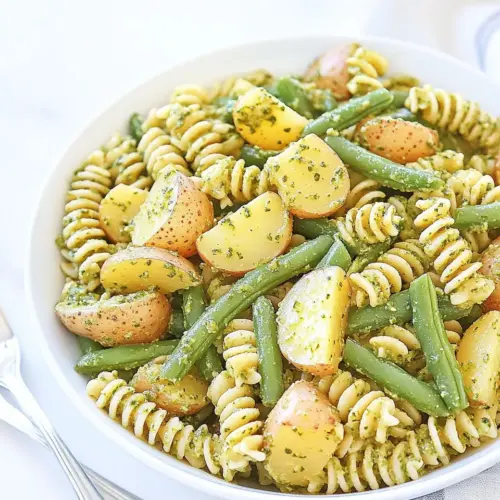
Pesto Pasta Salad with Potatoes and Green Beans
Pesto Pasta Salad with Potatoes and Green Beans combines creamy pesto, tender potatoes, and crisp green beans for a vibrant, easy weeknight dinner or picnic dish. The sauce is silky from reserved pasta water and a touch of butter, while Parmesan cheese adds a savory finish, making it a crowd pleasing, make ahead recipe you will want to serve again and again.
Equipment
- Large Pot
- Slotted Spoon
- Serving bowl
Ingredients
- 1 cup Pesto Adds bright, herbaceous flavor and binds the salad components together; provides a rich, oily coating that helps distribute taste evenly. Enhances aroma and delivers basil, garlic, and nutty notes that elevate the pasta and vegetables. Can be adjusted for intensity to balance salt and acidity in the final dish.
- Kosher salt Seasonss generously to enhance and balance flavors throughout the salad; helps bring out natural sweetness in the potatoes and beans. Preserves overall taste harmony and controls final savory intensity. Use gradually to avoid over-salting.
- 10 oz potatoes baby red, cut into slices about 1/4-inch thick, about 2 cups Supplies tender, creamy texture and mild sweetness when boiled or roasted; adds body and makes the salad heartier and more filling. Provides a starchy element that contrasts with the crisp green beans and al dente pasta. Absorbs dressing for integrated flavor throughout the dish.
- 10 oz green beans fresh, ends trimmed and cut in half Offers crisp, vibrant crunch and fresh vegetal flavor that contrasts with soft potatoes and pasta. Adds color and nutritional value, with a slightly grassy note that complements the pesto. Retains texture when blanched briefly to maintain pleasant bite.
- 1 lb pasta small Contributes bulk and a comforting, chewy texture as the primary carbohydrate base of the salad. Acts as the vehicle for pesto and other seasonings, soaking up flavors while maintaining al dente integrity. Provides structure that balances vegetables and cheese.
- 1 tablespoon unsalted butter slightly softened Introduces a subtle richness that rounds out the pesto and helps the dressing cling to pasta and vegetables. Adds a silky mouthfeel and slight buttery flavor without overpowering other ingredients. Can be melted and whisked into the dressing for smoother texture.
- 1/4 cup Parmesan cheese grated Delivers salty, umami-rich tang and nutty complexity to heighten overall savory profile. Sprinkled into the salad to add sharpness and depth while complementing the pesto's basil and garlic. Melts slightly into warm components to integrate flavor.
Instructions
- Make the pesto and set aside.: The aroma of blended basil, garlic, and oil should be vividly bright, fragrant and slightly peppery on the nose, signaling a lively sauce. While blending, aim for a texture that is cohesive but still slightly loose so it will coat pasta without clumping. If the mixture smells flat, it likely needs a pinch of salt or a splash of lemon, which helps wake up the flavors. Avoid overheating your mixer blade area, which can darken the basil and mute the scent.
- Bring a large pot of salted water to a rolling boil. Add the potatoes and green beans and cook until tender, about 8-9 minutes.: Listen for a vigorous, roaring boil that moves the water constantly, this ensures even cooking. The water should be as salty as the sea to properly season the potatoes and later the pasta . If the water barely simmers, the cooking will be uneven and the potatoes may take longer, so be patient and wait for the full boil before adding ingredients.
- Using a large slotted spoon, or directly from pasta pan (with holes), transfer the potatoes and beans to a large serving bowl. Cover the bowl lightly with foil to keep the veggies warm.: When you add the sliced potatoes and halved green beans , the water will quiet briefly then return to a steady boil. Watch the potatoes for a tender bite with a fork, and the green beans for a bright green color and slight snap. Overcooking will leave the green beans limp and dull, a common slip, so test early at eight minutes and adjust as needed.
- Bring the water back to a rolling boil and add the pasta, stir well, and cook, stirring occasionally, until al dente, following package instructions.: You want the vegetables to retain warmth, so move them gently to the bowl and cover with foil to trap heat. The sound of plopping vegetables into the bowl and the steam rising are cues that they are still warm enough to marry with the sauce. A frequent mistake is draining them completely and letting them cool, which reduces their ability to absorb flavors.
- Add the drained pasta to the bowl with the veggies. Scoop out and reserve about 1 cup of the pasta water. Add the pesto, Parmesan cheese, and butter to the pasta with vegetables. Stir and toss until the pasta and veggies are evenly coated with the sauce, adjusting the consistency with some of the cooking water if needed. Taste and add salt, if desired.: Once the water returns to a full boil, add the pasta and stir so pieces separate and do not stick together. Al dente means a tender exterior with a slight resistance in the center, which will hold texture when mixed with the vegetables and sauce. If you cook until soft, the salad will become mushy after tossing, so test a piece a minute before the package time.
- Serve warm or at room temperature.: The pasta should be hot and offer a slightly firm chew so it combines well with the warm potatoes and green beans . Reserve about 1 cup of the starchy cooking water as it will help loosen and emulsify the pesto with the butter . A trap to avoid is draining too thoroughly and discarding all the cooking water, which makes it harder to achieve a silky sauce consistency.
- Scoop out and reserve about 1 cup of the pasta water: The starchy, warm water acts like glue, allowing the pesto and grated Parmesan cheese to coat each piece evenly. You should see the water shimmer slightly with suspended oil and starch. If you forget to reserve it, the dressing may be gummy, so always set aside a cup before fully draining.
- Add the pesto Parmesan cheese and butter to the pasta with vegetables: The moment you add these, you should hear gentle mixing noises and see the glossy sheen as the butter melts and the Parmesan cheese softens into the warm mix. This creates a cohesive sauce that clings to pasta ridges and nests in the folds of potatoes . If the mixture seems dry, incorporate a splash of the reserved pasta water; if it seems oily, a little more cheese can help bind it.
- Stir and toss until the pasta and veggies are evenly coated with the sauce adjusting the consistency with some of the cooking water if needed: Feel for a smooth, glossy coating on each component and watch how the green beans remain vivid in color. The aroma should be herbaceous and savory with a gentle tang from the cheese. Avoid vigorous, rough tossing which can break apart the potatoes ; instead fold gently to preserve texture.
- Taste and add salt if desired: Sample a forkful for balance of salt, herb, and richness. Kosher salt can raise the flavors without making the dish overtly salty. If you oversalt, a squeeze of lemon or a bit more pasta can help dilute the seasoning, but prevention is better so season conservatively and adjust at the end.
- Serve warm or at room temperature: The salad should be inviting with warm steam or a gentle room temperature aroma of pesto . Serving slightly warm keeps the butter glossy and the Parmesan cheese integrated, while room temperature lets flavors marry fully. Do not serve chilled straight from the fridge without letting it come back toward room temp, or the pesto will stiffen and the textures will feel muted.
Notes
- Make the pesto ahead: The homemade pesto can be prepared up to one week in advance and stored in an airtight container in the refrigerator to save time on the day you assemble the salad.
- Use a quality store-bought pesto: If you are short on time, a high quality jarred pesto works well and still delivers the essential basil and oil notes that define the salad.
- Mix potato varieties: Baby gold or a mix of red, yellow, and purple potatoes add visual interest and slightly varied textures without changing the technique.
- Choose small pasta shapes: Fusilli, penne, bow tie, or elbow pasta all work because their shapes hold the pesto and bits of potato and green bean, so pick what you have on hand.
- Make ahead and refresh before serving: If preparing in advance, toss the salad with a tablespoon of olive oil and give it a good mix before serving to revive the glossy coating and separate any clumped pieces.