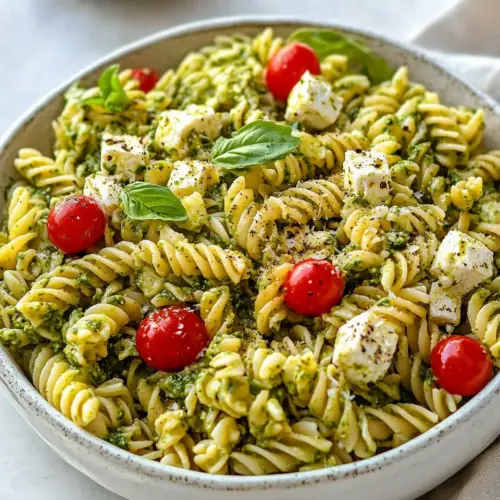
Pesto Pasta Salad
Pesto Pasta Salad is a creamy herb forward pasta dish that balances bright lemon, nutty parmesan, and fresh basil. This easy, refreshing salad is perfect for summer gatherings or an easy weeknight dinner, offering contrasting textures from juicy tomatoes and soft mozzarella. Make it ahead to let the flavors mingle and enjoy a crowd pleasing side or main that travels well.
Equipment
- Large Pot
- Food Processor
- 18 by 13 inch baking sheet
- Large Bowl
Ingredients
- 12 oz mini farfelle pasta (mini bowtie) Boil in salted water until al dente to provide the chewy base that holds pesto and other mix-ins; drain and cool briefly to stop cooking and prevent sogginess. Offer small, bowtie shapes that trap sauce and add playful texture throughout the salad.
- Salt and black pepper Season generously with salt and black pepper to enhance and balance flavors; use salt to bring out sweetness in tomatoes and cheese, and pepper for a subtle bite. Adjust to taste at multiple stages—pasta water, dressing, and final toss—for layered seasoning.
- 3 cups packed (3 oz) baby arugula Pack tightly and chiffonade or tear leaves to yield a peppery, slightly bitter green that brightens the dish; add near the end to preserve color and texture. Contribute fresh herbal notes that complement basil-based pesto and contrast creamy mozzarella.
- 2 cups heaping (11 oz) grape tomatoes, halved Halve to release juices and expose sweet, acidic flesh that adds fresh bursts of flavor and juicy texture; choose ripe grape tomatoes for consistent sweetness. Distribute evenly so their acidity balances the richness of cheese and oil.
- 8 oz fresh mozzarella pearls Toss or drain and add pearls for a soft, milky contrast that melts slightly into warm pasta; provide creamy richness and mild, milky flavor. Use fresh mozzarella to complement the salty parmesan and herbaceous pesto components.
- 1/4 cup fresh lemon juice, mixed with 1 tsp lemon zest Combine juice with zest to offer bright citrus acidity and fragrant oils that lift the entire salad; incorporate into pesto or drizzle over the finished dish. Use freshly squeezed lemon for cleaner, livelier flavor than bottled alternatives.
- 3 cups packed (65 g) fresh basil leaves Process or chiffonade to form the aromatic green backbone of the pesto; supply intense, sweet, peppery herb flavor that defines the sauce. Pack leaves to get the concentrated aromatics needed for a vibrant, balanced pesto.
- 1/2 cup (35 g) finely grated parmesan cheese, plus more for serving Grate finely to add savory, nutty umami that deepens the pesto and overall salad flavor; stir into the sauce and reserve a little for sprinkling at the end. Use freshly grated cheese for better melting and more pronounced flavor than pre-grated varieties.
- 1/4 cup (36 g) pine nuts or walnuts Toast lightly if desired and pulse in the pesto to provide essential fat, crunch, and a warm, resinous nuttiness; substitute walnuts for a more economical, earthy profile. Use measured quantity to achieve proper pesto texture without overpowering the basil.
- 2 medium garlic cloves, peeled and smashed Crush or mince to release pungent, spicy aromatics that form a key savory note in the pesto; briefly blend with nuts and basil to mellow harshness. Control quantity to prevent overpowering the delicate herb and cheese balance.
- 1/2 cup extra virgin olive oil Whisk or stream into the blender to emulsify the pesto, creating a glossy, cohesive sauce that coats pasta evenly; contribute fruity, peppery fat that carries flavor. Use extra virgin quality for pronounced olive character and superior mouthfeel.
Instructions
- Cook pasta to al dente in a large pot of salted boiling water according to package directions. Before draining pasta reserve 1/3 cup pasta water.: The aroma of boiling water and the hiss as the dry pasta hits the pot is the first sensory clue that the dish is underway. You'll want the pasta to be tender but still have a firm bite, because it will continue to soften as it cools and when dressed with sauce. Listen for a gentle rolling simmer and watch the water return to that boil after adding the pasta . Stir occasionally to prevent sticking, especially early on. A common mistake is overcooking, which leads to a mushy texture and a salad that absorbs too much dressing. If you are unsure, start checking at the lower end of the package time and test a piece; it should have a slight chew and a tiny white center when bitten.
- Drain pasta then spread out onto a lightly greased 18 by 13-inch baking sheet to cool for 15 to 20 minutes.: That warm starchy water smells subtly of cooked grain and it performs like magic in blending sauces. The reserved water helps thin and loosen the pesto so it evenly coats the pasta without adding more oil. Scoop it out with a measuring cup just before you drain, and keep it nearby. The common error here is forgetting it, which can leave your pesto too thick or clumpy; if you forgot, warm water can be used sparingly, but it will not have the same gloss and binding power.
- Meanwhile make the pesto: to a food processor add basil leaves, parmesan, pine nuts or walnuts, and garlic. Season lightly with salt then pulse until ingredients are minced. With food processor running slowly pour olive oil in through the feed tube and blend until nearly smooth.: Spreading the pasta on a sheet helps steam escape so the pieces cool without becoming mushy, and it prevents clumps. You'll notice the steam rising off the pan and the pasta losing that hot, sticky sheen as it cools. Move it once or twice so it cools evenly. A rookie misstep is piling it into a bowl while hot, which traps steam and softens the shapes too much, making the salad limp.
- In a large bowl toss together drained pasta, arugula, tomatoes, mozzarella pearls, lemon juice and zest, and pesto. Season with salt and pepper to taste and add parmesan cheese to taste.: to a food processor add basil leaves, parmesan, pine nuts or walnuts, and garlic : When you pulse these ingredients, the scent of crushed basil and garlic will fill the kitchen; it is one of the most vivid sensory moments. Pulse until the ingredients are minced and display a coarse, emerald texture. The mechanical action releases essential oils from the basil and nuttiness from the nuts, which is why you do it first. Be mindful not to overblend to a completely uniform paste if you prefer texture; overprocessing can make the pesto flat and warm quickly due to blade friction.
- Thin with reserved pasta water as needed. Store in fridge in an airtight container up to 1 day.: Salting early helps the blades break down the plant structure and brightens the flavors. You'll hear the motor change pitch slightly as the mixture becomes more cohesive. Season conservatively at this stage because the parmesan already contributes salt. A typical slip is oversalting before tasting; you can always add more later once the salad is combined.
- With food processor running slowly pour olive oil in through the feed tube and blend until nearly smooth: Slowly adding the olive oil creates a silky emulsion that coats both the herb mixture and the pasta evenly. You'll see the color deepen to a glossy green and the texture become smoother but still slightly textured. If you dump the oil in too quickly, the mixture may not emulsify properly and can separate. If separation occurs, add a tablespoon of reserved pasta water and pulse to bring it back together.
- In a large bowl toss together drained pasta, arugula, tomatoes, mozzarella pearls, lemon juice and zest, and pesto: At this stage the aromas are layered, with citrus brightening the herbaceous quality and the mozzarella cooling the mix. Toss gently so the arugula keeps some structure and the tomatoes stay intact. The warm pasta will help the pesto melt into the shapes, coating them evenly. A frequent mistake is vigorous tossing that bruises the greens and breaks the tomatoes, creating a wetter salad.
- Season with salt and pepper to taste and add parmesan cheese to taste: Now is when you refine the seasoning, tasting for balance between acid, salt, and richness. Freshly cracked black pepper adds a final lift. Add the grated parmesan gradually, because a little goes a long way in deepening the savory profile. Over-seasoning is easy here, so taste between additions to avoid overpowering the fresh components.
- Thin with reserved pasta water as needed: The reserved water will marry the pesto to the pasta , creating a glossy, cohesive coating. Add it sparingly while tossing, watching how the texture changes; a tablespoon can transform a clumpy mix into a silky salad. If you add too much, the salad will become watery and lose intensity, so proceed with care.
- Store in fridge in an airtight container up to 1 day: Chilling calms the flavors and lets them marry, but the salad will change texture as the pasta absorbs dressing. Keep it airtight to preserve brightness, and bring to cool room temperature before serving if you want the oils to loosen. A common error is leaving it out too long, which can soften the greens and reduce the freshness of the tomatoes.
Notes
- Use quality olive oil, because the oil carries the herb flavors and affects the mouthfeel; a fruity extra virgin oil will give the pesto a bright, pleasant finish.
- Toast nuts briefly, to unlock their oils and add depth; keep stirring and watch for a light golden color and a warm nutty aroma to avoid bitterness.
- Keep pasta slightly al dente, so it maintains structure in the salad; overcooked pasta will absorb dressing and become mushy when chilled.
- Drain mozzarella pearls well, to prevent excess moisture from making the salad watery; place them in a strainer and blot with a paper towel if needed.
- Adjust lemon carefully, adding juice little by little until the salad sings, because too much acid can mask the basil and cheese.