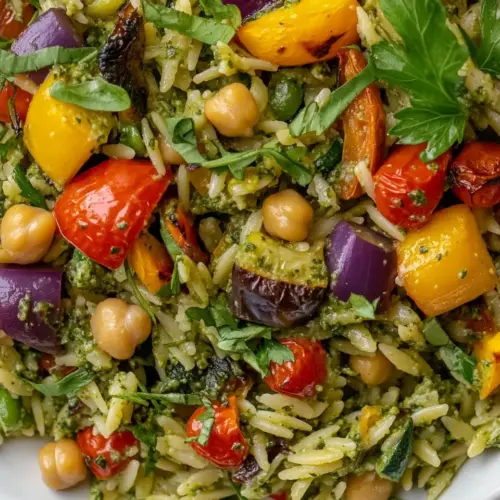
Pesto Orzo Salad with Roasted Vegetables Chickpeas
Pesto Orzo Salad with Roasted Vegetables Chickpeas is a creamy herb forward pasta salad with caramelized roasted vegetables and protein rich chickpeas. Bright basil and peppery arugula merge into a nutty sunflower seed pesto, coating tender orzo for an easy weeknight dinner or vibrant picnic dish. Make it for a quick, satisfying meal that highlights summer produce and pantry staples.
Equipment
- Food Processor
Ingredients
- 2 cloves garlic, peeled Mince finely to distribute pungent, aromatic flavor throughout the pesto and salad; helps brighten and balance richer components when blended or tossed.
- 1/4 cup toasted sunflower seeds, plus extra for garnish Toast further if desired and pulse to a coarse meal to provide a nutty backbone and crunchy texture in the pesto, and use extra for garnish to add visual contrast.
- 1 tablespoon capers Rinse briefly and chop if large to contribute briny, tangy bursts that enhance the pesto's savory complexity and help mimic umami in dressings.
- 1 cup arugula, lightly packed (plus extra for garnish) Wash and lightly pack to supply a peppery, slightly bitter green that lifts the pesto and salad with fresh, leafy depth; reserve some for garnish to maintain color and texture.
- 1 cup basil leaves, lightly packed (plus extra for garnish) Pick tender leaves and lightly pack to supply the primary herbal, aromatic character of the pesto; reserve extra for garnish to reinforce fresh basil perfume.
- 2 tablespoons fresh lemon juice Zest first if desired then squeeze to provide bright, acidic lift that balances the oil and toasted seeds while sharpening overall flavor across the dish.
- 1 tablespoon light miso (I used chickpea) Stir or whisk into the pesto to add subtle savory, umami richness and depth while keeping the dressing emulsified and slightly creamy without dairy.
- sea salt and ground black pepper, to taste Season sparingly and taste as you go to enhance overall flavors; use ground pepper to add mild heat while salt elevates other ingredients.
- 1/2 cup olive oil Emulsify with the lemon juice and miso to create a silky pesto, providing richness and sheen while carrying flavors evenly over the orzo and vegetables.
- 1 small eggplant, diced into 1-inch pieces Cut into uniform pieces to ensure even roasting; adds meaty, tender texture and absorbs pesto flavors while contributing a slightly smoky, savory note.
- 1 medium zucchini, diced into 1-inch pieces Dice evenly to allow quick, even roasting; offers moist, tender bite and mild sweetness that complements the eggplant and pesto.
- 1 bell pepper, diced into 1-inch pieces Chop into similar-sized pieces for balanced roasting; adds sweet, crisp-tender flesh and vibrant color contrast to the salad.
- 1 small red onion, diced into 1-inch pieces Dice to roast until softened and slightly caramelized; brings sweet, savory complexity and a bit of sharpness that mellows with heat.
- 1 cup cherry tomatoes Keep whole or halved to retain burst-in-mouth juiciness and bright acidity; adds freshness and helps balance the roasted vegetables and creamy orzo.
- 2 tablespoons olive oil Drizzle over vegetables before roasting to promote even browning and help seasonings stick; adds a glossy finish and richer mouthfeel.
- sea salt and ground black pepper, to taste Season vegetables before and after roasting to build layers of flavor; salt enhances natural sweetness while pepper adds subtle warmth.
- 1/2 lb orzo pasta Cook according to package instructions to provide tender, slightly chewy base that soaks up pesto and dressing while holding the salad together.
- 1 cup cooked chickpeas Rinse and drain if canned, then toss with the orzo to contribute protein, creaminess, and a satisfying, earthy bite that makes the salad more nourishing.
Instructions
- Preheat the oven to 400 F. Line a large baking sheet with parchment paper and set aside.: In the moments after you switch on the oven you will notice a gentle hum as it warms, and getting it to the right temperature ensures the vegetables brown rather than steam. The hot air circulating helps sugars caramelize, producing those browned edges that add savory complexity. A typical mistake is starting with a cooler oven, which lengthens roasting and yields less color. Make sure the rack is centered for even heat, and give the oven several minutes to fully reach 400 F before the vegetables go in.
- Make the pesto. In a food processor fitted with the “S” blade, add the garlic, sunflower seeds, and capers. Pulse a few times to finely chop. Then, to the food processor bowl, add the arugula, basil, lemon juice, miso, salt, and pepper. Pulse the mixture a few times until the greens are finely chopped. Then, with the lid on and the motor running on low, slowly drizzle in the olive oil through the feed tube until you have a smooth paste that’s evenly combined. Check the pesto for seasoning and adjust if necessary. Set aside.: As you pulse the garlic , toasted sunflower seeds , and capers in the food processor their aroma becomes sharply savory, and the seeds start to break down into a coarse texture. The next addition of arugula , basil , lemon juice, miso , salt, and pepper changes the smell to bright and herbal, which is the signal you want before adding the olive oil . Drizzling the oil while the processor runs yields an emulsified, silky pesto that clings to the orzo . If you add the oil too quickly the mixture may separate, so pour slowly. One common error is overprocessing until the greens heat up and turn dark, which dulls the fresh flavor, so pulse gently and stop when you have a smooth, vibrant paste.
- Roast the vegetables. Combine the chopped eggplant, zucchini, bell pepper, red onion, and whole cherry tomatoes on the baking sheet. Drizzle the vegetables with the olive oil and season very generously with salt and pepper. Toss to thoroughly coat all of the vegetables in oil and seasoning. Spread the vegetables out into a single layer and roast in the oven until tender and slightly browned on the edges, about 30 minutes. Check on the vegetables at the halfway point and give them a stir with a spatula. Set aside to cool slightly.: When you toss the diced eggplant , zucchini , bell pepper , red onion , and whole cherry tomatoes with the 2 tablespoons of olive oil , they glisten and the oil smells fruity and warm. Spreading them in a single layer on parchment prevents steaming and encourages browning. During roasting the high heat draws out moisture and concentrates sugars, creating a caramelized scent that is slightly sweet and toasty. Flip the vegetables halfway through so all sides develop color. Avoid overcrowding the pan, which leads to soggy, steamed pieces rather than crisped edges.
- Cook the orzo according to package directions and drain. Add the cooked orzo to a large serving bowl and immediately dress with the pesto. Once all of the pesto is coated, spread it out in the serving bowl. Top the dressed orzo with the roasted vegetables and chickpeas and give it another light toss.: As the pasta boils, a toasty, wheaty steam rises from the pot and the orzo plumps, becoming tender yet still toothsome when cooked properly. Drain it well so excess water does not dilute the pesto. A frequent oversight is overcooking the orzo, which makes the final salad mushy, so aim for al dente. Immediately after draining, the warm orzo will better absorb and bind to the pesto, which is why timing matters here.
- Top the pesto orzo salad with some extra basil, arugula, and toasted sunflower seeds. Serve immediately.: The moment you combine warm orzo with the green, the aroma lifts and the grains take on a glossy sheen. Spreading the dressed orzo in the bowl helps you layer the roasted vegetables and chickpeas on top without them sinking in, preserving texture contrasts. If the pesto seems thick, the warmth of the pasta helps it thin and coat evenly. One pitfall to watch for is adding too much pesto at once, which can make the salad overly oily; instead, toss lightly and add more if needed after tasting.
- Top the dressed orzo with the roasted vegetables and chickpeas and give it another light toss: As you fold the warm roasted pieces into the herbed pasta you will notice the sweet juices from the tomatoes mingling with the pesto, creating a glossy, herb scented coating. The varying textures of tender roasted veg and firm chickpeas create satisfying bites. Toss gently to keep the roasted edges intact; vigorous stirring can break down soft vegetables. If any pieces seem underseasoned, finish with a small sprinkle of sea salt and freshly cracked black pepper to brighten the flavors.
- Top the pesto orzo salad with extra basil arugula and toasted sunflower seeds: The final garnish adds a fresh, peppery pop from the arugula , sweet basil perfume, and crunchy toasted seeds that snap between your teeth. This last step enhances contrast and visual appeal, and the textures make the first bite complex and rewarding. A misstep here is adding the garnish too early, which can wilt the greens; add them just before serving for maximum freshness.
Notes
- Seed swaps are easy: If you lack toasted sunflower seeds, use an equal amount of toasted pumpkin seeds, walnuts, or sliced almonds for similar body and crunch, while noting each will shift the flavor slightly.
- Miso adds umami: Light miso contributes savory depth to the pesto, acting like a subtle seasoning agent; stir it in gradually and taste because its salt level can vary by brand.
- Temperature matters: Toss warm orzo with the pesto so the oil emulsifies and the flavors meld, but cool the roasted vegetables slightly so they do not wilt the greens in the pesto once mixed.
- Prep ahead smartly: Roast the vegetables and make the pesto up to two days ahead, then store separately; assemble just before serving to preserve texture and brightness.
- Layer seasoning: Season vegetables before roasting and taste the assembled salad to adjust final seasoning, because flavors concentrate during cooking and may need a finishing touch.