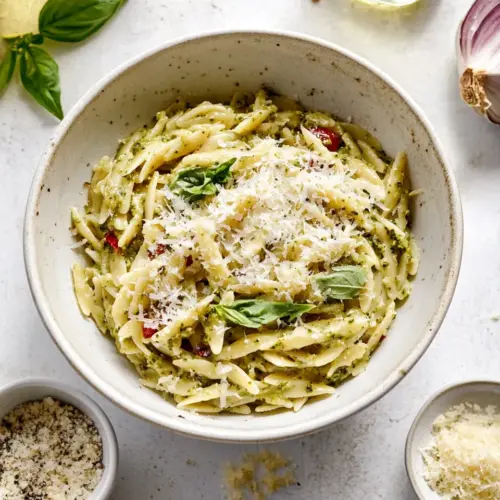
Pesto Orzo
Pesto Orzo is a creamy, herb forward one pot meal that blends pesto, sun dried tomatoes, and shredded chicken for an easy weeknight dinner. The orzo soaks up a luscious sauce made with cream and parmesan cheese, while asparagus adds a bright bite. It’s quick, comforting, and versatile, a perfect reason to make it tonight.
Equipment
- Pot
- Wooden Spoon
- Measuring Cups
Ingredients
- 1 tablespoon olive oil Sauté in the pan to provide a fruity, slightly bitter base and help soften aromatics while preventing sticking; contributes a heart-healthy fat and glossy finish to the sauce when combined with butter.
- 2 tablespoons butter Melt into the hot pan to add a rich, creamy mouthfeel and help carry flavors; blends with olive oil to create a silky base for the orzo and sauce.
- 1/2 medium onion chopped Chop finely and sweat until translucent to add a sweet, savory backbone and aromatic depth; provides texture and balances the richness of cream and cheese in the finished dish.
- 4 cloves garlic minced Mince and briefly cook with the onion to release pungent, aromatic oils that brighten the whole dish; contributes sharpness that balances the creaminess of the sauce.
- 1/2 teaspoon Italian seasoning Sprinkle into the sauté to introduce a blend of Mediterranean herbs that enhances overall savory complexity; complements basil flavors from pesto without overpowering delicate ingredients.
- 1 cup DeLallo Orzo Pasta uncooked Toast briefly in the pan with aromatics to develop a nutty surface flavor before simmering; acts as the pasta base that soaks up the broth and carries pesto through every bite.
- 2 cups chicken broth Pour in to deglaze and hydrate the orzo, providing savory liquid and seasoning; infuses grains with flavor while cooking them to tender doneness.
- 3/4 cup heavy/whipping cream Stir in to add richness, creaminess, and a smooth, velvety texture to the sauce; helps emulsify pesto and broth into a cohesive, luscious coating for the orzo and chicken.
- 1/4 cup DeLallo Simply Pesto Fold in to deliver concentrated basil, garlic, and cheese flavor that defines the pesto profile; enriches sauce with herbaceous, umami notes and binds components together.
- 1/3 cup DeLallo Sun-Dried Tomatoes in Extra Virgin Olive Oil drained & chopped Chop and incorporate for bursts of tangy, slightly sweet, sun-dried tomato flavor and chewy texture; adds color contrast and a savory, concentrated tomato element to the dish.
- 6 spears asparagus cut into quarters, see note Cut and add near the end to contribute a bright, vegetal crunch and fresh, slightly grassy flavor; provides a seasonal contrast and textural lift to creamy orzo and chicken.
- 2 cups cooked chicken (try rotisserie) shredded/chopped Add shredded to warm through, supplying protein and savory substance to make the dish a complete meal; absorbs sauce flavors and contributes tender, meaty texture.
- 1/2 cup freshly grated parmesan cheese Grate freshly and stir in to offer salty, nutty umami and help thicken and bind the sauce; provides a finishing richness and classic Italian cheese flavor.
- Salt & pepper to taste Season to taste at the end to balance and enhance all flavors; ensures proper seasoning and brings out the individual components without masking them.
Instructions
- Add the oil, butter, and onion to a pot over medium-high heat. Sauté the onion for 3-4 minutes.: As the pot heats, you will hear a gentle sizzle when the olive oil and butter meet the pan, and the aroma of the onion will shift from sharp to sweet within a few minutes. Visually, the onion should turn translucent and glossy, not browned; that translucence signals that the sugars are releasing and building a mellow base. Work with moderate heat so the fat does not brown too quickly, and stir occasionally to keep the pieces moving. A common mistake is cooking too hot which causes rapid browning, leading to a bitter undertone instead of gentle sweetness.
- Add the garlic, Italian seasoning, and orzo. Cook for 2-3 minutes, stirring often.: The moment you add the garlic and Italian seasoning , the kitchen fills with a warm, herbaceous scent. Toss in the orzo and let it toast lightly; you will notice the grains take on a slight sheen and the scent deepens into nutty notes. Stirring often prevents sticking and ensures the orzo toasts evenly, which adds a subtle depth when it later absorbs the broth. Avoid walking away at this stage, because garlic can turn bitter if it browns too much. If you see dark flecks, reduce the heat and start over with fresh aromatics.
- Stir in the chicken broth, cream, pesto, sun-dried tomatoes, and asparagus. Once it starts to bubble, continue cooking for 10 minutes, uncovered, stirring fairly often. You will likely need to turn the heat down a bit (to medium or even medium-low). You want it to gently bubble vs. furiously boil, and you don't want the liquid to reduce too much before the pasta has cooked.: When the liquids hit the pan, they will hiss and release steam, and you should bring them to a gentle simmer so the orzo can absorb evenly. The combination of chicken broth and cream creates a milky swirl as it heats, and the pesto will streak the surface with green ribbons before folding in. Keep stirring fairly often to prevent the orzo from settling and clumping at the bottom, and watch how the sauce thickens; it should coat a spoon without becoming gluey. Turn the heat down if the bubbling becomes aggressive, because a furious boil will evaporate liquid too quickly, leaving undercooked pasta. If you notice the liquid disappearing before the orzo is tender, add a splash more chicken broth to maintain the right cooking environment. A pitfall here is not adjusting the heat, which can either over reduce the sauce or leave the pasta undercooked.
- Stir in the cooked chicken (let it warm through for a minute or so).: Adding pre cooked chicken at this stage lets it heat gently without drying out. You will feel the temperature of the pot change and see the chicken pieces steam slightly as they warm. The meat absorbs some of the sauce, which integrates flavors and makes the dish more cohesive. Stirring ensures each shred gets a touch of sauce, but resist the urge to cook it vigorously; extended high heat will toughen the protein. A typical error is overheating the meat which causes it to lose moisture and become stringy.
- Take the pot off the heat and stir in the parmesan cheese. Give it a taste, and if the pasta is firmer than you'd like or you want the sauce to be thicker/more absorbed, cover the pot and let it sit for a few minutes. If the sauce has reduced too much, add in a splash of cream. Season with salt & pepper as needed and enjoy immediately.: Off the heat, stirring in parmesan cheese creates a glossy finish as the cheese melts into the warm sauce, adding savory brightness and slight thickness. Taste now to assess seasoning and texture; the short rest under a lid allows the residual heat to finish cooking the orzo and helps the sauce cling more tightly. If the mixture seems too wet, a brief uncovered rest will let the orzo absorb excess liquid. Conversely, if the sauce is overly reduced, add a splash of extra cream or chicken broth and stir to reincorporate. Over seasoning at this point can make the dish too salty because of the parmesan cheese and chicken broth , so add salt and pepper sparingly and taste between adjustments. A common misstep is skipping the rest period which can leave the pasta underdone or the sauce too loose.
Notes
- Make it vegetarian, omit the chicken and increase the asparagus or add extra sun dried tomatoes to boost heartiness while keeping the sauce intact.
- Swap the greens, try adding blanched spinach at the end instead of asparagus for a silkier, leafy texture that blends easily with the pesto.
- Adjust creaminess, reduce the cream slightly and finish with a touch more parmesan cheese for a denser, cheesier mouthfeel if you prefer a richer finish.
- Boost acidity, squeeze a little fresh lemon juice over servings to highlight the herbal notes in the pesto and cut through the richness.
- Change the protein, swap rotisserie chicken for shredded turkey or a can of white beans for a different texture while preserving ease and protein content.