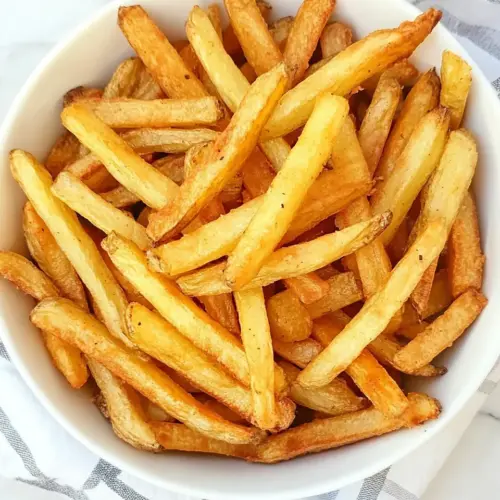
Perfect Homemade French Fries
Perfect Homemade French Fries are crispy on the outside and fluffy inside, made with simple ingredients like russet potatoes and neutral frying oil. This easy, classic method uses a soak and two stage fry to guarantee crunch and consistency, ideal for an easy weeknight side or party snack. Make them for reliably delicious fries every time.
Equipment
- candy and deep fry thermometer
- fry scoop
Ingredients
- 5 pounds russet potatoes Peelable and starchy, provides the ideal texture for crispy exteriors and fluffy interiors when cut and fried; choose large russets for uniform sizing and consistent cooking; rinse and dry thoroughly to remove excess surface starch and prevent oil spatter while frying.
- vegetable or peanut oil, for frying High-smoke-point oil used to fully submerge and evenly cook the fries, enabling rapid Maillard browning without burning; select neutral-flavored vegetable or peanut oil and heat to the recommended temperature for deep frying; maintain consistent oil temperature between batches to ensure crispness.
- sea salt Coarse sea salt used to season immediately after frying to enhance and balance the natural potato flavor; sprinkle while fries are hot so crystals adhere and dissolve slightly, improving taste and mouthfeel; adjust quantity to preference for finishing.
Instructions
- Peel potatoes. Cut them into slices lengthwise then cut each slice into french fry-sized sticks.: When you peel the potatoes , you should notice the fresh, earthy aroma of raw tuber and a firm, cool texture under the knife. The peel will come away cleanly if the potatoes are fresh, and uniform peeling helps each piece cook evenly. A frequent error is leaving bits of skin that create irregular browning, so take a moment to smooth the surface. If the flesh darkens slightly, it simply means a little oxidation; it will not affect flavor after soaking.
- To remove excess starch, add the potatoes to a large bowl and cover with cold water, soak 2-3 hours, then pat dry with a clean kitchen towel.: As you slice, listen for the crisp snap of the knife, and aim for consistent thickness so the fries cook at the same rate. Visual uniformity is the key to even color and texture, and the ideal fries are about a half inch thick for a classic balance of crust to interior. A common problem is uneven cuts, which cause some pieces to overbrown while others remain pale. Use a steady motion and a sharp knife to prevent tearing and ragged edges.
- When ready to cook, drain the water and lay the potatoes out on a baking sheet lined with paper towels. Blot with additional paper towels to dry.: During soaking you will see the water cloud as starch leaves the potatoes . That cloudy water is normal, and it is what you want to remove so the exterior crisps instead of gumming up. After soaking the pieces should feel slightly firm and not sticky; drying thoroughly on a towel is crucial because stray water will cause violent spitting when it hits hot oil. A typical mistake is rushing the soak or skipping drying, which results in soggy or dangerous splattering during frying.
- Heat a few inches of oil in a heavy large pot to 300°F. Add the potato pieces in 3-4 batches so as not to crowd the pot. Cook 4-5 minutes. (The potatoes will still be pale and not fully cooked.): As you drain and blot, notice any residual moisture on the surface disappearing under the towel. The fries should be nearly dry to the touch before they meet hot oil, because surface water lowers oil temperature and causes splatter. If you still see beads of water, keep blotting. People often underestimate how dry the pieces must be, so double check each batch before frying.
- Remove the potatoes from the pot with a slotted spoon and drain on fresh paper towels, then cook the remaining batches.: At 300°F the oil will shimmer gently and give off a faint sweet aroma without smoking. As the fries cook you will notice small bubbles form steadily around each piece, and the texture will change from glassy to slightly opaque, indicating internal softening. This low temp par cook sets up the interior. Crowding the pot cools the oil and prevents crisping, so fry in measured batches. Avoid leaving them in too long, because that can overcook the interior and make them limp when you finish at higher heat.
- When all of the potatoes have been cooked at 300°F, turn the heat up to 400°F. Add the potatoes again in batches, cooking until golden brown and crisp. Drain the fries on paper towels.: When you lift the pieces, they may feel a touch soft, and you might see small oil beads clinging to the surface. Draining on fresh towels absorbs excess oil and prevents puddles that make fries soggy. A common oversight is stacking drained fries too deep, trapping steam and collapsing crispness, so spread them into a single layer while you finish par frying all batches.
- Sprinkle with sea salt. Serve immediately.: At 400°F the oil will roar quietly with livelier bubbling, and the fries will quickly take on a golden hue. Watch for a uniform golden brown and an audible crisping sound as moisture rapidly leaves the surface. This second fry is where texture is won, so do not rush it and avoid overcrowding which lowers the oil temperature. A slip here is leaving fries in too long, which pushes them from golden to burnt in moments, so stay attentive and remove when they reach the desired color.
- Sprinkle with sea salt Serve immediately: Right after frying, the surface is warm and slightly tacky, perfect for the sea salt to adhere. The first bite should offer a crisp snap followed by a soft, steaming interior and a clean, salted finish. Serve without delay because fries begin to lose their optimal texture within minutes. A preventable mistake is letting them sit too long before salting, which allows steam to soften the crust and reduces the impact of seasoning.
Notes
- Seasoning blends Try sprinkling the fries with a mix of spices immediately after frying to help the flavors adhere. Use the hot surface as an adhesive and toss quickly so the spices coat evenly. Be cautious with salt quantity if your blend contains salty elements.
- Double frying timing Adjust the initial par fry time depending on thickness. Thicker fries benefit from a slightly longer first fry to ensure the interior softens, while thinner fries need less time to avoid collapsing when crisped. Watch visual cues rather than the clock for best results.
- Oil choice Use neutral oils with a high smoke point for safety and clean taste. Peanut oil is excellent if you are not restricted by allergies, while vegetable oil is a dependable, accessible option for home cooks.
- Batch management Keep cooked fries warm in a single layer on a baking sheet in a low oven while you finish other batches. This preserves crispness without overcooking. Do not stack fries, as trapped steam will soften them.
- Storage and reheating For leftovers, flash freeze and store in an airtight bag. Reheat at 400°F in the oven until crisp, which revives texture better than microwaving. Expect some loss of peak freshness, but proper reheating brings them back to enjoyable status.