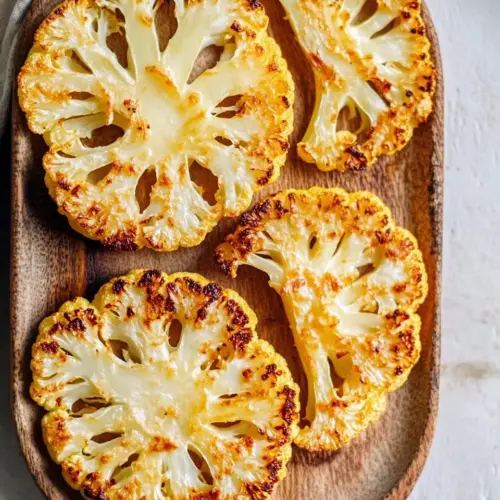
Perfect Cauliflower Steaks Recipe
Perfect Cauliflower Steaks Recipe delivers crispy caramelized edges and a tender center, showcasing smoked paprika and coriander for warm, savory depth. This easy weeknight dinner feels elevated enough for guests, yet simple to pull together with minimal ingredients. The result is a satisfying, plant forward main that blends texture and bold flavor, making it a recipe you'll want to repeat.
Equipment
- Oven
- Rimmed Baking Sheet
- Parchment Paper
- Knife
- Cutting Board
- Olive oil spray
- Spatula
Ingredients
- 2 medium heads of cauliflower Provide hearty, thick slices when preparing cauliflower steaks, offering a substantial base that holds seasonings and browning well in the oven or on the grill. Maintain the stem intact to keep florets connected, ensuring slices remain intact during cooking for an impressive presentation.
- Olive oil spray preferably extra-virgin Coat surfaces lightly with a fine mist of olive oil spray to promote even browning and prevent sticking without adding excess oil. Favor extra-virgin varieties to contribute a subtle fruity aroma and a touch of richness that complements roasted vegetables.
- 1 teaspoon kosher salt Season steaks evenly with kosher salt to enhance and balance natural flavors, helping to draw out moisture and concentrate the cauliflower's taste. Use the larger crystalline texture to control salinity more precisely while sprinkling.
- 1/2 teaspoon freshly ground black pepper Add freshly ground black pepper to introduce a bright, mildly pungent heat that contrasts with the cauliflower's sweetness. Grind just before seasoning to retain volatile oils and maximize aromatic punch.
- 1 teaspoon garlic powder Sprinkle garlic powder to impart a savory, umami-rich depth without introducing moisture, making it ideal for dry rubs and even coating. Use it sparingly to avoid overpowering the vegetable while contributing a familiar garlicky backbone.
- 1 teaspoon smoked paprika Dust smoked paprika over steaks to deliver a warm, smoky sweetness and appealing red color that enhances visual and flavor complexity. Choose smoked varieties for a campfire-like aroma that pairs especially well with roasted cauliflower.
- 1 teaspoon ground coriander Incorporate ground coriander to add a citrusy, slightly floral warmth that brightens the overall spice blend. Grind fresh if possible to retain its lemony top notes, which complement both the smoky and savory elements in the seasoning mix.
Instructions
- Begin by preheating your oven to 425°F. Prepare a large, rimmed baking sheet by lining it with parchment paper and give it a light coating of olive oil spray to prevent sticking.: The moment the warm oven air moves across the surface of the cauliflower , you get the first hint that caramelization will happen. You should smell a faint mineral warmth as the oven reaches temperature, and a reliable preheat ensures the steaks start browning immediately. Why this matters, the high heat initiates the Maillard reaction so the edges become deeply flavored rather than simply drying out. Troubleshooting tip, if your oven runs cool or uneven, rotate the baking sheet halfway through the roast to promote even color. Avoid placing the sheet too close to the element because the tops can char too quickly while the interiors stay firm.
- Clean the cauliflower heads under running water. Carefully remove the outer leaves and trim the stem end. You need to ensure the core remains intact to hold the steaks together. Cut the cauliflower into 3/4-inch-thick steaks. You can expect to get about 3 good steaks from each head (you can roast the smaller pieces alongside the steaks).: The parchment creates a nonstick surface while the oil spray encourages crisp edges and an even brown crust on the cauliflower . You will notice the paper will shimmer slightly where oil pools, which helps the steaks sizzle instead of sticking. This step matters because it reduces tearing when you flip the steaks. Troubleshooting tip, if your spray is heavy, blot excess oil with a paper towel, otherwise the steaks can steam rather than roast.
- Place the cauliflower steaks and any florets onto the prepared baking sheet in a single layer, ensuring they're not overcrowded. Mist the tops with olive oil spray, and evenly distribute half of the combined seasonings over them.: Rinsing removes any residual dirt and lets you inspect for blemishes that should be trimmed. The voice of experience says, handle each head gently so you do not bruise the florets. You will feel the firmness of the core, and keeping it intact is essential because it holds the steaks together as they roast. Why this matters, an intact core prevents the slices from falling apart when you flip them. Troubleshooting tip, if the core is soft or rotten, select another head, because weak cores lead to broken steaks in the oven.
- Roast the cauliflower in the preheated oven for 15 minutes. After this initial cooking time, carefully flip the steaks and florets. Give them another spray of olive oil and finish with the rest of the seasonings.: Removing leaves exposes the tight florets, which roast evenly, and trimming the stem creates a flat base for stable slicing. The trimmed stem should still keep the head upright, you want the core intact but tidy. This technique matters because an even cut yields consistent thickness across steaks, ensuring they finish at the same moment. Troubleshooting tip, if you have an uneven base, place the head on a cutting board and gently level it so your slices come out uniform.
- Continue to roast for an additional 10 to 15 minutes, or until they start caramelizing and are tender enough to be pierced with a fork.: When you slice the cauliflower at this thickness, you preserve both a tender center and a caramelized exterior. You will hear a firm, satisfying sound as the knife passes through, and you can inspect each slice for integrity. Why this matters, too thin and the steaks will crisp too quickly, too thick and the centers remain underdone. Troubleshooting tip, if your knife slips or the slice crumbles, cut a little slower and steady the head with your hand to stabilize it.
- You can expect to get about 3 good steaks from each head: Typically each medium head yields several solid steaks and some smaller florets that roast beautifully. You will notice some irregular pieces, which are not waste, because they caramelize faster and become crunchy highlights. This expectation helps you plan portions and roasting space. Troubleshooting tip, if a head yields fewer steaks, roast the remaining florets on the same sheet so nothing goes to waste.
- Place the cauliflower steaks and any florets onto the prepared baking sheet in a single layer: Spacing is crucial, a single layer allows hot air to circulate and promotes even browning on every surface. You will see steam escape and then gradually a golden rim form as the sheets heat up, which signals progress. Why this matters, overcrowding causes steaming and soggy edges instead of crispness. Troubleshooting tip, if your sheet is crowded, use a second sheet and roast them in two batches for the best result.
- Mist the tops with olive oil spray: A light mist ensures every surface of the cauliflower has enough fat to brown, without becoming greasy. You should see a slight sheen, and when the oil heats, it helps the spices adhere and the sugars caramelize. This technique matters because oil is the conduit for heat and flavor development. Troubleshooting tip, if you do not have a spray, brush sparingly with oil to avoid pooling that can make the steaks soggy.
- Evenly distribute half of the combined seasonings over them: Apply spices so each steak gets a consistent flavor layer right from the start, and the initial seasoning will begin to toast during the first phase of roasting. You will smell the aromatics as the oven warms them, which heightens anticipation. Why this matters, seasoning early builds a crust that becomes more complex with time. Troubleshooting tip, if seasoning clumps in one spot, gently lift the steaks and redistribute to avoid uneven flavor pockets.
- Roast the cauliflower in the preheated oven for 15 minutes: During this stage you will hear a gentle sizzle and see the edges begin to color, and the air in your kitchen will take on a nutty, toasty scent. The initial roast sets the foundation for a tender interior and browned exterior. This technique matters because it jump starts caramelization while still allowing time to flip for even coloring. Troubleshooting tip, if your oven temperature dips, add a few extra minutes but watch closely so the exterior does not overbrown.
- After this initial cooking time, carefully flip the steaks and florets: Flipping lets both sides develop the same golden color, and you will notice a satisfying crackle when the browned surface releases from the parchment. This action is important for even texture and appearance. Troubleshooting tip, if a steak seems fragile, use a thin spatula and go slowly to prevent breakage.
- Give them another spray of olive oil and finish with the rest of the seasonings: A second light mist and seasoning refresh the surface, and at this stage the spices toast quickly, releasing a deeper aroma. You will detect richer, roasted notes as the second phase progresses. This step matters because it layers flavor, building a more complex finish. Troubleshooting tip, avoid over-spraying which can pool and steam the steaks instead of crisping them.
- Continue to roast for an additional 10 to 15 minutes: In these final minutes you will watch the edges deepen to a warm, golden brown and the aroma will become sweet and savory. Test doneness with a fork, the interior should yield but still hold structure. This timing matters because it balances tenderness and caramelization. Troubleshooting tip, if the centers are still too firm, give an extra 3 to 5 minutes, checking frequently to prevent burning.
- Or until they start caramelizing and are tender enough to be pierced with a fork: The true sign of readiness is a fork sliding into the center with gentle resistance and the presence of browned, slightly crisped edges. You will also notice enhanced perfume from the spices and roasted sugars. Why this matters, it confirms the steaks achieved both texture and flavor harmony. Troubleshooting tip, if they are mushy, your oven may be too cool or you may have over-sprayed oil; next time reduce oil and maintain higher heat.
Notes
- Use firm heads: Select dense, heavy cauliflower heads with tight florets to ensure steaks hold together when sliced and roasted.
- Control oil application: Prefer a light spray or thin brush of olive oil to promote browning while avoiding soggy surfaces.
- Toast spices briefly: If you want an extra flavor kick, sprinkle spices on before the final minutes so they toast slightly without burning.
- Rotate the pan: If your oven has hot spots, rotate the baking sheet halfway through roasting for even color development.
- Reserve small florets: Roast the smaller pieces alongside the steaks, they caramelize faster and add texture contrast to the plate.
- Serve warm: These steaks are best enjoyed straight from the oven when the contrasts of tender interior and crisp edges are most pronounced.