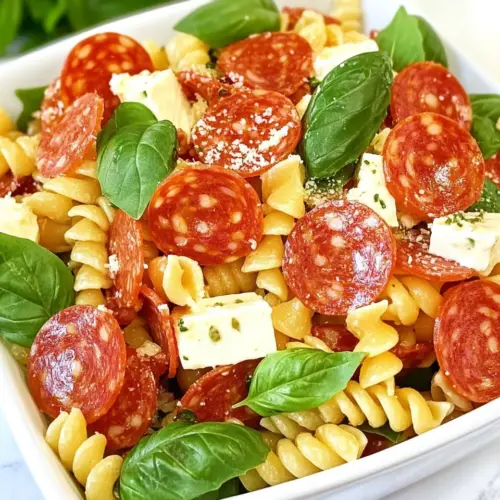
Pepperoni Pasta Salad
Pepperoni Pasta Salad is a creamy, tangy, and easy crowd pleaser featuring pillowy cheese tortellini, savory pepperoni, and bright cherry tomatoes. Perfect for summer potlucks and easy weeknight dinners, this salad melds fresh basil and mozzarella with zesty Italian dressing for a balanced bite. Make it ahead for best flavor and serve chilled for a satisfying, hassle free dish everyone will ask about.
Equipment
- 6-quart saucepot
- Colander
- Mixing Bowls
- Chef Knives
- Cutting Board
Ingredients
- 120 -ounce package refrigerated cheese tortellini Provide a tender, cheese-filled base that holds flavors and textures together in the salad, offering a soft, pillowy contrast to firmer mix-ins. Cook until al dente, rinse with cold water to stop cooking, and toss gently so the tortellini remain intact and evenly coated with dressing. Use a refrigerated package to save time while ensuring a rich, creamy center that complements savory components.
- 1 cup fresh mozzarella, cubed Add creamy, melty pockets of fresh dairy that contribute mild saltiness and a soft, chewy bite to each forkful. Cube evenly so small pieces disperse throughout the salad, balancing hearty and fresh elements while adding a subtle milky richness. Chill slightly before adding to prevent melting into the dressing and maintain visual appeal.
- 1 cup pepperoni, chopped Provide concentrated, savory spice and a chewy texture that brings classic pepperoni flavor to the salad mix. Chop into small pieces to distribute its bold, cured notes without overpowering other ingredients, and incorporate some oils released from the meat to enhance overall richness. Pair with fresh herbs and acidic components to balance fat and salt.
- 1 cup cherry tomatoes, cut in half Introduce bright, juicy acidity and a burst of freshness that lightens the dish and cuts through richer components. Halve evenly so each bite contains a pop of tomato, and remove excess seeds if a less watery salad is preferred. Use ripe cherry tomatoes for optimal sweetness and color contrast.
- 1/3 cup fresh basil, chopped Offer aromatic, peppery herbaceousness that lifts the overall flavor profile and adds a fresh green note to the salad. Chop finely to spread the basil’s fragrance throughout without overwhelming textures, and add just before serving to preserve its vibrant color and aroma. Combine with the dressing to create a cohesive Mediterranean-inspired taste.
- 2/3 cup Italian salad dressing Bind and flavor the salad with a tangy, herby vinaigrette that coats ingredients and enhances overall taste with acidity and seasoning. Measure and toss gently to ensure even coverage, adjusting quantity slightly if a lighter or richer coating is desired. Choose an Italian-style dressing for complementary herbs, oil, and vinegar balance.
Instructions
- Cook tortellini according to package directions; drain. Rinse with cold water and allow to completely drain.: The kitchen will fill with a warm, toasty, pasta aroma as the cheese tortellini cooks, and you want the pieces to be tender yet slightly resilient when you bite them, not mushy. Timing here matters because overcooking turns the pasta soft and prone to absorbing too much dressing, leaving a claggy texture. After the pasta reaches al dente, drain immediately and move to the next step to stop carryover cooking. A common mistake is leaving cooked tortellini in the hot pot, which continues to soften the pasta. Use a large pot of salted water when boiling so the tortellini develops a subtle seasoning that complements the other ingredients.
- In a large bowl, combine cooked tortellini, mozzarella, pepperoni, tomatoes and basil. Pour Caesar salad dressing over mixture, toss well to coat.: Chilling the cooked cheese tortellini under cold water halts cooking and firms the texture, giving you that pleasant chew. As you rinse, you will notice the steam subside and the surface of the pasta become slick and slightly cooled. Let it drain fully in a colander to prevent excess water from diluting the dressing. If you skip thorough draining, the salad can become watery, and the dressing will not adhere properly. A key tip is to shake the colander gently to remove trapped water and, if needed, blot lightly with a clean towel.
- Transfer cooked tortellini to a large bowl and add remaining ingredients. Toss well. Refrigerate at least 1 hour before serving.: When you assemble the components, you will see a mosaic of colors and textures, and the scent of fresh basil will brighten the mix. Toss gently so the cubes of fresh mozzarella remain intact while the pepperoni and cherry tomatoes distribute evenly. The motion should be firm but light, preventing the delicate cheese from breaking apart. A frequent oversight is aggressive tossing that pulverizes the mozzarella , changing the texture. Combine ingredients in a bowl large enough to allow for gentle folding so each piece keeps its shape.
- Pour Caesar salad dressing over mixture, toss well to coat: As the dressing hits the salad, it will gleam on the surface of the cheese tortellini and steam a faint herbal scent, depending on the dressing. The dressing is responsible for marrying the flavors, so coat everything evenly to ensure each bite has balance. I suggest adding most of the dressing first and reserving a little to adjust after chilling. One common misstep is over dousing, which can make the salad soggy; taste and tweak instead of pouring blindly. Use a gentle folding motion to distribute the dressing without breaking the soft ingredients.
- Transfer cooked tortellini to a large bowl and add remaining ingredients: This step is about positioning and rhythm, moving the drained cheese tortellini into the serving bowl so the remaining mix-ins can be incorporated cleanly. The visual contrast is appealing as the white mozzarella and red pepperoni and cherry tomatoes settle among the pasta. Doing this on a stable workspace helps avoid spills and ensures even mixing. A mistake to avoid is using a bowl that is too small, which leads to overly vigorous tossing and ingredient breakage. Make sure everything fits comfortably to maintain texture integrity.
- Toss well: Tossing distributes flavors and ensures dressing clings to the nooks of each tortellini. Listen for a soft swish as ingredients move against each other, and watch how the dressing forms a subtle sheen. The goal is even coverage without crushing the mozzarella or rupturing the tomatoes. Over enthusiastic tossing can bruise the tomatoes and make the salad watery, so use measured, repeated folds to achieve harmony.
- Refrigerate at least 1 hour before serving: Chilling allows the flavors to meld and the dressing to settle into the pasta, yielding a cohesive, layered taste. During this rest, the herbal notes of basil diffuse and the cheese tortellini absorbs some dressing, making each bite more integrated. Be mindful that the pasta will soak up liquid, so plan to taste after chilling and add a splash more dressing if needed. A common error is skipping this chill period, which results in less melded flavors and a raw dressing presence. Cover the bowl to prevent fridge odors from interfering with the salad's brightness.
Notes
- Read my FAQ Make sure you check the FAQ section for answers to common storage and serving questions, which often resolves substitution queries.
- Store properly Store the pasta in an airtight container in the refrigerator to maintain texture and freshness, and stir before serving to redistribute dressing.
- Adjust dressing after chilling You may need to add more dressing after refrigerating, because the cheese tortellini soaks it up; add a little at a time to avoid over saucing.
- Stir before serving A quick stir just before plating re-coats any dried areas and refreshes the salad's appearance and mouthfeel.
- Use ripe tomatoes Choose firm, ripe cherry tomatoes to avoid excess water in the salad and to ensure bright, fresh flavor in every bite.