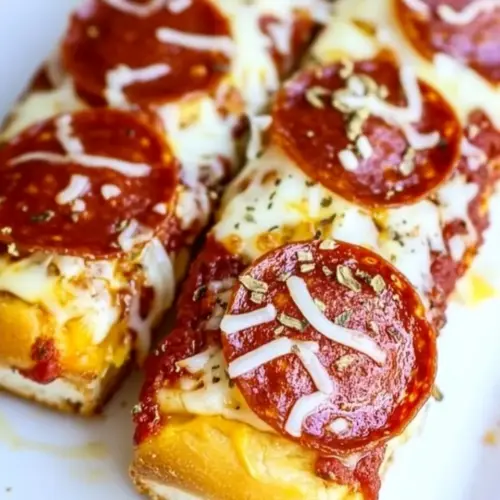
Pepperoni French Bread Pizza
Pepperoni French Bread Pizza is a crispy edged, cheesy comfort classic that comes together fast. With bright tomato sauce, melted mozzarella, savory pepperoni, and a garlicky buttered toast base, it makes an easy weeknight dinner or party snack. It’s fast to prep and delivers that satisfying pizza experience without fuss, perfect for feeding a small crowd or family dinner.
Equipment
- Rimmed Baking Sheet
- Aluminum Foil
- Mixing Bowls
- Brush
Ingredients
- 1 cup canned crushed tomatoes Provide a tangy, rich tomato base that anchors the pizza flavors; simmered or seasoned crushed tomatoes create a slightly chunky sauce that melts into the bread for moist, savory results. Use to spread evenly over the bread to ensure balanced acidity and sweetness in each bite.
- 1 tablespoon extra-virgin olive oil Add a fruity, aromatic richness when drizzled into the sauce or brushed on the bread; extra-virgin olive oil enhances mouthfeel and helps meld herbs and seasonings. Use a measured tablespoon to avoid greasiness while promoting a glossy finish and deeper flavor.
- 1 teaspoon dried Italian seasoning Impart a warm, herbaceous Mediterranean profile that complements tomatoes and cheese; dried Italian seasoning blends oregano, basil, and thyme for classic pizza flavor. Sprinkle into the sauce for consistent seasoning and to build aromatic complexity without fresh herbs.
- 1/2 teaspoons sugar Balance acidity and round out the tomato sauce with a touch of sweetness; sugar softens harsh tomato notes and harmonizes the overall flavor. Use sparingly to avoid an overtly sweet sauce while improving palatability.
- 1/4 teaspoons salt Enhance overall taste by bringing out savory notes and balancing sweetness in the sauce; a small pinch of salt elevates other ingredients. Add carefully to avoid over-salting, especially since cheeses and butter can contribute additional salt.
- 1/4 teaspoon black pepper Provide a subtle bite and depth to the sauce with mild heat and savory contrast; freshly ground black pepper brightens flavors and adds complexity. Grind directly into the sauce to taste, adjusting for personal preference.
- 1/2 teaspoon crushed red pepper flakes Introduce a pronounced spicy kick and layered heat to the sauce or finished pizza; crushed red pepper flakes add bold warmth that pairs well with pepperoni. Use cautiously to suit your heat tolerance and to avoid overpowering other ingredients.
- 1 loaf soft French bread Serve as the substantial foundation for the recipe that soaks up sauce and holds toppings; a soft French bread loaf provides a crisp crust and tender interior when toasted. Slice lengthwise and hollow or press slightly to create an ideal surface for spreading sauce, butter, and cheese.
- 1 tablespoon extra-virgin olive oil Moisten and flavor the bread or sauce while contributing a silky texture; extra-virgin olive oil used again here helps to brush crust edges or incorporate into garlic butter. Apply sparingly to promote even browning and a fragrant crust without excess oiliness.
- 8 tablespoons salted butter, melted Create a rich, golden butter layer that crisps the bread edge and adds indulgent flavor; melted salted butter blends with garlic powder to form a savory spread. Brush liberally on cut bread surfaces to encourage browning and a luscious mouthfeel.
- 1 1/2 teaspoons garlic powder Deliver concentrated garlic flavor throughout the butter or on the crust; garlic powder disperses evenly and infuses every bite with aromatic savoriness. Combine into melted butter for a consistent garlicky base that complements cheese and pepperoni.
- 1/4 teaspoons salt Contribute additional seasoning and balance to the garlic butter or crust; a pinch of salt enhances overall savory taste while interacting with the butter's saltiness. Use cautiously given other salty elements in the recipe to prevent overseasoning.
- 2 cups shredded mozzarella cheese Provide the primary melty, creamy texture that binds toppings and covers the sauce; shredded mozzarella melts smoothly to create that classic pizza stretch. Distribute evenly for uniform coverage and to achieve a bubbly, golden finish when baked.
- 1/3 cup grated Parmesan cheese Add a sharp, nutty complexity that accents the mozzarella; grated Parmesan contributes umami and a toasted finish when melted. Sprinkle over mozzarella or sauce to introduce layered cheesiness and an appealing flavor contrast.
- 2 ounces pepperoni slices Offer bold, savory topping with cured meat flavor and a satisfying chew; pepperoni slices bring spiced, smoky notes and render flavorful oils that caramelize slightly. Arrange atop cheese for even coverage and to allow edges to crisp under heat.
Instructions
- Preheat oven to 450 degrees. Line a rimmed baking sheet with aluminum foil.: When you open the oven to set it to 450 degrees , notice the dry heat that will encourage crisping on the bread surfaces. The foil on a rimmed baking sheet helps with cleanup and reflects heat for even browning, and the faint metallic scent as it warms is normal. This temperature is high enough to quickly toast the bread without drying the interior. A common mistake is to skip the foil and then struggle with stubborn baked on butter, which makes cleanup harder and can burn residues onto the pan.
- In a bowl, stir together all sauce ingredients.: The moment you combine the canned crushed tomatoes , extra-virgin olive oil , dried Italian seasoning , sugar , salt , black pepper , and crushed red pepper flakes , inhale the herbal and tomato aromas that bloom as they mingle. Stirring releases the olive oil into the tomato, smoothing the texture and distributing the herbs evenly. This step sets the flavor backbone for the whole pizza, so taste and adjust lightly. Avoid overmixing to the point of creating a watery sauce, which can make the bread soggy when spread.
- Cut bread in half crosswise and then cut each piece horizontally. Brush crust sides with oil.: As you cut the French bread , observe its crumb structure; a slightly firm loaf will hold up best. Brushing the exterior crusts with extra-virgin olive oil promotes a golden, glossy finish and prevents the outer crust from drying out. The oil also carries flavor and helps the buttered surface on the interior develop an attractive color. One thing to watch for is applying too much oil, it can pool and make the crust greasy rather than crisp.
- Place bread pieces crust side down on prepared baking sheet.: Laying the halves crust side down centers the cut surfaces up to receive butter, sauce, and cheese. You should hear a slight thud as the bread hits the sheet, and as it bakes the heat will move through the crumb, firming the base while allowing the top to bubble. Make sure pieces are arranged without overlapping to ensure even heat circulation. Overcrowding will produce uneven toasting and limp centers.
- In a small bowl, stir together melted butter, garlic powder, and salt. Brush mixture on the cut sides of the bread.: The moment you whisk the melted butter with garlic powder and salt , the aroma of garlic will become pronounced, signaling flavor depth for the toast layer. Brushing this mixture provides a rich, savory barrier that crisps under heat, and it helps the sauce adhere to the surface. Apply an even coat and allow excess to drip back into the bowl rather than pooling on the bread. If you apply too much, the butter can make the bread soggy or cause flare ups in the oven.
- Place in oven for 5 minutes, or until browned around the edges.: During this brief toasting step you will see the buttered cut surface take on a warm golden color and smell the nutty butter aroma. The 5 minute window is designed to create a toasted foundation that resists sogginess once sauce is added. Look for small browned spots at the edges as your cue to remove the bread. A common error is leaving it in too long, which dries the interior and reduces the pleasant chewiness you want.
- Spread sauce on bread pieces. Top with mozzarella cheese, Parmesan cheese, and pepperoni slices.: After toasting, spreading the sauce releases a burst of tomato fragrance and creates a glossy bed for the cheeses. Sprinkle mozzarella cheese evenly so it melts uniformly, dust with Parmesan cheese for savory complexity, and place pepperoni slices with some spacing to allow edges to crisp. The visual cue is a shiny red sauce dotted by white cheese and circular pepperoni. Avoid piling toppings too thickly, which will lengthen bake time and can prevent proper browning.
- Bake for another 12 to 15 minutes.: As the pizza returns to the oven, listen for the gentle bubble of melting mozzarella and watch the pepperoni edges begin to curl and crisp. The cheese should be uniformly melted with golden flecks and the crust edges deeper brown, while the sauce simmers slightly under the cheese. This bake time gives the right balance of melted interior and crisp exterior. If you underbake it, the cheese will be pale and not fully cohesive, and if you overbake it, the bread can become too dry and the pepperoni overly crisped.
Notes
- Pick the right loaf. Choose a soft French bread with a slightly firm exterior so it crisps without collapsing under toppings. If the loaf is very dense or extremely fresh and doughy, it may need a slightly longer initial toast to avoid sogginess.
- Moderate the butter. Melted butter enhances flavor and browning, but too much will pool and make the bread greasy. Brush a thin, even layer and blot any excess with a paper towel if it looks shiny and wet.
- Grate your own mozzarella. Pre-shredded cheeses often contain anti caking agents that hinder melt quality. When you grate mozzarella from a ball, you get creamier, silkier melt and better stretch.
- Watch the pepperoni placement. Laying slices with small gaps allows the edges to crisp and the fat to render, creating those slightly charred, flavorful rims we love. Overlapping slices will steam instead of crisp.
- Use foil for cleanup. Lining the baking sheet saves time and prevents sticky burnt bits, especially when butter and cheese melt off the edges. Replace foil between batches to avoid flavor carry over.
- Finish under high heat if needed. If your cheese is melted but not browned to your liking, briefly move the pan to a hotter oven rack for the last minute or two, keeping a close eye to prevent burning.