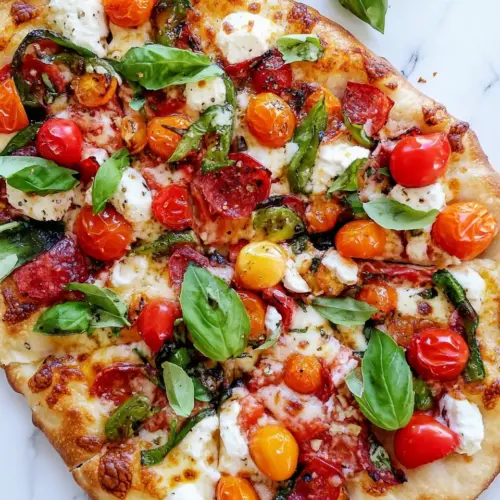
Pepper and Cherry Tomato White Pizza
Pepper and Cherry Tomato White Pizza is a creamy, crispy, and easy weeknight dinner that balances roasted bell peppers and burst cherry tomatoes with melty provolone and gruyere. Bright basil and a splash of balsamic vinegar lift every bite, making it perfect for casual dinners or summer gatherings. Try it tonight for an effortless, crowd pleasing pizza.
Equipment
- Baking Sheet
- Medium skillet
- Rolling surface
Ingredients
- 3 tablespoons extra virgin olive oil Drizzle generously over vegetables and dough to provide rich fruity flavor and help achieve a crisp, golden crust when baking the pizza, while also carrying and melding other seasonings for depth.
- 2 -3 bell peppers sliced Slice thinly and sauté or roast to add sweet, slightly smoky crunch and vibrant color to the pizza topping; contribute texture contrast and complementary flavor to cheeses and herbs.
- 1 cup cherry tomatoes Burst when roasted or warmed to release bright, tangy-sweet juices that balance the richness of the cheeses and add pops of fresh acidity across each bite.
- 2 cloves garlic, smashed Smash and gently cook to infuse aromatic pungency and savory depth; distribute subtle heat and a fragrant backbone that complements both oils and vinegars.
- 1 tablespoon fresh oregano leaves Chop finely and scatter over the pizza to introduce a woodsy, slightly minty-fragrant note that elevates the overall herbaceous profile and pairs well with tomatoes and cheeses.
- 1 tablespoon balsamic vinegar Splash over roasted peppers and tomatoes before assembling to add concentrated sweet-tart complexity and to brighten the overall flavor with a gentle vinegar backbone.
- 1 pinch crushed red pepper flakes Sprinkle sparingly to introduce a touch of heat and warming spice; contrasts the creamy cheeses and balances sweeter elements without overpowering the dish.
- 1 pinch kosher salt Season lightly to enhance all other flavors and draw out natural sweetness from the vegetables and dough while ensuring proper overall seasoning of the pizza.
- 1/2 pound pizza dough, homemade or store-bought Stretch and shape to form the pizza foundation, providing chewy, airy structure that crisps at the edges and supports toppings; can be baked for a thin or thick crust depending on preference.
- 1 cup shredded provolone Shred and scatter to deliver a melty, slightly sharp creaminess that stretches and browns nicely, contributing savory depth and a mild tang to the white pizza.
- 1 cup shredded gruyere Grate and blend with other cheeses to offer nutty, buttery richness and excellent melting qualities that create a smooth, golden-bubbly topping with complex flavor.
- 1 large handful fresh basil, plus more for topping Tear and scatter fresh leaves before and after baking to provide bright, peppery-sweet herbal freshness and aromatic lift; add extra leaves as a garnish for visual appeal and fragrance.
Instructions
- Preheat the oven to 450 degrees F. Grease a large baking sheet with olive oil. Heat a medium skillet over medium heat. Add the olive oil, bell peppers, tomatoes, garlic, oregano, balsamic vinegar, and a pinch of both crushed red pepper and salt. Cook until the peppers just begin to soften and the garlic is fragrant, about 10-15 minutes. Remove from the heat. On a lightly floured surface, push/roll the dough out until it is pretty thin (about a 10-12 inch circle). Transfer the dough baking sheet. Drain the olive oil left over from the peppers and spread it over the dough. Add the provolone and then arrange the peppers and tomatoes over top. Sprinkle on the gruyere and fresh basil. Transfer to the oven and bake for 10-15 minutes or until the crust is golden and the cheese has melted. Top with fresh basil. EAT!: As the oven warms, you'll smell faint warm air and the faint mineral scent of the dry heat, signaling that the environment for a crisp crust is forming. Preheating is essential so the dough begins to set immediately on the hot surface, promoting oven spring and a nicely blistered edge. A common error is slipping the pizza into a cool oven, which yields a denser, soggier crust. Make sure your oven indeed reaches 450 degrees F by using an oven thermometer if yours runs cool or hot.
- Grease a large baking sheet with olive oil: Rubbing a thin sheen of extra virgin olive oil across the pan creates a barrier between dough and metal, helping the bottom crisp and preventing sticking. You should notice the oil glisten and pool slightly in low spots, which will brown and take on a toasted aroma when heated. Using too much oil, however, can cause the dough to fry rather than bake, so wipe away visible excess before placing the dough.
- Heat a medium skillet over medium heat: The skillet will hiss softly as it warms, indicating readiness to receive ingredients. Heating first ensures vegetables begin to sizzle immediately, releasing moisture and caramelizing faster. Skipping this step means longer overall cook time and a risk of steaming the vegetables, leaving them limp instead of slightly charred.
- Add the olive oil, bell peppers, tomatoes, garlic, oregano, balsamic vinegar, and a pinch of both crushed red pepper and salt: When these items hit the hot pan you'll hear a lively sizzle and see juices begin to mingle. The garlic and oregano will perfume the oil, and the vinegar will hiss as it reduces, concentrating sweet and tangy notes. Stir to coat everything, and resist overcooking which would collapse textures and dull bright flavors. If the pan seems dry, add a teaspoon of oil rather than crowding the pan and steaming.
- Cook until the peppers just begin to soften and the garlic is fragrant, about 10 to 15 minutes: During this period watch for the peppers to soften but retain some bite, their edges taking on small browned spots. The aroma should shift from raw vegetal to a sweeter, roasted scent with garlic warmth. If you leave them much longer they will become overly sweet and lose texture. Stir periodically, scraping any fond, because those browned bits carry concentrated flavor.
- Remove from the heat: When you pull the skillet off the burner you'll notice an intensified aroma as steam rises and the residual heat continues gentle cooking. This pause also allows the mixture to cool slightly so it doesn't immediately release too much moisture onto the dough. If you skip resting, hot juices can saturate the crust, making the bottom soggy rather than crisp.
- On a lightly floured surface, push/roll the dough out until it is pretty thin about a 10 to 12 inch circle: Rolling the pizza dough should feel elastic and springy, with the surface smoothing under your palms. The act of rolling also lets you detect uneven thickness, which you can correct by pressing gently where needed. If the dough resists, let it rest for a few minutes, because overworking cold, tight dough can make it shrink back and become tough during baking.
- Transfer the dough to the baking sheet: Sliding the stretched dough onto the oiled sheet should be smooth, the oil helping it glide and settle. The dough should already show slight surface dimples as evidence of handled structure. If it sticks or tears, gently patch with pinched edges and press to seal; avoid overworking that area as it can create dense spots.
- Drain the olive oil left over from the peppers and spread it over the dough: Spoon the drippings and a little of the pan oil across the dough surface so each bite picks up that roasted vegetable essence. You will see a glossy sheen and smell the concentrated roasted notes. Too much oily puddling will create soggy pockets, so distribute thinly with the back of a spoon, leaving the edges mostly dry to crisp up.
- Add the provolone and then arrange the peppers and tomatoes over top: Scatter shredded provolone evenly so it melts into a cohesive cushion for the vegetables, then arrange the roasted bell peppers and cherry tomatoes in an even layer for balanced bites. As the cheeses warm in the oven they will bubble and pull moisture into a silky layer around the vegetables. Overcrowding with toppings can inhibit browning and make the center heavy, so leave breathing room near the edges.
- Sprinkle on the gruyere and fresh basil: The gruyere will add nutty complexity and attractive browning while the handful of fresh basil tucked under the cheese will wilt slightly and lift its aroma. You should see the cheese distributed in little mounds that will melt into golden patches. If you add all the basil now, some of its bright green hue will dull; reserve a small portion for topping after baking for freshness.
- Transfer to the oven and bake for 10 to 15 minutes or until the crust is golden and the cheese has melted: In the oven the crust should begin to puff and brown at the edges, producing a toasty aroma and light crackle as it cools. The cheeses will bubble and develop golden spots, releasing a nutty, savory scent as they brown. Pull the pizza when the crust is golden and the cheese is glossy and flowing. Leaving it too long risks drying the cheese and hardening the crust.
- Top with fresh basil: Once out of the oven, scatter the reserved fresh basil so its cooling leaves keep aromatic oils intact, lending a bright herbaceous finish. The basil will soften against the warm surface, releasing a final fragrant note. If you omit this, the pizza loses an element of freshness that balances the richness of the cheeses.
- EAT!: The first bite should present a mix of textures, from crisp crust to creamy cheese and tender roasted vegetables, with the basil and seasonings lifting each forkful. Take note of the contrast and adjust future bakes slightly if you prefer more char, more cheese, or a thinner crust. Rushing to slice while piping hot can scald, so allow a minute to settle for cleaner slices and safer bites.
Notes
- Room temperature dough: Letting your pizza dough come to room temperature for 30 minutes makes it much more pliable and easier to stretch without snapping back, which prevents dense spots in the crust.
- Evenly sliced peppers: Cut your bell peppers into similar thickness so they roast uniformly, avoiding a mix of raw and charred pieces on the same pizza.
- Drain roasted vegetables: Spoon off excess oil from the pan after roasting to prevent oil pooling on the dough, which can produce a soggy surface rather than a crisp base.
- Layer cheeses strategically: Put the milder provolone down first to form a creamy bed, then top with gruyere for browning and nuttiness that adds depth to each bite.
- Final basil addition: Reserve a handful of fresh basil to scatter on the pie right after baking to preserve its color and bright herbal note that completes the flavor profile.
- Use an oven thermometer: Confirm your oven reaches and holds 450 degrees F for consistent crust results, as many home ovens can run cooler or hotter than their set temperature.