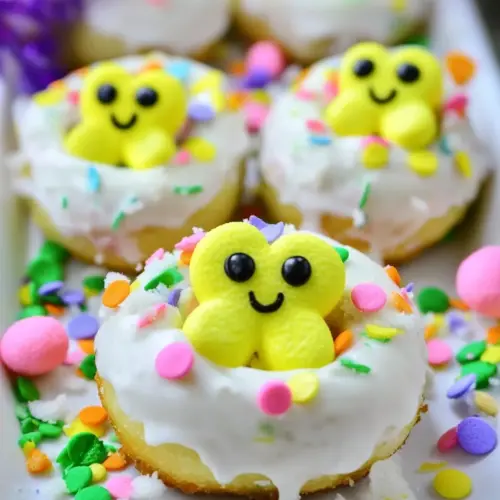
Peeps Baked Lemon Cake Donuts
Peeps Baked Lemon Cake Donuts are light, citrus scented baked treats topped with a glossy lemon glaze and playful marshmallow decorations. These tender cake donuts balance bright lemon flavor with a soft, moist crumb, making them ideal for spring brunches and holiday gatherings. They are easy to make, kid friendly, and a cheerful reason to celebrate.
Equipment
- Donut Pan
- Mixing Bowls
- Whisk
- wire cooling rack
- Spoon or small scoop
Ingredients
- 1/2 cup all-purpose flour Provides structure and tenderness to the donut batter while contributing gluten for light chewiness; combines with whole wheat pastry flour to balance texture and yield a soft crumb. Sifts easily into dry mix to ensure even distribution and prevent lumps before adding wet ingredients.
- 3/4 cup whole wheat pastry flour Adds whole-grain flavor and additional fiber while lightening the dense all-purpose flour for a nuttier, heartier crumb; helps absorb moisture for a stable dough. Works with the all-purpose flour to create a balanced texture that remains tender after baking.
- 1/3 cup granulated sugar Sweetens the batter, promoting browning and moistness while balancing the lemon's tartness; dissolves quickly into wet ingredients for even sweetness. Controls overall sugar level to keep donuts lightly sweet without overpowering citrus notes.
- 1 teaspoon baking powder Leavens the batter by producing carbon dioxide when combined with moisture and heat, creating lift and lightness in the donuts; helps achieve a tender, cake-like texture. Should be evenly mixed with dry ingredients to avoid uneven rising or bitter pockets.
- 1/2 teaspoons salt Enhances overall flavor by balancing sweetness and strengthening gluten slightly; helps control yeast and baking reactions and ensures the correct seasoning profile. Requires precise measurement since too much salt can mute the lemon flavors.
- 2 eggs large Binds ingredients together and adds richness, moisture, and structure through protein coagulation during baking; contributes to a tender crumb and golden color. Beaten lightly before adding to batter for even incorporation and consistent texture.
- 1/3 cup milk Adds liquid to hydrate dry ingredients, dissolve sugar, and activate leaveners while contributing mild dairy richness; helps achieve proper batter consistency for piped or scooped donuts. Can be adjusted slightly for thicker or thinner batter to control donut density.
- 2 tablespoons canola oil Contributes fat for tenderness, moisture, and a delicate crumb while aiding in browning; provides a neutral flavor that lets lemon and Peeps stand out. Should be combined with other wet ingredients for uniform distribution and emulsification.
- 3 tablespoons unsweetened applesauce Replaces some oil for reduced fat while adding moisture and natural sweetness, helping create a tender, cake-like texture; contributes to binding and prevents dryness. Blends smoothly with other wet ingredients and complements whole wheat pastry notes.
- 2 teaspoons freshly squeezed lemon juice Boosts bright citrus flavor and acidity, enhancing the lemon profile while reacting with baking powder for slight lift and freshness; adds a clean, tart note to contrast sweetness. Best used freshly squeezed to avoid bitterness from bottled juice.
- 1 1/2 teaspoons vanilla extract Adds aromatic depth and warmth while complementing lemon flavor, enhancing overall fragrance and complexity; helps round out sweetness and citrus brightness. Incorporate with other wet ingredients to disperse evenly through the batter.
- 1 tablespoon lemon zest Concentrates essential lemon oils for an intense citrus aroma and flavor, producing vibrant lemon character in the donuts; also visually indicates lemon presence when mixed into batter. Zest should be finely grated to release oils without adding bitter pith.
- 1 cup powdered sugar Creates a sweet glaze base that adds a smooth, sugary coating for shine and sweetness; dissolves with lemon juice to form a pourable icing that complements the donut's citrus notes. Powdered sugar also helps balance tartness and provides a silky mouthfeel.
- 1 -2 tablespoons freshly squeezed lemon juice Thins the powdered sugar into a glossy lemon glaze while intensifying tartness and freshness; controls glaze consistency from drizzle to pourable. Fresh juice ensures bright flavor and prevents the glaze from tasting flat or overly sweet.
- Marshmallow Peeps Adds a playful, seasonal marshmallow topper that provides soft chewiness and visual whimsy; melts slightly when placed on warm donuts and offers a contrast in texture and sweetness. Decorative Peeps introduce nostalgia and fun to the finished donuts.
- Green candy grass Provides decorative texture and color reminiscent of spring grass, enhancing presentation and creating a festive base for Peeps; adds a slight crunch and visual contrast. Sprinkled around the donut or on the glaze, it completes the seasonal look.
- mini jelly beans Contributes small bursts of fruity sweetness and vibrant color for garnish, offering contrast in texture and chew to the soft marshmallow and cake; enhances visual appeal and taste variety. Scattered strategically, mini jelly beans make each donut bite playful and colorful.
Instructions
- Preheat oven to 350 degrees. Grease a donut pan and set aside.: The kitchen will begin to smell faintly warm as the oven comes up to temperature, and preheating ensures the batter springs up evenly when it hits heat. You should feel consistent radiant warmth when you open the oven and see a steady glow on the racks. This step matters because baking in an oven that is not fully hot can lead to flat, dense donuts. A common mistake is skipping preheat, which changes bake time and texture, so always wait until the oven reads the target temperature.
- In a large mixing bowl whisk the flours, sugar, baking powder and salt together.: As you lightly oil the wells, you will notice a slick surface that helps the cakes release. Greasing prevents sticking and keeps the finished donut edges smooth and intact. If the pan looks dry in spots, the donuts can tear when you remove them, so be thorough but avoid pooling oil. Using the wrong release technique is a frequent issue, so use a pastry brush or nonstick spray for even coverage.
- In a medium bowl whisk the eggs together with the milk, applesauce, oil, lemon juice and vanilla extract. After combined add the lemon zest.: Mixing these dry ingredients creates a uniform base so the leavening distributes evenly. The texture will be powdery and speckled with the tiny grains of sugar, and you should not see streaks of flour when it is done. This matters because uneven leavening causes patchy rise. A common error is adding wet ingredients too soon, which can lead to pockets of unincorporated baking powder, so fully whisk the dry mix first.
- Pour the wet mixture into the dry ingredients and fold together until combined (don’t beat or over mix).: Whisking produces a glossy mixture with ribbons from the beaten eggs and a faint citrus aroma from the lemon juice and vanilla . The sound is a soft whisking rhythm, and the mixture should look homogeneous. This step ensures even hydration and flavor distribution, which helps the cake rise and stay tender. A common mistake is under whisking, leaving the eggs uneven and the batter inconsistent, so whisk until smooth.
- Spoon the batter into the donut pan filling 3/4 full. Bake for 20 minutes or until light golden brown. Let cool for 5 minutes before putting them on a wire cooling rack.: When you fold in the lemon zest , you will notice a bright, citrus perfume that lifts the whole bowl. The tiny flecks of zest are visual cues of lemon flavor distributed throughout the batter. Adding zest late preserves volatile oils that can fade with prolonged mixing. If you add zest too early and then overmix, much of that fresh aroma can dissipate, so add it just before combining wet and dry.
- GLAZE: As you fold, the batter should transform from a crumbly mass into a smooth, slightly thick batter with gentle ribbons. The sound is quiet, and the visual cue is that there are no streaks of dry flour. Folding instead of beating preserves air and keeps the crumb tender, which is crucial for light texture. Over mixing is the main pitfall here, so stop when no dry streaks remain to avoid a tough final donut.
- Mix the powdered sugar with one tablespoon of the lemon juice. Add more until desired consistency. Dip each donut in the glaze and place on a baking sheet covered with parchment paper or foil. Add candy grass and gently add Marshmallow Peep in the center of the donut. Decorate with jelly beans and let set.: As you spoon, the batter should mound slightly in each well and hold its shape, indicating the right consistency. Filling to three quarters allows room for the donuts to rise without overflowing, producing a domed top that browns evenly. If you overfill, expect spillover and uneven shapes, so measure by eye and tap the pan gently to settle batter.
- Bake for 20 minutes or until light golden brown: During baking you will see the edges set and a gentle golden color appear, and a light citrus scent will float through the oven. The tops should spring back slightly when touched and a toothpick inserted into the center should come out clean or with a few moist crumbs. Baking to the right color and springiness ensures the interior is cooked but still tender. Under baking is a common mistake that yields gummy texture, so rely on visual cues and the toothpick test.
- Let cool for 5 minutes before putting them on a wire cooling rack: In these five minutes the donuts relax and steam escapes, which helps prevent soggy bottoms. The warmth will still be present but manageable, and transferring to a wire rack allows air to circulate so they cool evenly. Leaving them too long in the pan can trap moisture and lead to soft bottoms, so move them while they are warm but not piping hot.
- GLAZE: The glaze begins to transform powdered sugar into a glossy coating, and you will notice a thick, shiny paste that can be thinned with lemon juice . A good glaze should cling to the donut and set with a soft sheen. If the glaze is too thin it will slide off, if too thick it will look pasty, so adjust gradually for the right balance. Rushing this step and dunking into hot glaze can cause the toppings not to adhere properly.
- Mix the powdered sugar with one tablespoon of the lemon juice: Start with a soft, powdery mound and watch it become satin smooth as the juice is whisked in, releasing the citrus fragrance again. The consistency should coat a spoon and drip slowly, which indicates it will set nicely on the donut. Taste and tweak for acidity and sweetness balance. Adding too much juice at once is a common issue leading to runny glaze, so add slowly.
- Add more until desired consistency: As you add more lemon juice , the glaze will loosen and become more pourable, letting you control whether you want a thin sheen or a thick cap. The visual cue is the way the glaze settles into a smooth surface without too many bubbles. Over thinning will prevent it from setting, so aim for a thick ribbon that holds briefly on the surface before smoothing.
- Dip each donut in the glaze and place on a baking sheet covered with parchment paper or foil: When dipped, the donut should emerge with a smooth, even coat that catches the light. Place them on parchment to avoid sticking and to keep decorations tidy. Work quickly but gently, because a slow approach lets the glaze set unevenly. The common mistake is dipping when the glaze is clumpy or grainy, indicating it needs another whisk.
- Add candy grass and gently add Marshmallow Peep in the center of the donut: Sprinkle the green candy grass while the glaze is tacky, then press the Marshmallow Peeps in the center so they adhere without sinking. The contrast of textures is immediate, soft marshmallow against glossy glaze and fine candy strands. If you press too hard the topper may smudge the glaze, so be delicate and patient.
- Decorate with jelly beans and let set: Finish with mini jelly beans for pops of color, placing them where the glaze is still slightly wet so they stick. Allow the donuts to rest until the glaze has set to the touch, which creates a pleasant snap when bitten. Placing decorations too late can cause them to roll off, and placing them too early while the glaze is too wet can cause the toppings to sink, so time it just right.
Notes
- Room temperature eggs: Bringing the eggs to room temperature helps them incorporate more evenly into the wet mix, producing a smoother batter and better rise.
- Gentle folding: Folding the wet and dry mixtures together prevents gluten overdevelopment, keeping the crumb tender and soft rather than chewy or tough.
- Test glaze consistency: Aim for a glaze that ribbons off a spoon slowly, that way it will coat the donuts without dripping off in puddles.
- Even filling: Use a small cookie scoop or piping bag to fill the donut wells consistently so bake times and shapes are uniform across the batch.
- Decorate while tacky: Add the green candy grass, Marshmallow Peeps, and mini jelly beans while the glaze is still tacky so toppings adhere cleanly.
- Storage: Store the donuts in a single layer at room temperature for up to two days, placing parchment between layers if stacking to protect the glaze and decorations.