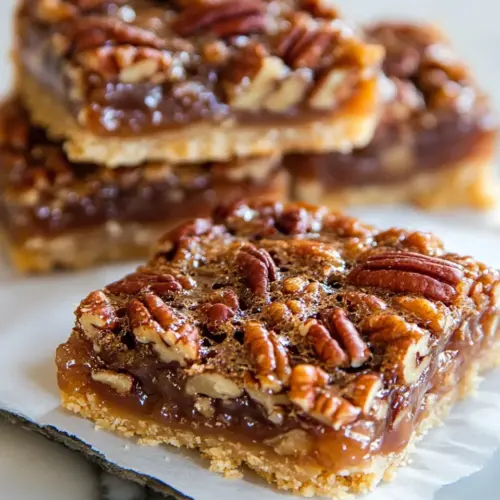
Pecan Pie Bars
Pecan Pie Bars offer a buttery shortbread base topped with a gooey, nut filled caramel layer, delivering warm, toasty and sweet flavors in every bite. This easy to share dessert is ideal for holidays and casual gatherings, combining crisp texture with a sticky, satisfying finish. Make a pan for a crowd pleasing treat that keeps well and disappears fast.
Equipment
- 13 by 9 inch baking dish
- Foil
- Electric Stand Mixer
- Heavy-Bottomed Saucepan
- Wire Rack
- Spatula
Ingredients
- 1 cup butter, softened Creamed to create a tender, buttery crust and provide rich flavor and moisture in the shortbread base for the bars.
- 2/3 cup packed light-brown sugar Packed to add caramel-like sweetness and deep molasses notes that enhance the crust and balance the pecan filling.
- 1/2 tsp salt Added sparingly to balance sweetness and enhance the overall flavor while strengthening the dough structure during mixing.
- 1 1/2 tsp vanilla bean paste or 1 tsp vanilla Added for aromatic depth and vanilla flavor that heightens the pastry and filling; paste provides visible flecks while extract is a smooth alternative.
- 2 2/3 cups all-purpose flour Combined into the dough to form the bulk of the crust, providing structure and a tender crumb when properly mixed and chilled.
- 1/2 cup butter Melted or softened into the topping to bind sugars and pecans, adding richness and a glossy finish to the filling layer.
- 1 cup packed light-brown sugar Packed to sweeten the pecan layer with a mellow, toffee-like taste that caramelizes during baking for a classic pecan bar profile.
- 1/3 cup honey Incorporated to lend floral, complex sweetness and assist with a slightly softer, chewier filling texture when mixed with sugars and butter.
- 2 tbsp heavy cream Stirred in to enrich the filling, contribute creaminess and help create a smooth, cohesive caramel-like consistency for the nut layer.
- 1/8 tsp salt Used in small amount to subtly enhance flavors and control sweetness, helping to round out the filling without salting the crust too much.
- 2 cups roughly chopped pecans Chopped and folded in to provide crunch, toasted flavor, and the signature nutty profile that defines pecan bars and complements the sweet filling.
- 1 tsp orange zest (optional) Zested finely to add bright citrus aroma and a hint of acidity that lifts the richness of the butter-sugar-pecan filling when used optionally.
Instructions
- Preheat oven to 350 degrees. Line a 13 by 9-inch baking dish with foil, leaving a two-inch overhang on all sides. In the bowl of an electric stand mixer, whip 1 cup butter with 2/3 cup brown sugar and 1/2 tsp salt until pale and fluffy. Mix in vanilla bean paste.: The oven warming gives you a reliable environment so the shortbread sets properly while the topping bubbles evenly. You should smell a faint warmth and, if your oven is calibrated, expect the heat to wrap the pan consistently, promoting even browning. A common mistake is skipping preheating, which can lead to a pale, underbaked base. Check that racks are centered and the oven is at a steady temperature before sliding the dish in.
- With mixer set on low speed, slowly add in flour and mix until dough begins to come together in crumbles. Press mixture into an even layer in prepared baking dish and bake in preheated oven 20 minutes, or until edges are golden.: The foil creates a nonstick lift out and makes slicing and storage far simpler. Smooth the foil into corners and press it so the edges lie flat, which helps the crust bake evenly without pooling. You may hear a slight crinkle as you press the foil, and visually, the pan will look shiny and ready. Avoid using too little overhang, or you will struggle to lift the bars out cleanly later.
- Meanwhile prepare the topping by melting together 1/2 cup butter, brown sugar, honey, heavy cream and salt in a heavy-bottomed medium saucepan set over medium heat. Simmer mixture 1 minute, then stir in orange zest and pecans.: As you whip, the mixture will lighten in color and develop a creamy, aerated texture that contributes to a delicate shortbread crumb. You will see small air bubbles and the beaters leaving trails when lifted. Over mixing can make the dough too soft, so stop when it is smooth and pale. If you do not have a stand mixer, use a hand mixer and pause occasionally to scrape the bowl for even creaming.
- Pour pecan mixture over hot shortbread and spread into an even layer. Return to oven and bake until top is bubbling, about 20 minutes.: The paste disperses tiny flecks and fragrant vanilla throughout the dough, which enhances aroma and complexity. Stir gently so the paste dissolves into the creamed butter and brown sugar , and breathe in the warm scent as it melds. A common misstep is adding too much liquid vanilla, which could make the dough sticky; measure carefully.
- Allow to cool completely on a wire rack (you can cool in the fridge or freezer to speed up cooling) then, using foil overhang lift bars out and cut into squares. Store in an airtight container.: Adding the flour gradually prevents a dense, overworked base and lets you judge the texture. The dough should form loose crumbs that hold together when pressed. If it looks dry, small bits of fat will still bind when pressed into the pan. Over mixing at this stage leads to a tough crust, so aim just until it starts to clump.
- Press mixture into an even layer in prepared baking dish: Use your fingers or the bottom of a measuring cup to press the crumbs into a uniform layer, creating a compact, even shortbread base. The visual cue is a smooth, lightly glossy surface with no gaps or high spots. Press firmly to avoid a crumbly bar later, but not so hard that the base becomes compacted and dense. Uneven pressing will cause inconsistent baking, so take a moment to level it out.
- Bake in preheated oven 20 minutes, or until edges are golden: During baking you will notice the smell of toasted butter and the edges developing a warm golden hue. The base should be set to the touch and not doughy in the center. If it still looks pale after the time, allow a few more minutes and watch closely to avoid over browning. Opening the oven too frequently can drop the temperature and affect the texture.
- Meanwhile prepare the topping by melting together 1/2 cup butter, brown sugar, honey, heavy cream and salt in a heavy bottomed medium saucepan set over medium heat: As the mixture warms, watch it become glossy and the sugars dissolve into the butter . Stirring helps the components combine and prevents scorching. You should hear a gentle simmer and see steam rising, with the mixture thickening slightly. Using a heavy bottomed pan prevents hot spots that can burn the sugars, an error that would give the topping a bitter edge.
- Simmer mixture 1 minute, then stir in orange zest and pecans: The brief simmer allows the sugars and heavy cream to meld into a cohesive syrup that will set properly. After simmering, folding in the roughly chopped pecans and optional orange zest distributes texture and brightness. The aroma should shift toward toasted nuts and caramel. Avoid simmering too long, or the mixture may overcook and harden rather than set with a pleasant chew.
- Pour pecan mixture over hot shortbread and spread into an even layer: Pour while the topping is hot so it seeps slightly into the shortbread, bonding the layers. Use a spatula to coax the mixture toward the edges, creating an even surface studded with nut pieces. You will see glossy pooling that gradually evens out. If you wait too long and the topping cools, it will be harder to spread smoothly.
- Return to oven and bake until top is bubbling, about 20 minutes: The bubbling is the crucial signal that the topping has reached the right temperature and the sugars are caramelizing around the pecans . Expect audible gentle bubbling and a shiny, slightly thickened surface. Over baking can dry the topping out, making it crumbly rather than tacky, so remove when you observe even bubbling and a deepened color.
- Allow to cool completely on a wire rack: Cooling lets the filling set so you can slice neat squares. You may feel warm caramel steam as the pan rests, and the bars will firm up visually around the edges. A common mistake is cutting while still warm, which leads to messy slices. If you are impatient, chilling briefly in the fridge helps, but do not freeze solid before cutting or it will fracture.
- Using foil overhang lift bars out and cut into squares: The lift out makes removing the slab effortless and protects those clean edges. Place a sharp knife to cut, and if needed wipe between cuts for tidy slices. The bars should show a defined shortbread layer and a glossy, nutty top. If the bars crumble when you cut, they may not have cooled enough, so return them to the fridge for a short interval.
- Store in an airtight container: Proper storage maintains texture and flavor. Keep the bars at room temperature for a day or refrigerate for longer shelf life, ensuring they remain pleasantly chewy. If stacking, place parchment between layers to prevent sticking. Leaving them uncovered will dry out the topping, so airtight is key.
Notes
- Choose good quality butter — Real, flavorful butter makes a noticeable difference in both the crust and the topping. I prefer European style when available for a richer mouthfeel, but standard unsalted butter works fine too.
- Measure flour correctly — Spoon the flour into your measuring cup and level it off rather than scooping directly. This prevents a dense shortbread base and keeps the crumb tender and light.
- Toast pecans first — Gently toasting the pecans for a few minutes in a dry skillet enhances their aroma and brings out oils that deepen the overall flavor of the topping.
- Use a heavy bottomed saucepan — This prevents hot spots and caramel scorching. Even heat distribution helps the sugar and butter form a smooth, glossy topping instead of a grainy one.
- Adjust sweetness with honey — If you prefer a less sweet bar, reduce the honey slightly and rely more on the brown sugar for caramel notes. Taste the warm mixture carefully before pouring to ensure you like the balance.
- Chill before slicing — For the cleanest squares, chill the pan for at least 30 minutes after it cools to room temperature. The filling firms and slices much more cleanly, making for prettier serving pieces.