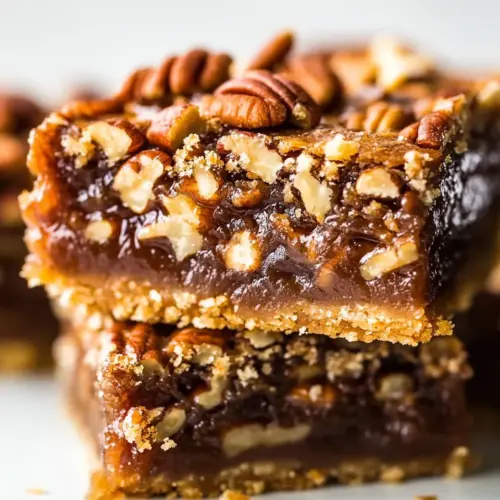
Pecan Pie Bars
Pecan Pie Bars are a crispy buttery crust topped with a glossy, chewy pecan filling, offering toasted nut aroma and caramel like richness. These easy to slice bars are perfect for holiday gatherings and casual potlucks, delivering familiar flavors in a convenient bar format. Make them for a crowd friendly dessert that travels well and is sure to become a festive favorite.
Equipment
- 9 x 13-inch baking pan
- Parchment Paper
- Food processor or blender
- Mixing Bowls
- Wire Rack
Ingredients
- 2 cups (10 ounces) all-purpose flour Provide structure and tenderness to the bars while creating a neutral base; sifted and measured by weight ensures consistent texture and reliable crumb in the crust.
- 1/2 teaspoon baking powder Leaven the dough slightly to prevent heaviness in the crust and contribute a lightness to the shortbread-like base; use fresh baking powder for best rise.
- 1/2 teaspoon ground cinnamon Add warm, aromatic notes that enhance the nutty filling and crust; balance with other spices to avoid overpowering the pecan flavor.
- 1 teaspoon salt Season and balance sweetness throughout both crust and filling, strengthening flavors and enhancing contrast; dissolve thoroughly so it distributes evenly.
- 1/3 cup (2 and 1/3 ounces) dark brown sugar, packed Sweeten and brown the crust slightly while contributing moistness; packing the sugar ensures consistent measure and caramel-like depth once baked.
- 1/3 cups Stevia In The Raw® Bakers Bag Provide sweetness without sugar calories in both crust mixtures or filling, helping reduce overall sugar content while maintaining bulk and texture.
- 3/4 cup pecans, toasted and coarsely chopped Contribute crunch and toasty flavor to the crust when chopped coarsely; toasting deepens nuttiness and prevents sogginess in the finished bars.
- 12 tablespoons (6 ounces) unsalted butter, cold and cut into small pieces Cut into the dry ingredients to form a coarse, flaky dough for the crust, adding richness and helping create tender layers when chilled and pressed.
- 8 tablespoons (4 ounces) unsalted butter, melted Supply fat and moisture to the filling, aiding in a smooth, glossy texture and helping dissolve sugars for a cohesive pecan topping.
- 1/2 cup (3 and 1/2 ounces) dark brown sugar, packed Enhance the filling's sweetness and contribute a deeper caramel flavor; packed measure ensures predictable sweetness and consistency.
- 1/2 cup Stevia In The Raw® Bakers Bag Provide additional sweetness with fewer calories, helping balance the filling's texture and reducing total sugar without affecting structure.
- 3/4 cup dark corn syrup Deliver classic pecan pie flavor and viscosity to the filling; its viscosity helps the filling set while giving a glossy, chewy finish.
- 2 teaspoons unsulphured molasses Deepen the molasses-forward flavor profile and add complexity to the filling with a touch of robust, slightly bitter sweetness.
- 1 tablespoon vanilla extract Amplify overall flavor and aroma of the filling by adding warm, floral notes; use pure vanilla for the cleanest taste.
- 3/4 teaspoon salt Heighten the filling's overall seasoning and control sweetness perception; salt enhances other flavors and balances richness.
- 1 large egg plus 2 egg yolks, lightly beaten Bind the filling ingredients together while contributing richness and a custard-like set; beating ensures even incorporation and smooth texture.
- 3 and 1/2 cups pecans, toasted and coarsely chopped Provide abundant nutty crunch and pronounced toasted flavor for the topping; chopping coarsely preserves texture and creates delightful contrast.
Instructions
- Preheat oven to 350 degrees (F). Line a 9 x 13 inch baking pan with parchment paper, allowing the sides to overlap. Spray the parchment paper and exposed pan with non-stick baking spray and set aside.: As the oven warms, you will notice a faint mechanical hum and gradually rising warmth, which primes the pan and ensures even baking. Preheating is critical so the crust begins to set the moment it hits the heat, helping achieve a golden exterior without an underbaked center. A common mistake is slipping into other tasks and forgetting this step, which can extend bake times unpredictably. Make sure your oven reads a consistent 350 degrees (F) before inserting the pan.
- In the bowl of a food processor or blender, combine the flour, baking, salt, brown sugar, Stevia In The Raw®, and pecans; pulse until the mixture resembles a coarse meal, about 6 pulses. Add in the butter and pulse until the mixture is cohesive, about 8 pulses. Using a rubber spatula, scrape the mixture into the prepared pan. Pat the crust into an even layer and bake for 20 to 22 minutes, or until the crust is golden brown and it springs back when lightly touched.: Lining the pan creates easy removal and straight edges. The tactile action of smoothing the parchment into corners helps prevent bubbling or wrinkles that can affect the crust shape. If you skip overlapping sides, you may struggle to lift the bars cleanly from the pan, so leave a generous overhang for leverage.
- While the crust is baking, make your filling. In a large bowl add the melted butter, dark brown sugar, Stevia In The Raw®, corn syrup, molasses, vanilla, and salt; whisk well to combine. Add in the egg and egg yolks and whisk until combined.: Spraying guarantees that the parchment and any exposed metal will release without sticking, preserving the delicate crust edges. Lightly spritzing the pan also prevents caramelized sugar from welding to metal. Avoid heavy coating that pools, and be careful with aerosol sprays near direct flame or heat sources.
- Pour the filling over the warm crust, then sprinkle pecans evenly on top. Bake for 25 minutes, or until the top is brown and shiny. Cool bars in the pan, on a wire rack, for 2 hours before cutting.: As you pulse, listen for a change in rhythm and look for coarse crumbs that hold together when pressed. This texture signals the right balance of dry ingredients and chopped pecans . Over processing will make the mixture too fine and yield a tougher crust, so stop when you still see tiny bits of nut throughout.
- Add in the butter and pulse until the mixture is cohesive, about 8 pulses: The cold unsalted butter will break into pea sized pieces, creating pockets that melt during baking and produce flakiness. You should see the dough begin to clump when pinched. If the butter softens too much, chill the bowl briefly; warm butter can turn the crust greasy and dense.
- Using a rubber spatula, scrape the mixture into the prepared pan: The spatula allows you to press the crumbly dough evenly across the pan bottom without warming it with your hands. Firm, even pressure creates a uniform crust thickness for consistent baking. If you press unevenly, thin spots may brown too quickly while thicker areas stay underbaked.
- Pat the crust into an even layer and bake for 20 to 22 minutes, or until the crust is golden brown and it springs back when lightly touched: You will notice a nutty aroma and a light golden color along the edges as cues the crust is ready. The spring back test is a gentle way to confirm setness without overbaking. Resist the urge to extend the bake time excessively, which could dry the crust and make it brittle rather than pleasantly crisp.
- While the crust is baking, make your filling: Preparing the filling during the crust bake keeps momentum and ensures the crust is still warm when you pour the filling, which helps the layers meld. The bowl will hold a glossy mixture without separation when emulsified properly. A common slip is adding eggs to a very hot liquid, which can scramble them, so temper carefully if needed.
- In a large bowl add the melted butter, dark brown sugar, Stevia In The Raw®, corn syrup, molasses, vanilla, and salt; whisk well to combine: The whisking motion brings the sugars and liquids into a cohesive, glossy emulsion, and you will notice the mixture becoming smoother and slightly thickened. This homogeneous mix ensures even sweetness and a united texture in the finished bar. If ingredients remain uncombined, the filling can bake unevenly and develop grainy spots.
- Add in the egg and egg yolks and whisk until combined: Incorporating the eggs provides structure and richness, and whisking until smooth results in a velvety filling that sets properly. You should see a uniform color and sheen when fully incorporated. Avoid under mixing, which can leave streaks of raw egg, or over mixing vigorously, which might introduce excess air and cause bubbling while baking.
- Pour the filling over the warm crust, then sprinkle pecans evenly on top: Pouring over a warm crust helps the filling settle and adhere, creating a seamless layer. As you sprinkle the toasted pecans , aim for even coverage so each slice has nuts. If nuts clump on one side, that area will be pecan dense and others sparse, impacting texture balance.
- Bake for 25 minutes, or until the top is brown and shiny: The oven will transform the glossy filling into a set, amber top, with occasional tiny bubbles that subside as the bars cool. Visual cues like a shiny, slightly firm surface indicate doneness more reliably than strict timing. Keep an eye that the edges do not over darken; if the top seems to brown too quickly, tent loosely with foil.
- Cool bars in the pan, on a wire rack, for 2 hours before cutting: Cooling allows the filling to firm up and the flavors to meld, and the wire rack helps air circulate so the bottom does not steam and soften. Patience here yields clean slices with a defined crust to filling ratio. Cutting too soon will produce gooey, messy bars that do not hold their shape.
Notes
- Adjust nut quantity if you prefer more crunch, increase the topping pecans slightly to ensure every bite includes nuts.
- Control sweetness by balancing the brown sugar and Stevia In The Raw® to suit your palate, remembering that liquid sweeteners like corn syrup affect texture as well as taste.
- Enhance toasting by warming the pecans in a dry skillet for a minute or two to release oils, but keep a close eye to prevent burning.
- Chill before cutting to achieve cleaner edges, place the pan in the fridge for a short time if you prefer very neat slices.
- Use quality butter since the flavor of unsalted butter shines in both crust and filling, it significantly impacts the overall taste.