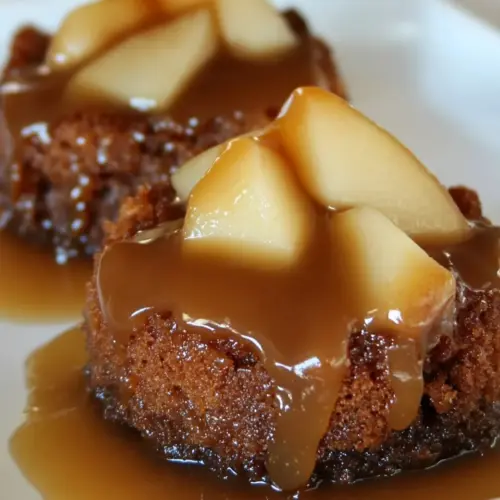
Pear Upside Down Gingerbread Cake
Pear Upside Down Gingerbread Cake is a spiced, moist dessert with a glossy caramel top and tender pear slices, offering a warm, cozy aroma. This easy to slice cake combines whole wheat flour and buttermilk for a hearty yet soft crumb, perfect for fall gatherings and easy weeknight desserts. Make it for its comforting spice profile and irresistible caramel finish.
Equipment
- 9 x 3 inch round cake pan
- Oven
- Mixing Bowl
- Saucepan
Ingredients
- 1 cup firmly packed dark brown sugar Provide deep molasses flavor and moisture while caramelizing during baking; pack firmly to ensure accurate measurement and a glossy, sticky topping that balances the pears' sweetness.
- 6 tablespoons butter, cut into several pieces Add rich creaminess and help melt the brown sugar to form a cohesive caramel layer; cut into pieces so it melts evenly and distributes heat across the pan for even browning.
- 2 pears, peeled, cored, and cut into wedges Contribute tender fruit texture, natural sweetness, and moisture while creating the decorative upside-down top; peel, core, and wedge uniformly so they hold shape and cook evenly without becoming mushy.
- 1 1/2 cups whole wheat flour Supply hearty structure and a nutty flavor while increasing fiber content, resulting in a slightly denser, wholesome crumb; whisk before measuring to remove lumps and ensure even distribution with leaveners.
- 1 cup granulated sugar Provide bulk sweetness and contribute to browning and moisture retention while tenderizing the crumb by interfering with gluten formation; measure level to maintain the intended texture and sweetness balance.
- 1 teaspoon baking soda Deliver chemical leavening that reacts with acidic components to release carbon dioxide, helping the cake rise and develop a light crumb; mix thoroughly into dry ingredients to avoid localized metallic pockets.
- 1 teaspoon baking powder Offer additional chemical leavening to ensure reliable rise and a tender crumb, often providing lift complementary to baking soda; combine with other dry ingredients for balanced aeration throughout the batter.
- 1/2 teaspoons salt Enhance overall flavor balance by moderating sweetness and strengthening gluten slightly, while improving dough handling; measure carefully since small amounts significantly affect seasoning and yeast-free leavening performance.
- 2 teaspoons ground cinnamon Impart warm aromatic spice with sweetness and depth, enhancing the pears and gingerbread profile; add to dry mix for even distribution and to prevent clumping that would create flavor hot spots.
- 1/4 teaspoon ginger powder Introduce warm, pungent heat characteristic of gingerbread in a concentrated form; balance with fresh ginger for brightness and fold into dry ingredients for consistent flavor throughout the cake.
- 1/8 teaspoon nutmeg Contribute subtle warmth and complexity with aromatic nutmeg that complements cinnamon and ginger; use sparingly as its potency can quickly dominate the spice blend if overused.
- 2 large eggs Provide richness, structure, and emulsification while adding moisture and color to the batter; beat eggs to incorporate air, which aids leavening and contributes to a tender, cohesive crumb.
- 1/2 cup oil Add neutral fat that contributes moistness and tender texture without overwhelming flavor; combine properly with wet ingredients to ensure a smooth batter and avoid greasy pockets.
- 1/2 cup buttermilk Bring tang, acid, and richness that react with baking soda for additional lift while contributing a subtly creamy flavor; measure carefully to maintain batter consistency and achieve tender crumb.
- 2 teaspoons grated fresh ginger Offer bright, zesty heat and aromatic freshness that complements ground ginger and spices; grate fresh ginger to maximize volatile oils and fold into wet ingredients for an even, lively ginger flavor.
- For the Caramel Sauce: Provide context label indicating the following items are for the caramel sauce component; separate this section clearly so stages and purposes remain organized within the recipe.
- 1/2 cup whipping cream Contribute luxurious creaminess and body to the caramel sauce while softening the cooked sugars; warm gently to combine and prevent scorching to achieve a smooth, glossy finish.
- 1/2 cup firmly packed dark brown sugar Add intense sweetness and molasses depth to the caramel sauce while helping it thicken as it cools; combine with granulated sugar and cream to create a balanced, sticky topping.
- 1/2 cup granulated sugar Bring clean sweetness and help the caramel reach the correct texture and crystallization point; dissolve fully with brown sugar and cream to produce a smooth, even caramel sauce.
- 1/2 cup unsalted butter Supply richness, mouthfeel, and a silky texture to the caramel while helping stabilize and meld sugars and cream; use unsalted butter to control overall salt level in the final sauce.
- 1 teaspoon vanilla extract Introduce floral warmth and amplify other flavors in the caramel with a sweet, fragrant finish; stir in at the end off heat to preserve the delicate aromatic and avoid volatilization.
Instructions
- Preheat the oven to 325 degrees F. Grease a 9 X 3 inch round cake pan.: The warm, dry breath of the oven helps the cake rise properly, and a 9 X 3 inch pan creates the right depth so the pear slices can sit in the caramel without sinking. When your oven reaches 325 degrees F you will notice a steady, gentle heat rather than a blast that could brown the top too quickly. I always wipe the pan with softened butter or use a thin coat of neutral oil to prevent sticking. A common misstep at this stage is forgetting to grease thoroughly at the edges which can cause the cake to cling when inverted, so be meticulous about coating every part of the pan.
- Spread the brown sugar out evenly on the bottom of the cake pan and spread out the butter pieces on top of the sugar. Place the pan in the oven for 8 minutes. Remove the pan and stir the butter/sugar mixture until combined and smooth. Spread it out evenly on the bottom of the pan. Lay the pear wedges on top of the butter/sugar mixture in spoke/circular fashion.: As the dark brown sugar and butter warm, they melt into a bubbling, caramel like pool that perfumes the air with molasses notes and a rich toasted sugar aroma. Stirring after the short oven time ensures the mixture is uniform and glossy, creating an even bed for the pear wedges. Arrange the fruit so slices overlap slightly in a spoke pattern, creating a pretty visual once inverted. Watch for hot spots while in the oven, and use an oven mitt when stirring, the pan will be hot. A typical error here is letting the sugar burn, which gives a bitter edge, so keep the oven step to about 8 minutes and stir promptly.
- In a large mixing bowl, combine the flour, sugar, baking soda, baking powder, salt, cinnamon, nutmeg, and ground ginger. Add the eggs, oil and milk and beat just until combined. Add the fresh grated ginger and beat just until combined. Pour the batter evenly over the pears in the pan. Bake in an oven preheated to 325 degrees F for 1 hour or until a toothpick inserted into the middle of the cake comes out clean. Remove the cake from the oven and let it cool in the pan for 20 minutes before inverting it onto a cake platter.: When you whisk dry whole wheat flour with spices, you release a warm, fragrant dust that hints at the finished cake. Adding eggs , oil , and buttermilk creates a batter that should be smooth but not overworked; the batter will smell faintly of spice and fresh ginger . Pouring the batter gently over the arranged pears helps keep the fruit in place. As the cake bakes at 325 degrees F , you will notice an even rise and a golden hue around the edges; the aroma of spice will deepen and fill the kitchen. Insert a toothpick into the center to check for doneness, if crumbs cling, it needs more time. Letting the cake rest for 20 minutes allows the caramel to set slightly so the top releases cleanly when inverted. A common problem is removing the cake too soon which causes it to stick, so patience here is rewarded.
- To make the caramel sauce: Place all sauce ingredients in a saucepan and bring to a boil. Once the butter is completely melted, let the sauce simmer for another 3 minutes. Remove from heat and stir in the vanilla extract. Spread about 2 tablespoons of the caramel sauce evenly over the warm cake (on top of the pear wedges). Serve the cake with the remaining caramel sauce and some whipped cream if desired.: Place all sauce ingredients in a saucepan and bring to a boil. Once the butter is completely melted, let the sauce simmer for another 3 minutes. Remove from heat and stir in the vanilla extract. Spread about 2 tablespoons of the caramel sauce evenly over the warm cake (on top of the pear wedges). Serve the cake with the remaining caramel sauce and some whipped cream if desired. : As the sauce comes to a boil, the sugars dissolve and the mixture thickens to a glossy, syrupy consistency, while the scent of melting butter and caramelized sugar becomes richer. Simmering for about 3 minutes concentrates flavors and gives the sauce body without graininess. When you stir in the vanilla extract , a sweet floral aroma blossoms and balances the caramel’s depth. Spoon a modest amount over the warm cake so the fruit gleams, then reserve the rest for drizzling at the table. Watch the heat and stir frequently to prevent scorching, since burnt spots will darken the flavor. A frequent mistake is boiling too long which can make the sauce too thick when cooled, so keep an attentive eye.
Notes
- Boost the spice: If you want a more pronounced kick, increase the fresh ginger to 1 tablespoon grated and add an extra 1/4 teaspoon of ground cinnamon, this deepens the warming notes and makes the cake feel more ginger forward.
- Make it more tender: Substitute half of the oil with melted unsalted butter for a richer mouthfeel; this adds flavor while keeping moistness, especially useful if your pears are very juicy.
- Adjust sweetness: If you prefer less sugar, reduce the batter granulated sugar by 2 tablespoons and rely on the pan caramel for sweetness; this keeps the cake balanced and avoids cloying slices.
- Presentation upgrade: Arrange the pear wedges in concentric circles or overlapping rows for a decorative top that looks stunning after inversion at a dinner party.
- Advance prep: You can prepare the caramel layer and slice the pears the day before, store them in the greased pan covered tightly, then assemble the batter and bake the next day for less day of serving stress.