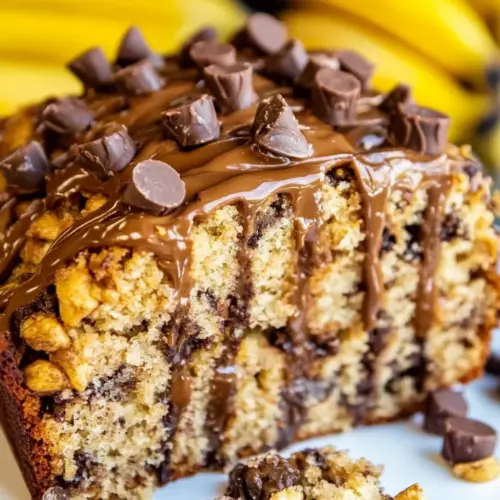
Peanut Butter Cup Banana Bread
Peanut Butter Cup Banana Bread is a creamy and slightly crunchy loaf that combines ripe banana sweetness with pockets of chocolatey peanut candy and a glossy peanut butter glaze. This easy, crowd pleasing bake works for breakfast, snack, or dessert, offering moist crumb and playful bursts of flavor. Make it for relaxed mornings or casual gatherings to impress with minimal effort.
Equipment
- Electric Stand Mixer
- 9×5-inch loaf pan
Ingredients
- 1 2/3 cups all-purpose flour Provide structure and bulk to the loaf, creating the crumb and framework that holds other ingredients together. Combine with leavening and liquids to determine texture; avoid overmixing to prevent toughness. Sift or whisk before measuring to ensure even incorporation and consistent results.
- 1 teaspoon baking soda Leaven the bread by producing carbon dioxide when activated, giving rise and lightness to the crumb. Distribute evenly through the dry ingredients to avoid pockets of metallic taste or uneven rising. Measure precisely to balance lift without overproofing or bitter flavor.
- 1/4 teaspoons salt Enhance overall flavor balance by subtly brightening sweetness and strengthening other flavors, while helping control yeast or chemical reactions. Contribute to the dough’s seasoning so flavors don’t taste flat. Use the measured small amount to avoid making the loaf noticeably salty.
- 1/2 cup butter, softened Provide moisture, richness, and tenderizing fat that contributes to a soft crumb and golden crust. Cream with sugars to incorporate air for a lighter texture and to help dissolve sugar for even sweetness. Bring to room temperature for easiest blending and predictable batter consistency.
- 3/4 cup packed light brown sugar Add deep, caramel-like sweetness and moisture while contributing to the bread’s tender crumb and slightly chewy texture. Cream with butter to aerate the batter and enhance flavor complexity compared to white sugar alone. Pack firmly when measuring to ensure consistent sweetness and moisture contribution.
- 1/4 cup granulated sugar Supply clean, straightforward sweetness and help with creaming to aerate the batter for lift and tenderness. Balance the brown sugar’s molasses notes and control overall sweetness intensity. Dissolve fully into wet ingredients to prevent grittiness.
- 2 large eggs, room temperature Bind ingredients and contribute to structure, moisture, and richness while aiding leavening through trapped air if properly beaten. Bring to room temperature so they emulsify smoothly with fats and sugars, ensuring a homogenous batter. Add one at a time to avoid curdling and to maintain batter stability.
- 1 1/2 cups mashed banana Provide primary fruit flavor, natural sweetness, and moisture while helping to tenderize the crumb and reduce the need for excessive fat. Use very ripe bananas for maximum sweetness and banana intensity; mash until smooth or slightly chunky depending on preferred texture. Measure after mashing to ensure correct moisture balance.
- 2 tablespoons sour cream Add slight tanginess and extra moisture to keep the bread tender and prevent dryness while enhancing overall richness. Help react with baking soda to promote leavening and a fine crumb structure. Use full-fat sour cream for best texture, and fold gently into the batter.
- 1/2 teaspoon vanilla extract Contribute warm, rounded flavor and aromatic depth while complementing the banana and peanut butter notes. Add to the wet mixture to evenly distribute flavor without overpowering other components. Use pure extract for the most natural taste.
- 1 (8-ounce) package mini peanut butter cups, about 1 1/2 cups Introduce pockets of peanut butter and chocolate for texture, sweetness, and flavor contrast throughout the loaf. Distribute evenly or fold in as desired to avoid sinking and to create delightful bites of candy. Chop or leave whole depending on preferred distribution and melt behavior.
- 1/2 cup whipped peanut butter Provide intense peanut butter flavor and creamy richness that blends into streaks or swirls when folded or dolloped into the batter. Add to create concentrated pockets of nuttiness and to complement mini cups for layered peanut character. Use a whipped or softer variety for easier incorporation and smoother texture.
- 1/2 to 1 tablespoon granulated sugar Add a final touch of sweetness and help create a slightly crisped or caramelized surface when sprinkled on top or folded in. Use the lower amount for subtle sweetness or the higher amount for noticeable crunchy sugar accents. Dissolve or dot where desired to control textural contrast.
Instructions
- Preheat oven to 350 degrees.: The moment the oven warms you will notice the slight floral hum of electric elements or the quiet whoosh of gas, which primes the loaf for even rise. Preheating ensures a consistent initial oven spring, helping the top set quickly and produce a gentle dome. A common mistake is placing the pan into an oven that is not fully heated, which can lead to uneven rise and a dense center. Use an oven thermometer if yours runs hot or cool.
- Whisk together flour, baking soda, and salt in a medium bowl.: The dry mixture should smell faintly wheaty and look uniformly pale, which signals even distribution of leavening. Sifting or whisking prevents clumps, and this step reduces pockets of baking soda that could cause uneven flavor. If the mixture feels lumpy, break clumps with a spoon. Avoid over whisking to the point of aerating too much, which can alter texture.
- Using an electric mixer on medium-high speed, beat butter and both sugars until fluffy.: As you beat, the mixture will lighten in color and develop a soft, cloud like texture, indicating air has been incorporated for tenderness. This creaming step creates tiny air pockets that help the loaf rise and produce a tender crumb. A frequent misstep is using cold butter, which won’t cream properly and can lead to a dense loaf; ensure the butter is soft but not oily.
- Add eggs, one at a time, scraping down sides of bowl as necessary.: Each egg should be fully incorporated until the batter looks smooth and slightly glossy; this ensures uniform texture and prevents curdling. Scraping keeps pockets of unmixed butter from causing streaks. Adding eggs too quickly or all at once can cause separation, so patience is key for a cohesive batter.
- Beat in banana, sour cream, and vanilla extract.: At this stage the batter takes on a fragrant, sweet aroma of ripe bananas and subtle tang from the sour cream. The batter will appear moister and silkier, which contributes to a tender crumb after baking. If the banana is not fully mashed, small lumps remain which yield little pockets of banana flavor; however large chunks can create inconsistent baking. Avoid over mixing which can develop gluten.
- With mixer on low, beat in flour and mini peanut butter cups.: You will notice the batter thicken and the candy pieces scatter like confetti, promising little surprise bites throughout the loaf. Mixing on low prevents overworking the gluten in the flour, preserving a soft texture. A common error is folding vigorously, which tightens the crumb and makes the bread tough; use gentle, short strokes to combine.
- Pour into a greased 5 X 9-inch loaf pan. Bake for 50 to 60 minutes.: As the batter hits the pan, it settles and the top smooths; once in the oven you may catch a warm sweet scent emerging after about 20 minutes, signaling sugar caramelizing and bananas deepening. The edges should pull away slightly from the pan when done, and a toothpick inserted into the center comes out with a few moist crumbs, not wet batter. The biggest pitfall is underbaking, which leaves a gummy center, so test near the end of the time window and tent with foil if the top browns too quickly.
- Mix together peanut butter and sugar. Microwave until melted. Let cool slightly and place in a ziptop bag. Snip one of the corners and drizzle the glaze on top of the bread.: As the peanut butter melts, it becomes glossy and fluid, and the sugar dissolves to form a smooth glaze that will cling to the bread’s surface. Warm glaze flows easily for drizzling, creating an attractive finish and concentrated flavor. Be cautious of overheating which can separate oils; heat in short intervals and stir between bursts. If the glaze is too thick, a teaspoon of milk can help thin it slightly.
- Let cool slightly and place in a ziptop bag.: Allowing the loaf to cool until warm to the touch prevents the glaze from running off completely while still permitting penetration into the top slices. The residual heat helps the glaze set with a glossy sheen. A common mistake is glazing a very hot loaf, which makes the topping sink in too much and appear messy; wait for a gentle warmth for best results.
- Snip one of the corners and drizzle the glaze on top of the bread.: The final drizzle should form ribbons across the top, catching in crevices and accentuating the loaf’s texture. This finishing touch gives visual appeal and a concentrated burst of peanut flavor on each slice. Avoid heavy globs which overwhelm the balance; a light, even drizzle is both elegant and flavorful.
Notes
- Use ripe bananas: Bananas with brown speckles or heavy scent give the best natural sweetness and moisture.
- Room temperature eggs: They incorporate more smoothly into the batter, yielding a more uniform texture.
- Softened butter: Ensure butter is soft but not melted so it creams properly with the sugars for lightness.
- Measure flour correctly: Spoon and level your flour into the cup to avoid packing, which can make the loaf dense.
- Gentle mixing: Combine the dry ingredients with the wet on low speed to avoid overdeveloping gluten for a tender crumb.
- Even distribution of candy: Toss the mini peanut butter cups in a tablespoon of flour before folding in to help them suspend evenly in the batter.