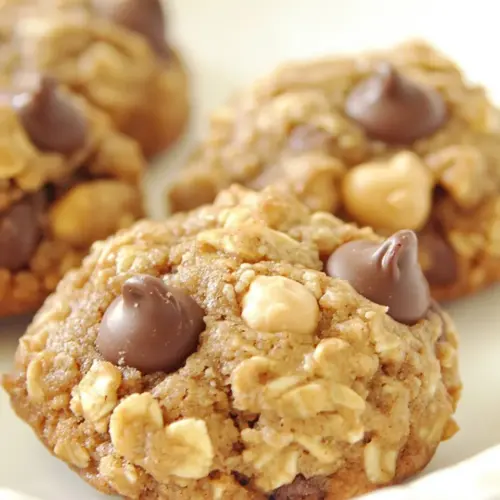
Peanut Butter Chocolate Granola Cookies
Peanut Butter Chocolate Granola Cookies are an easy, crispy and chewy treat that blends creamy peanut butter with crunchy granola and melty chocolate chips. This simple one bowl cookie offers deep caramel notes from brown sugar and a satisfying texture contrast that makes it ideal for snack time or quick gatherings. Make a batch when you want a fast, crowd pleasing cookie.
Equipment
- Stand mixer
- Mixing Bowl
- Baking Sheet
- Parchment Paper
- Cookie Scoop
Ingredients
- 1 cup smooth peanut butter Provide creamy texture and rich nutty flavor while acting as the primary binder to hold the cookie dough together during baking. Add healthy fats and moisture that keep cookies tender and help create a chewy center when combined with sugar and egg.
- 1 large egg Contribute structure and leavening by coagulating proteins as it bakes, which helps set the cookie and provides lift. Also add moisture and a subtle richness that balances the sweetness and contributes to the cookie's tender crumb.
- 1 cup light or dark brown sugar I used dark Impart deep caramel-like sweetness and moistness while enhancing the overall flavor complexity; brown sugar's molasses content promotes chewiness and a slightly sticky texture. Help with caramelization and color development on the cookie surface for an appealing golden-brown finish.
- 1 cup granola cereal I used Fiber One Granola Cereal in Cranberry Almond Introduce crunch, whole-grain texture, and additional flavor notes such as nuts or dried fruit depending on the cereal variety used. Add bulk and a contrasting crispness to the soft cookie base, helping create textural interest in each bite.
- 1/2 cup semi-sweet chocolate chips Deliver pockets of melted chocolate flavor and sweetness that contrast with the salty peanut butter and crunchy granola. Provide richness and small bursts of chocolate in every bite while softening slightly during baking to create gooey inclusions.
Instructions
- Preheat oven to 350 degrees F.: As the oven warms you will begin to smell a faint warmth that signals readiness. A properly preheated oven ensures even color and texture, so the edges set at the right pace while the centers remain soft. One sign that the oven is up to temperature is when a test cookie placed briefly browns evenly in one side. A common mistake is not waiting long enough for the oven, which can yield underbaked centers and pale, underdeveloped flavor.
- Line a baking sheet with parchment paper or silicone baking mat.: The sheet will feel cool under your hands while the parchment prevents sticking and promotes even bottom browning. Using a silicone mat adds extra protection against overbrowning and makes cleanup effortless. Lay the liner flat to avoid creating ridges that can distort cookie shape. Avoid placing cookies directly on an unlined sheet, as they can stick and lose their bottoms.
- Place peanut butter and brown sugar in a large mixing bowl of a stand mixer.: When the peanut butter and brown sugar first meet, you may notice a dense, glossy mass that promises richness. Starting with these two lets the sugar dissolve into the fat for a smoother dough. If the peanut butter is stiff, scrape the jar sides first so it incorporates evenly. A frequent error is adding dry ingredients too early, which prevents the sugar from blending uniformly into the fat.
- Mix until combined, 30 seconds.: At this point you should hear a gentle whir and see the mixture become cohesive and slightly satiny, with tiny sugar granules mostly integrated. This brief mixing prevents overworking the dough, which could make cookies tough. If lumps remain, scrape the bowl and pulse a few more seconds. Overmixing here can trap excess air, leading to puffier, cakier cookies.
- Add egg and mix in until the dough is smooth.: As the egg folds into the mix the dough will lighten slightly and take on a smoother, more pliable texture. The aroma shifts to a sweeter, freshly blended scent. A smooth dough indicates the egg has been incorporated evenly, which helps even baking. Avoid vigorous mixing that can incorporate too much air and change the cookie's density.
- Add granola and chocolate chips and mix on low just until incorporated.: When the granola and chocolate chips are joined, you will immediately notice visual contrast and hear a soft clinking as the mixer folds them through. Mixing on low keeps clusters intact so you retain crunchy pockets, and preserves the shape of the chocolate chips . Overmixing can break the granola into dust and melt or crumble the chips, losing the texture that makes these cookies special.
- Scoop 1.5 tablespoon size scoops of dough onto the prepared cookie sheet.: The dough should feel sticky but manageable, holding its mound without spreading flat before baking. Use a scoop for uniform sizing which promotes even baking and consistent results. Space them with room to spread so edges crisp without merging. A common pitfall is overcrowding the pan, which yields misshapen cookies and uneven baking.
- Bake 9 to 10 minutes.: As the cookies bake you will see edges set and attain a light golden hue while centers remain slightly soft. The aroma of toasted granola and warming peanut butter becomes more pronounced, and the chocolate chips may show glossy spots. This short bake time preserves tender centers; leaving them too long will produce dry, brittle cookies, so watch closely during the last minutes.
- The cookies will be fragile at this point, so let them cool for 5 to 7 minutes.: Fresh from the oven the cookies appear soft and delicate, and cooling allows them to firm up as the interiors finish setting. You will notice a slight crackle sound as steam escapes and edges stabilize. If you try to move them too soon they may crumble, so patience here preserves their shape. A typical mistake is rushing the transfer, which breaks the cookies and wastes a perfect batch.
- Store in an airtight container for up to 5 days.: Once cooled, the cookies keep their chew and texture when sealed away from air and humidity. Storing them with a small piece of parchment between layers prevents sticking, and room temperature storage maintains the pleasant chew of the granola . Refrigeration can firm them excessively, while leaving them uncovered will dry them out quickly.
Notes
- Swap brown sugar intensity Use dark brown sugar for deeper molasses notes, or light brown sugar for a milder caramel flavor. Dark brown sugar will make the cookies slightly moister and more robust tasting, which I prefer when pairing with hearty granola.
- Watch mixing speed Mix the granola and chocolate chips on low to preserve texture, as vigorous mixing can break clusters and melt chips into the dough, changing the mouthfeel.
- Use a cookie scoop Scoop dough at 1.5 tablespoon portions for uniform results. A consistent size ensures the cookies bake evenly so you do not end up with some that are overdone while others are underbaked.
- Let cookies rest briefly Allow 5 to 7 minutes of cooling on the sheet to finish setting. This step makes them easier to transfer and prevents fragile cookies from breaking under a spatula.
- Storage method Store in an airtight container at room temperature for up to 5 days. Place parchment between layers to prevent sticking and preserve the cookie shape and texture.