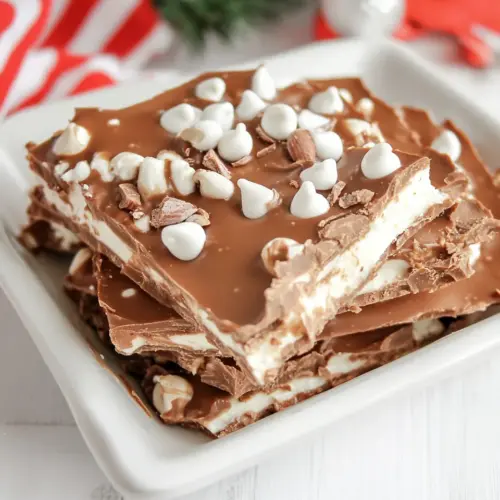
Peanut Butter Chocolate Bark
Peanut Butter Chocolate Bark is a creamy and crunchy no bake treat that combines crackly matzo, buttery caramel, glossy melted chocolate, and swirled peanut butter for an easy crowd pleaser. Perfect for holiday platters or last minute gatherings, this simple dessert balances sweet and salty notes with delightful texture. Make it for a party or to stash in the fridge, it’s an effortless showstopper.
Equipment
- Rimmed Baking Sheet
- Foil
- Heavy 2 quart saucepan
- Candy thermometer
- Metal spatula
- Microwave-safe Bowl
Ingredients
- 4 matzo crackers (unsalted or lightly salted) Provide a sturdy base and subtle crunch for the bark; matzo crackers are neutral in flavor and hold up well under a butter-sugar toffee layer, creating textural contrast. Break or arrange them in a single layer to form an even foundation for the chocolate and peanut butter toppings, absorbing some of the toffee for cohesive bites.
- 1 cup (226 g) unsalted butter Melt into the toffee mixture to create a rich, glossy coating; unsalted butter allows precise control over overall saltiness. Combine with sugar and water to form a caramelized base that soaks into the crackers and sets the structure of the bark once cooled.
- 1 1/4 cup (250 g) granulated sugar Caramelize with butter to form the sweet toffee component that binds the crackers and toppings; granulated sugar provides crystalline structure and sweetness. Cook until bubbling and amber in color for deep flavor, then quickly spread over the crackers to ensure even coverage before it hardens.
- 1/2 teaspoons salt Enhance and balance the sweetness of the toffee by contributing a subtle savory edge; salt rounds out flavors and heightens chocolate and peanut butter notes. Sprinkle carefully into the cooking mixture to avoid over-salting, especially if using lightly salted crackers.
- 2 tablespoons (30 ml) water Facilitate even melting and prevent sugar crystallization by adding moisture to the toffee; water helps dissolve sugar and kickstart caramelization. Use sparingly and combine with butter and sugar over heat to achieve a smooth, cohesive toffee consistency.
- 1 teaspoon pure vanilla extract Add a warm, aromatic note that deepens the overall flavor profile; pure vanilla extract complements both chocolate and peanut butter. Stir into the finished toffee or melted chocolate to distribute flavor evenly without altering texture.
- 2 cups (340 g) chocolate chips (milk, semi-sweet, or dark) Provide a meltable, glossy topping that hardens into a smooth chocolate layer; chocolate chips supply the chocolate component and can be milk, semi-sweet, or dark to adjust sweetness. Melt over a gentle heat or in short microwave bursts, then spread over the toffee layer to set and pair with peanut butter.
- 1 cup (268 g) creamy peanut butter (not natural) Create a creamy, nutty spread that contrasts with the crunchy toffee and chocolate; creamy peanut butter (not natural) offers stable texture and consistent sweetness. Dollop or swirl over melted chocolate so it melds into the top layer, adding pronounced peanut flavor and richness once the bark sets.
Instructions
- Preheat your oven to 350 °F. Line a rimmed baking sheet with foil, covering the bottom and sides. Spray with nonstick cooking spray. Place a layer of matzo crackers on the sheet, breaking as needed to cover the sides; set aside.: Warmth from preheating ensures the caramel sets uniformly once it hits the matzo crackers , and lining the pan with foil makes removal effortless later. As the oven warms, listen for the quiet hum and feel the gentle rise in kitchen temperature, which helps the caramel behave predictably. A common mistake is skipping the foil, which can make cleanup and removal messy; also, if the crackers are packed too loosely they may shift when pouring the caramel, so press them gently to create an even base.
- In a heavy 2-quart saucepan, melt the butter over medium heat. Stir in the sugar and 2 tablespoons of water. Bring the mixture to a boil and cook undisturbed over medium-high heat until the caramel mixture is a light golden and registers 255 degrees on a candy thermometer, about 5-7 minutes. Remove from the heat and let cool for 1 minute. Stir in the vanilla and quickly pour over the matzos, using a metal spatula to spread evenly. Bake for 8 minutes.: As the butter and granulated sugar combine, you will notice a glossy sheen and a toffee aroma blooming in the pan; those are signals the caramel is progressing. The sound will shift from gentle bubbling to a more vigorous boil as water evaporates. Hitting 255 degrees yields a firm but slightly tender caramel after baking. Cooling for a minute prevents the vanilla from evaporating and tempers the caramel so it will spread rather than running off the matzo crackers . A frequent error is stirring constantly early on which can cause crystallization, so patience is crucial.
- Remove the bark from the oven and sprinkle with the chocolate chips. Return to the oven and bake just until the chocolate starts to melt, about 2 minutes, then spread the chocolate evenly.: When the sheet returns to the oven, watch the chocolate chips closely; you want them glossy and soft, not fully pooled. The brief warmth will transform the chips into a spreadable state, and when you run a spatula over them they should give with a silk like texture. The smell of warm chocolate will become more forward. Overheating here can make the chocolate grainy, so remove promptly when just softened and spread smoothly in thin strokes for a uniform layer.
- Meanwhile, melt the peanut butter in a microwave safe bowl for 1-1 1/2 minutes, until it is a pourable consistency. Drizzle the peanut butter over the chocolate and, using the handle of a wooden spoon, swirl the chocolate and peanut butter together.: The melted peanut butter should be pourable, with a glossy sheen and a faint roasted aroma. Drizzling creates ribbons that you can manipulate into decorative swirls with the spoon handle, producing marbled visual appeal and pockets of concentrated flavor. If it is too thin, it will bleed into the chocolate; if too thick, it will sit in lumps, so heat in short bursts until it reaches the right flow. A common misstep is overheating peanut butter, which can make it oily and separate, so warm gradually.
- Let the bark cool for 1 hour, then refrigerate until set, at least 2 hours. Break into pieces and serve.: As it cools, the chocolate will firm and the caramel will snap into place, offering a crisp bite followed by a chewy middle. You will notice the surface go from glossy to matte as it fully sets. Cooling on the counter allows residual warmth to dissipate gently before chilling, which helps avoid condensation. A usual pitfall is breaking the bark too soon, which yields sticky, soft pieces; patience results in clean breaks and tidy shards.
Notes
- Use saltines instead of matzo: If matzo is unavailable, saltines work well and provide the same crackers toffee effect, just watch salt levels elsewhere in the recipe.
- Omit salt when using salted butter: Many butters carry added salt, so skip the teaspoon of salt in the list if your butter is salted to avoid over salting the caramel.
- Avoid white chocolate chips: They do not melt the same way and can leave a grainy texture, so stick with milk, semi sweet, or dark chocolate chips.
- Choose no stir peanut butter: A stable, no stir peanut butter melts predictably and sets with a pleasant texture; natural peanut butter may separate and become oily.
- Use a candy thermometer: Hitting the right temperature for the caramel is key; 255 degrees gives the ideal chew and snap without overcooking.
- Press crackers firmly but gently: Ensuring the matzo crackers sit flat prevents gaps where caramel can pool and create uneven texture.