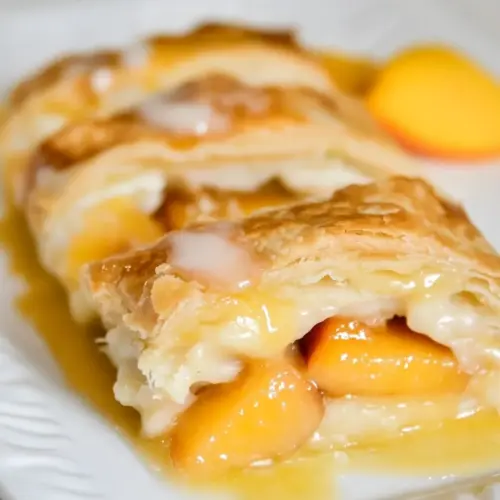
Peach Strudel
Peach Strudel is a flaky, fruit forward dessert with crisp phyllo dough, tender peaches, and toasted pecans. This easy summer pastry balances sweet and warm spice for a crowd pleasing treat, ideal as an easy weeknight dessert or a leisurely weekend bake. The contrast of textures and aromatic filling makes it worth trying for any occasion.
Equipment
- Oven
- Baking Sheet
- Parchment Paper
- Silicone mat
Ingredients
- 20 ounces fresh peaches, peeled, pitted and cut into 1/8-inch slices Provide juicy, sweet-tart fruit layers that become tender when baked; peel and pit before slicing into thin 1/8-inch pieces so they soften evenly and release natural juices without making the pastry soggy. Combine with sugar and spices to create a flavorful filling that contrasts the crisp phyllo exterior. Handle gently to avoid mashing the slices while assembling.
- 1/3 cup brown sugar Sweeten the fruit filling and help draw out juices for a saucy consistency when cooked; brown sugar adds molasses notes and deeper caramel flavor than white sugar. Sprinkle and mix with the peaches to balance acidity and enhance overall richness. Adjust slightly if peaches are very ripe or overly sweet.
- 1 tablespoon all-purpose flour Thicken the fruit juices into a cohesive filling so it doesn’t overly soak the phyllo; all-purpose flour blended with the sugar absorbs excess liquid as the strudel bakes. Combine evenly with the other dry components to ensure consistent thickening throughout the filling. Use sparingly to avoid a pasty texture.
- 1/3 cup chopped pecans Add crunchy texture and a toasty, buttery flavor contrast to the soft peach filling; chop pecans to small pieces so they distribute evenly throughout the strudel. Toss with the fruit mixture prior to filling to ensure every bite has nutty interest. Lightly toast beforehand to intensify flavor if desired.
- 1 teaspoon vanilla extract Enhance the aromatic profile and deepen the dessert’s sweetness with a warm vanilla note; vanilla extract melds with peach and brown sugar for a more complex flavor. Stir into the filling mixture to infuse throughout before assembling. Use pure extract for best results.
- 1/4 teaspoon ground cinnamon Provide warm, spiced undertones that complement the peaches’ sweetness and brown sugar’s richness; ground cinnamon integrates into the filling to create classic flavor harmony. Sprinkle into the peach mixture and mix well to distribute evenly. Use a light hand to avoid overpowering delicate fruit flavors.
- 5 sheets phyllo dough, thawed (use 14x18-inch phyllo for 1 large strudel; use 9x14-inch phyllo for 2 small strudels) Create delicate, flaky layers for the strudel shell that crisp beautifully when brushed with butter; choose appropriate phyllo size as instructed to form either one large or two small strudels. Thaw sheets gently and keep covered with a damp towel to prevent drying and tearing during assembly. Handle carefully and layer sheets with melted butter between each for optimal texture.
- 5 tablespoons unsalted butter, melted Brush between phyllo layers to encourage browning and create a crisp, golden crust; melted unsalted butter adds rich flavor without extra saltiness. Apply evenly with a pastry brush to ensure each layer separates and crisps independently. Use warmed butter to keep phyllo pliable during assembly.
- 2 tablespoons granulated sugar Sprinkle over the assembled strudel for a hint of extra sweetness and a slight caramelized finish when baked; granulated sugar creates a subtle crunch on the crust. Distribute lightly across the top before baking to enhance appearance and texture. Optionally mix with a pinch of cinnamon for added flavor.
Instructions
- Adjust oven rack to lower-middle position and preheat oven to 450 degrees F. Line a baking sheet with parchment paper; set aside.: You will notice a warm, dry rush of air as the oven reaches temperature; this high heat is crucial to get the phyllo dough crisped and golden quickly while keeping the interior moist. I always set the rack lower so the bottom browns evenly, avoiding an undercooked base. A common mistake is skipping the preheat, which can lead to a chewy crust instead of a flaky one, so wait until the oven signals ready.
- Stir together the peaches, brown sugar, flour, pecans, vanilla extract and cinnamon; set aside.: As you fold the ingredients, you will smell the sweet, toasty perfume of brown sugar and cinnamon marrying with the bright fruitiness of the peaches . The flour will dull the juices slightly, giving the filling body, while the pecans add a nutty grain against the soft fruit. Taste a bit of the raw mixture to check balance, but be careful not to overmix which can break down the slices. A pitfall here is adding too much sugar; if your peaches are very ripe, reduce the sugar to avoid an overly sweet filling.
- Place a silicone mat or a piece of parchment on your work surface. Place a sheet of phyllo on the mat or parchment, with the long side facing you. Brush the sheet of phyllo with melted butter and sprinkle with 1 teaspoon of the sugar. Repeat with the remaining four sheets of phyllo, stacking them on top of one another.: The smooth, cool feel of the silicone or parchment makes handling phyllo dough much friendlier, and prevents sticking. Lay a sheet with the long side facing you, and you will see how easy it is to brush and assemble. Keep the remaining phyllo covered with a slightly damp towel or plastic wrap to prevent drying, which leads to tearing. A frequent misstep is letting sheets dry out, which makes them brittle and hard to layer.
- Place the filling in a 3-inch-wide strip about 2 1/2 inches from the bottom and 2 inches from each side of the phyllo (if you are using the smaller size phyllo, use half of the filling and repeat the steps with additional phyllo). Fold the short sides of phyllo over the filling. Then fold the bottom of the phyllo over the filling and very gently roll the strudel loosely.: As you brush, the phyllo dough will glisten and relax, making the layers adhere and crisp uniformly. The small sugar sprinkle adds caramelization and a hint of crunch to the finished crust. Work gently to avoid ripping the sheet; if a tear happens, patch it by overlapping a small piece of extra phyllo. Using too much butter can make the layers greasy and heavy, so use an even, light coating.
- Place the strudel, steam-side down, on the baking sheet. Brush with the melted butter and sprinkle with sugar. Cut four 1-inch-long vents in the top of the strudel. Bake until golden brown, 15 to 20 minutes. Place the baking sheet on a cooling rack and allow to cool until warm, about 30 minutes.: Building the stack is about rhythm more than speed. Each brush and sprinkle creates thin, distinct layers that puff and separate as they bake, producing that signature flakiness. Listen for a faint whisper as the brush glides, and keep hands steady so edges remain aligned. A typical error is misaligned sheets which can cause uneven baking, so straighten each sheet as you stack.
- Place the filling in a 3-inch-wide strip about 2 1/2 inches from the bottom and 2 inches from each side of the phyllo: The visual cue of a narrow strip lets the pastry roll cleanly and ensures even distribution of fruit. You should hear gentle thuds as the soft fruit nestles into the sheet, and the filling will look glossy from the sugar and vanilla extract . If using smaller phyllo, split the filling evenly to avoid overfilling. One common issue is packing the filling too tightly which prevents the interior from cooking through, so keep the strip compact but not compressed.
- Fold the short sides of phyllo over the filling: Folding the edges creates a sealed envelope that protects the filling during rolling. The phyllo dough will feel delicate but holds together when folded carefully; use a light touch and press only gently. If the sides resist, you may need to press down the layered sheet slightly to encourage flexibility. Avoid folding too loosely, which can lead to leaks, or too tightly, which can tear the pastry.
- Then fold the bottom of the phyllo over the filling and very gently roll the strudel loosely: Rolling should be smooth and deliberate, yielding an even cylinder with visible layers under the surface. The exterior should glimmer from the melted butter as you roll. Rolling too tightly squeezes out filling juices, and rolling too loosely can cause gaps, so aim for a comfortable middle ground. If juices begin to escape, tilt the roll slightly to let excess drain into a bowl and adjust by using less filling next time.
- Place the strudel, seam-side down, on the baking sheet: Setting the seam down protects the roll from unraveling and helps the bottom brown evenly. You will hear a soft thud as the roll meets the parchment, and the surface will already look glossy. Position it with some space around so hot air can circulate. A mistake I see is putting multiple rolls too close which yields uneven baking, so give each strudel breathing room.
- Brush with the melted butter and sprinkle with sugar: The final brush creates a lacquer that turns golden under high heat, and the sugar sprinkles will caramelize into a delicate crunch. Brush gently to preserve the shape of the roll. If you overbrush, the pastry can become saturated and less flaky, so aim for an even, thin coat. Too much sugar on top can burn quickly at this temperature, so keep the sprinkle light.
- Cut four 1-inch-long vents in the top of the strudel: These vents let steam escape so the interior sets without making the crust soggy, and you will hear a faint hiss as hot air finds its way out once baking begins. The vents also create a pretty pattern as the filling peeks through. Avoid cutting too many vents or making them too large, which can cause excessive juice loss and drying of the filling.
- Bake until golden brown, 15 to 20 minutes: As the oven works, you will smell the sweet perfume of baking peaches , and the phyllo dough will transform to a rich golden color. Keep an eye on the roll after 12 minutes since ovens vary, and rotate the sheet if one side seems to brown faster. Overbaking leads to a dark, brittle crust, while underbaking gives a pale, soft pastry, so aim for a deep golden hue as your cue.
- Place the baking sheet on a cooling rack and allow to cool until warm, about 30 minutes: Cooling lets the juices settle, so slices hold shape when cut, and the aroma continues to build. The exterior will firm as it cools, offering that perfect flake when you slice into it. Cutting too soon can make the filling runny and messy, so be patient; the reward is cleaner slices and a better texture. If you must speed this up, cool for at least 15 minutes but expect slightly looser filling.
Notes
- Keep phyllo covered: When working with phyllo dough, keep unused sheets under a lightly damp cloth so they remain pliable. This prevents cracking and tearing which can be frustrating mid assembly.
- Toast pecans first: Toasting the pecans in a dry skillet for a few minutes brings out deeper nutty flavors and a crunch that stands up to the soft peaches.
- Adjust sugar by peach sweetness: Taste a peach slice before adding sugar; if the fruit is exceptionally sweet, reduce the brown sugar slightly to maintain balance.
- Use parchment or a silicone mat: A nonstick surface prevents the strudel from sticking and makes transfer effortless, especially when the filling softens and becomes a little syrupy.
- Make smaller portions: If you prefer two smaller strudels, split the filling and use the smaller phyllo size as suggested, which is great for gifting or sharing.