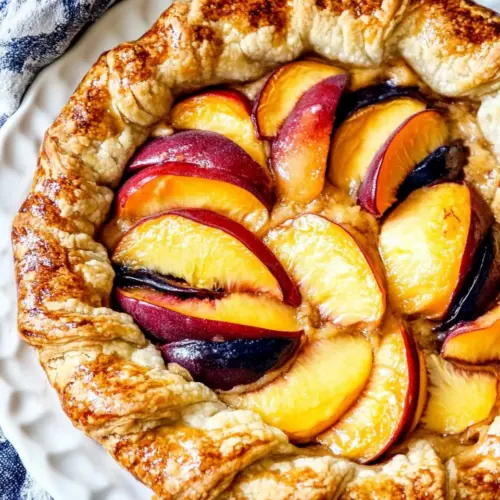
Peach Galette
Peach Galette is a rustic, easy to make summer dessert that highlights juicy, sweet peaches with a flaky, buttery crust, warm caramel notes from coconut palm sugar, and a light crunch of sliced almonds. This simple tart is perfect for an easy weeknight dessert or relaxed weekend entertaining, delivering bright citrus lift and soft jammy fruit in every bite, a compelling reason to bake it now.
Equipment
- Bowl
- Pastry Cutter
- Wooden Spoon
- Baking Sheet
- Parchment Paper
Ingredients
- 1 1/4 cups all-purpose flour (chilled in the freezer for 30 minutes) Combine and sift into a bowl to form the galette dough base, providing structure and tender crumb when chilled properly; keep cold to prevent overworking the gluten and to ensure flaky texture.
- 1/4 teaspoons salt Enhance dough balance by controlling sweetness and strengthening gluten slightly; dissolve or mix into dry flour to evenly season the crust for better flavor contrast with fruit.
- 8 tablespoons butter (unsalted, cut into pieces and chill again) Cut into small pieces and incorporate cold to create flaky layers; chill again after cutting to keep butter solid so it steams in the oven and yields a light, layered crust.
- 1/4 cups sour cream Add to the dough to enrich moisture and tenderize the crust while contributing a subtle tang; mix briefly with flour and butter to bind the dough without making it overly sticky.
- 2 teaspoons fresh lemon juice Brighten the fruit filling with fresh acidity to balance sweetness and prevent browning; squeeze into sliced peaches and blueberries to enhance overall flavor and freshness.
- 1/4 cup ice water Use ice-cold water to hydrate the dough just enough for cohesion while keeping fat solid; add gradually until the pastry holds together without becoming wet or tough.
- 2 large peaches (slices about 1/4 of an inch in thickness) Slice and layer as the primary filling, supplying natural sweetness, juiciness, and texture; arrange on the dough to create the signature rustic galette center and bake until tender.
- 1/4 cup blueberries Scatter among the peach slices to contribute bursts of sweet-tart flavor and contrasting color; incorporate evenly to ensure each slice contains a mix of fruit textures.
- 1/4 cup organic coconut palm sugar (or brown sugar) Sweeten the fruit filling and help draw juices during baking to create a syrupy interior; sprinkle or toss with the fruit to distribute caramelized flavor and aid in browning.
- 1 egg (for egg wash) Brush over the crust to give a glossy, golden finish and help any toppings adhere; beat and apply before baking for an attractive, appetizing surface.
- 1/4 cups sliced almonds (optional) Garnish the galette with a nutty crunch and toasty flavor when sprinkled atop before baking; optional use adds texture contrast and enhances visual appeal.
Instructions
- Make Dough: Start by making the pastry dough. Add the flour and salt to a large bowl and slightly whisk. Using two knives or a pastry cutter, cut in the butter until it resembles coarse sand. In a small bowl, whisk together the sour cream, lemon juice and water and add this to the butter-flour mixture. Using a wooden spoon or your fingers, mix in the liquid until large lumps form. Pat the lumps into a ball; do not overwork the dough. Cover with plastic wrap and refrigerate for 1 hour.: The bowl will feel cool to the touch and the flour will smell faintly of grain, while the cut butter glints like tiny pale pebbles among the dry ingredients. As you cut in the butter , listen for a slight change in texture from powdery to coarse crumb. This technique traps pockets of fat that melt in the oven to produce flaky layers. Mix the sour cream , lemon juice , and ice water just until large lumps form, then gather them gently into a ball and refrigerate for one hour so the gluten can relax. If you overwork the dough it will become tough, so avoid pressing it into a perfectly smooth ball. A common mistake is adding too much water; stop as soon as cohesive lumps appear.
- Make Filling: In a bowl toss the peaches, blueberries and sugar together.: When you toss the peaches , blueberries , and sugar together, you should smell immediate fruity sweetness and citrus lift from the lemon juice , and the sugar will begin to draw out juices from the fruit. This pre mixing macerates the fruit slightly so the filling will be juicy without being soupy. Handle the fruit gently so the slices keep some shape, and avoid over mixing which can bruise the blueberries . A frequent error is chopping the peaches too thin, which leads to a filling that cooks to mush rather than tender slices.
- Preheat Oven: Preheat oven to 400 F degrees. Line a baking sheet with parchment paper.: Your oven should be at the right temperature so the crust browns while the filling cooks through. Preheating to 400 F degrees ensures the pastry edges become crisp and golden, and the sugars in the fruit begin to caramelize. Line the baking sheet with parchment so the galette lifts easily after baking. If your oven runs hot, check a few minutes early to prevent over browning. Many home cooks under preheat, leading to soggy crusts, so give the oven full time to reach temperature.
- Roll the Dough: On a floured work surface, roll the dough out into a 12-14 inch round. Transfer to the prepared baking sheet.: As you roll the chilled dough on a floured surface, you'll notice it becomes more pliable and the edges smooth slightly. Aim for a round about 12 to 14 inch diameter so the crust can fold over the filling while leaving a generous open center. The tactile feedback is important here, the dough should be cool and slightly tacky but not sticky. If it springs back, let it rest for five to ten minutes before continuing. A common slip up is rolling too thin, which makes the edges fragile and prone to tearing during assembly.
- Assemble: Arrange the peaches over the dough, leaving a 2-inch border. Fold the border over the filling, pleating the edge to make it fit. The center will be open. Brush crust with egg yolk. Sprinkle with more sugar if preferred and sprinkle some almonds over the crust.: When you arrange the peaches on the dough, place them in slightly overlapping concentric rings so they compact into a pretty pattern and release juices evenly. Leave a 2 inch border, then fold and pleat the dough over the filling, making sure the pastry seals to itself at several points to hold juices in. Brush the crust with the beaten egg for a glossy finish and sprinkle with additional sugar and the optional sliced almonds for crunch. You will see juices starting to bead at the fruit edges, which is a good sign the filling will bubble and thicken while baking. Avoid folding the border too tightly, which can prevent proper expansion and lead to dense edges.
- Bake: Bake for about 45 minutes or until golden brown.: As the galette bakes for about 45 minutes , your kitchen will fill with a warm, caramelized aroma and the crust should turn a deep golden brown while the fruit center bubbles gently. Look for a glossy, set filling and edges that are uniformly browned; if the crust darkens too fast, tent with foil. The bubbling indicates the sugars are caramelizing and the juices are reducing, which concentrates flavor and creates that jam like interior. A frequent mistake is under baking, which leaves dough pale and the fruit overly wet, so trust the visual cues rather than time alone.
Notes
- Swap sugar mindfully Use organic coconut palm sugar for a deeper, caramel like flavor; if you prefer a lighter sweetness, brown sugar works fine. Be aware that different sugars change the rate at which the filling browns, so keep an eye on the galette as it bakes.
- Toast almonds first Lightly toasting the sliced almonds brings out oil and aroma, adding a richer nutty note. Spread them on a sheet and watch closely, as they can go from golden to burnt quickly.
- Chill between steps If your kitchen is warm, return the dough to the fridge for ten to fifteen minutes before rolling to prevent the butter from softening too much, which helps maintain flakiness in the finished crust.
- Use a baking stone or heavy sheet A heavy pan helps conduct heat evenly so the bottom crust crisps properly. If your sheet is thin, the bottom can remain soft, so prefer sturdier bakeware when possible.
- Serve room temperature The filling develops flavor as it cools slightly, so serving at room temperature brings out the best texture and aroma. Refrigerating immediately can firm the juices into a less pleasing texture.
- Brush edges gently Apply the egg wash lightly with a pastry brush to avoid pooling, which can make the crust burn in spots. A thin, even coat produces the nicest shine without over browning.