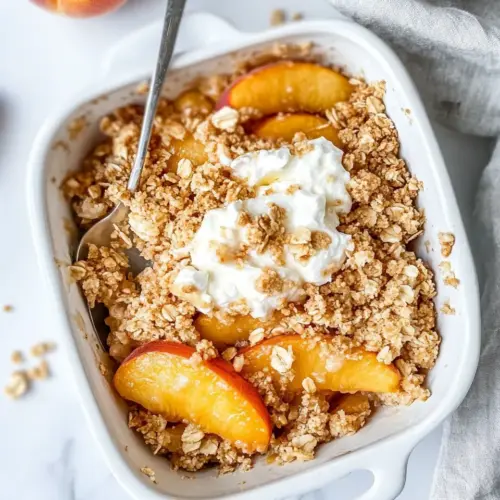
Peach Crisp
Peach Crisp is a warm, crispy dessert that showcases juicy summer peaches with a buttery oat topping. This easy, crowd pleasing classic offers bright fruit flavors and a crunchy texture that pairs perfectly with a scoop of vanilla. Make it for summer gatherings or a cozy weeknight dessert because it is simple to assemble and reliably delicious.
Equipment
- Pastry blender
- 8x8 dish
- cut and serve turner
Ingredients
- 1/2 cup all-purpose flour Provides structure and moisture absorption in the topping, helping bind oats and sugars into a cohesive crumble when mixed with butter and baked; contributes a tender texture by tenderizing gluten when combined with fat.
- 1/2 cup old-fashioned rolled oats Adds chewy texture and whole-grain flavor to the crisp topping, helping balance the tenderness of flour and offering a rustic mouthfeel when toasted in the oven.
- 1/2 cup light brown sugar Imparts sweetness and caramel-like depth to the topping, melting into the butter to create a crisp, slightly sticky exterior while enhancing overall flavor complexity.
- 1/2 teaspoon baking powder Lightens the topping slightly and contributes a subtle lift; helps prevent an overly dense crumble and balances the sweetness with a bit of aeration.
- 1/4 teaspoon ground cinnamon Adds warm, aromatic spice to the topping mixture, complementing the peaches with a sweet-woody note and enhancing the overall aroma of the dessert.
- dash of ground nutmeg Contributes a warm, slightly sweet and nutty aroma in small amounts, rounding out the spice profile and giving the finished crisp a classic fall character.
- dash of salt Enhances the overall flavor balance by subtly amplifying sweetness and reducing blandness in both topping and filling when used sparingly.
- 1/3 cup unsalted butter, cold, diced into small chunks Creates a tender, flaky texture in the topping by coating flour and oats with fat; cold, diced butter yields small pockets of steam during baking that produce a crisp, golden finish.
- 3 1/2 pounds fresh peaches (about 6-8) peeled, cored and sliced about 3/4 in thick Forms the juicy, fruity base of the dessert, releasing natural sugars and juices when baked; peeling and slicing ensures even cooking and a tender, saucy filling that contrasts the crunchy topping.
- 1/4 cup granulated sugar Sweetens the fruit filling to balance tartness and encourage caramelization; helps draw juices out of the peaches to create a syrupy base beneath the crumble.
- 2 tablespoons all-purpose flour Thickens the fruit juices released during baking, preventing a runny filling by absorbing liquid and creating a cohesive, saucy texture that clings to the peach slices.
- 2 teaspoons lemon juice Brightens and balances the filling with acidity, enhancing fruit flavor and preventing a cloyingly sweet result while helping maintain fresh peach flavor.
- 1/2 teaspoon vanilla extract Adds a subtle floral-vanilla background note to the filling, rounding flavors and enhancing the perceived sweetness without adding actual sugar.
- dash of salt Improves overall seasoning by subtly enhancing and balancing flavors in the filling, making the fruit and sugar taste more pronounced.
- dash of cinnamon Echoes the warm-spice notes in the topping to unify the dessert's flavor profile, providing a delicate cinnamon accent directly in the fruit layer.
Instructions
- Peel peaches and slice into 3/4 inch thick slices. Add the sliced peaches to a medium size bowl. Add 1/4 cup sugar and toss to coat. Allow peaches to sit for about 20 minutes, to allow the sugar to pull some of the juice out of them.: The aroma of freshly peeled fresh peaches is floral and sweet, and slicing them to about 3/4 inch gives you pieces that hold shape while becoming tender as they bake. You should notice the flesh release a little juice as you slice, which signals ripeness. A sharp knife will give clean cuts and minimize squashing, which reduces wasted juice on the cutting board. Avoid using overly soft fruit if you want distinct slices, since very ripe peaches will break down into a purée during baking.
- To make crumble topping, add all topping ingredients to a bowl. Use a pastry blender or fork to cut in butter until mixture resembles small crumbs. Refrigerate.: When the fruit hits the bowl you will see a glistening pile of peach flesh, and it should smell intensely peachy. This step keeps the work contained so you can evenly coat the fruit. Using a bowl with depth helps you toss without spilling juices. A common error here is overcrowding the bowl, which makes it hard to mix evenly; use a suitably sized bowl.
- Preheat oven to 375 degrees F.: As you sprinkle granulated sugar and toss, the crystals begin to draw out liquid, making the peach surfaces glossy. After a few minutes you will see beads of juice at the bottom, which is good, because that juice will turn into sauce. If you skip tossing thoroughly, some slices will be under sweetened and the filling can be uneven in flavor.
- Drain the peaches, reserving the peach juice, and placing the peaches in a large bowl.: During this resting period the sugar macerates the fruit, extracting liquid and concentrating flavor so the filling becomes syrupy when baked. You will notice the bowl collecting a peach syrup, fragrant and slightly thick. Do not shorten this time drastically, or the filling will be less saucy and the fruit may not release enough juice to meld with the thickener.
- Measure out 1/4 cup of the peach juice and add it to a small bowl (you can discard the rest, or drink it because it's delicious!). Stir in the flour, lemon juice, vanilla, salt, and cinnamon. Pour mixture over peaches and toss to combine.: When you assemble the topping ingredients like all purpose flour , old fashioned rolled oats , light brown sugar , and spices, the dry mixture smells warm and subtly sweet. Keeping the components separate until this point ensures even distribution before butter is cut in. Mixing everything dry first prevents clumps and ensures each bite of topping has consistent flavor.
- Pour peaches into a 8×8'' or similar size dish. Sprinkle oat topping evenly over the top. Bake for 30-35 minutes or until golden brown and top is set.: As you work in the cold unsalted butter , watch the texture become pebbly, with little lumps coated in flour and sugar. Those butter pockets are what melt in the oven to create a flaky crisp. If the butter becomes too soft from handling, chill the mixture briefly; warm butter leads to a greasy, compact topping rather than a light, crumbly one.
- Remove from oven and cool for at least 10 minutes before serving. Serve with vanilla ice cream, if desired.: Chilling the topping firms the butter bits so they hold their shape and produce a better bake. A chilled topping results in more distinct crumbs and a superior crunch. Leaving it at room temperature risks the butter melting into the mix and producing a denser texture when baked.
- Preheat oven to 375 degrees F: When the oven reaches 375 degrees F the environment is hot enough to encourage browning while allowing the filling to bubble gently. You should sense a dry heat and the oven will stabilize, ready to crisp the topping without burning. Preheating thoroughly avoids uneven baking; placing the dish in a cooler oven can yield soggy results or uneven browning.
- Drain the peaches, reserving the peach juice, and placing the peaches in a large bowl: Draining concentrates the fruit while giving you that peach syrup to thicken. The scent of the reserved juice will be intensely peachy and sweet. Working in a large bowl gives you room to mix in the thickening agents without crushing the slices. Do not discard the juice unless you plan to replace its functions, as it is crucial for flavor and sauce consistency.
- Measure out 1/4 cup of the peach juice and add it to a small bowl: Taking that measured juice ensures you have the right liquid for the filling slurry. The small bowl allows precise mixing with the 2 tablespoons all purpose flour so the flour will dissolve and not clump. If you use more juice without adjusting the thickener, the filling can become too runny and not set properly.
- Stir in the flour, lemon juice, vanilla, salt, and cinnamon: As you whisk these into the reserved juice, the aroma becomes balanced with citrus brightness from the lemon juice and the warm perfume of vanilla extract . This mixture thickens slightly and will cling to the peach slices when tossed. If the flour forms lumps, strain or whisk vigorously; clumps of raw flour will affect texture in the finished dish.
- Pour mixture over peaches and toss to combine: Tossing coats each slice with the flavored slurry so when it bakes the juices thicken evenly into a glossy filling. You should see the fruit glistening and lightly dusted with spice. Avoid over tossing which can break the slices and create a mushier consistency; gentle folding preserves shape while ensuring coverage.
- Pour peaches into a 8×8'' or similar size dish: Transferring the filling into the baking dish, spread the slices so they sit in a single to slightly overlapping layer, which promotes even cooking. The pan size concentrates heat appropriately; if your pan is much larger the filling will be shallow and may bake too quickly. Be mindful of oven hot spots when placing the dish.
- Sprinkle oat topping evenly over the top: Cover the peach surface with the chilled topping so it bakes into a uniform crust that turns golden. Pressing lightly is optional; I prefer to leave it loose so steam escapes and the topping crisps. Packing it too tightly will inhibit airflow and reduce the crunch.
- Bake for 30 to 35 minutes or until golden brown and top is set: As it bakes you will see the topping shift from pale to golden brown and the filling should begin to bubble at the edges, sending up a fragrant steam of cooked fruit and caramel notes. The sound is a gentle simmer, the aroma rich and homey. If the top browns too quickly, tent with foil to prevent burning while allowing the filling to finish cooking through.
- Remove from oven and cool for at least 10 minutes before serving: Cooling lets the filling thicken and settle, so spoonfuls hold together rather than run. The temperature drop mellows the steam and concentrates flavor, making each bite more balanced. Serve slightly warm for the best texture; serving immediately may result in a looser filling that slides on the plate.
- Serve with vanilla ice cream, if desired: A scoop of cold vanilla contrasts the warm crisp with creamy chill and adds richness that many guests love. The melting ice cream blends with the peach syrup creating a luscious sauce. If you skip the ice cream, the crisp still shines, but the temperature contrast is a lovely finishing touch.
Notes
- Add fresh berries If you want more complexity, fold a handful of fresh blueberries or blackberries into the peaches before topping; they add bursts of bright flavor and a pretty color contrast.
- Using frozen peaches Allow frozen peaches to thaw completely and drain excess liquid, then reserve a little of that juice to mix with the flour for the filling so it still thickens properly.
- Canned peach shortcut If using canned peaches, skip the peeling and maceration steps, and use the canned syrup measured into the slurry so the filling maintains its flavor and body.
- Gluten free version Substitute the topping all purpose flour with almond meal or gluten free flour and use a tablespoon of cornstarch in the filling to achieve similar thickening and texture.
- Make ahead Prepare the filling and topping a day ahead, store separately in the fridge, then assemble and bake when ready for fresher texture and easier hosting.
- Freezing Cool completely and wrap tightly before freezing for up to two months; reheat gently in a 350 degrees F oven until warmed through to preserve texture.