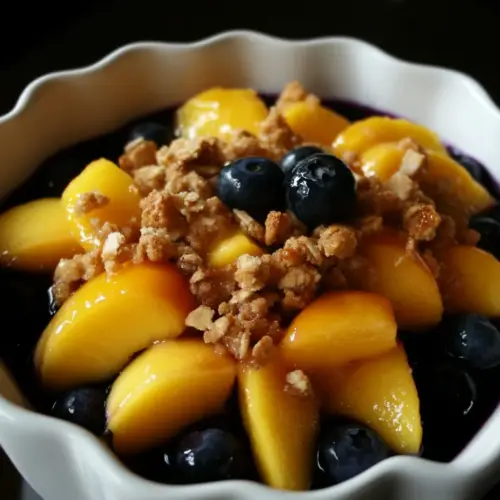
Peach Blueberry Crumble
Peach Blueberry Crumble is a warm, juicy summer dessert with tender peaches and bursting blueberries topped with a crisp, buttery crumble. This easy fruit crumble is perfect for casual dinners or spontaneous gatherings, offering a mix of syrupy fruit and crunchy topping that everyone will love, making it a must make for seasonal fruit.
Equipment
- Oven
- Ramekins
- Sheet Pan
- Parchment Paper
- Mixing Bowl
- Electric Mixer
Ingredients
- 2 lb s firm, ripe peaches (6-8 peaches) 2 teaspoons grated lemon zest 2 tablespoons freshly squeezed lemon juice 1/2 cup granulated sugar 1/4 cup all-purpose flour 1 cup fresh blueberries (1/2 pint) Provide juicy, ripe peach slices that form the tender, flavorful base of the crumble and pair with blueberries to deliver bright sweetness and texture contrast; include grated lemon zest and freshly squeezed lemon juice to lift flavors, granulated sugar and a bit of flour to macerate the fruit and thicken released juices during baking, and fresh blueberries to contribute bursts of tartness and color for a balanced filling.
- 1 cup all-purpose flour 1/2 cup granulated sugar 1/4 cup light brown sugar, lightly packed 1/2 teaspoon kosher salt 1/4 teaspoon ground cinnamon 8 tablespoons (1 stick) cold unsalted butter, diced Create a buttery, crisp topping by combining all-purpose flour with granulated and light brown sugars to achieve sweetness and caramel notes, while kosher salt and ground cinnamon enhance and balance flavor; incorporate cold diced unsalted butter to form pea-sized pieces that bake into flaky, golden crumbs for a contrasting crunchy texture atop the fruit filling.
Instructions
- Preheat the oven to 350°F.: The heat should be steady and even, so the oven needs to reach temperature before you slide in the crumbles. You will smell a faint warmth as the oven finishes preheating. This ensures the topping browns while the filling bubbles, producing the ideal texture contrast. A common mistake is opening the oven too early, which lets heat escape and can lengthen bake time, so avoid peeking for the first 25 minutes.
- Immerse the peaches in boiling water for 30 seconds to 1 minute, until their skins peel off easily. Place them immediately in cold water. Peel the peaches, slice them into thick wedges, and place them in a large bowl. Add the lemon zest, lemon juice, granulated sugar, and flour. Toss well. Gently mix in the blueberries. Allow the mixture to sit for 5 minutes. Spoon the mixture into ramekins or custard cups.: When you blanch the peaches briefly in boiling water, their skins loosen and slip away, revealing sweet flesh that will release juices as it cooks. The cold water stops the cooking so the fruit stays firm enough to slice. As you toss everything with lemon zest , lemon juice , and granulated sugar , you should see the peaches start to glisten and the blueberries coat gently. The aroma will be floral with a citrus hit. Letting the mixture rest for five minutes helps the sugar pull juice from the fruit so flavors meld, and the small amount of all-purpose flour helps thicken the juices during baking. One mistake is slicing the peaches too thin, which makes the filling collapse into an overly saucy mess; aim for thick wedges for texture.
- For the topping, combine the flour, granulated sugar, brown sugar, salt, cinnamon, and the butter in the bowl of an electric mixer fitted with a paddle attachment. Mix on low speed until the butter is the size of peas. Rub the mixture with your fingertips until it’s in big crumbles, then sprinkle evenly over the fruit. Place the ramekins on a sheet pan lined with parchment paper and back for 40 to 45 minutes, until the tops are browned and crisp and the juices are bubbly. Serve warm or at room temperature. If you want to make these early, store the unbaked crumbles in the refrigerator and bake before dinner.: Combining dry ingredients first distributes the salt and cinnamon evenly so every bite is balanced. Add the cold diced butter and start mixing on low so the butter stays chilled and forms little lumps rather than melting into a paste. You will notice a sandy texture turning into larger crumbs; this visual cue means the topping is developing. A common error is using warm butter, which will create a greasy mixture that won’t bake into crisp clumps.
- Mix on low speed until the butter is the size of peas.: At this stage you should see pea sized pieces of butter coated in flour and sugar. The texture should be rough, not smooth. These pea sized pockets of butter are what melt in the oven to leave behind flaky, crisp pockets in the finished topping. The sound of the mixer will be steady and gentle. If the mixture becomes paste like, the butter has warmed too much, so chill briefly and then continue.
- Rub the mixture with your fingertips until it’s in big crumbles, then sprinkle evenly over the fruit.: Rubbing by hand gives you control over crumble size, letting you create irregular clusters that bake to golden crispness. As you work, the mixture will feel coarse and slightly cool. When you sprinkle it over the fruit, distribute it so some fruit peeks through for even bubbling. A trap here is compacting the topping by pressing down, which can make it dense rather than crumbly; keep the light touch.
- Place the ramekins on a sheet pan lined with parchment paper and back for 40 to 45 minutes, until the tops are browned and crisp and the juices are bubbly.: During baking you will notice the kitchen fill with a comforting aroma of butter and toast from the topping, while the fruit below begins to release glossy juices that bubble up at the edges. The visual cues to watch for are a deep golden brown on the topping and active bubbling fruit. The sound is a soft pop as juices bubble. If the top browns too quickly, tent lightly with foil to prevent burning while the filling finishes cooking. Removing the crumbles too early can lead to runny filling, so allow the full bake time for set juices and a crisp top.
- Serve warm or at room temperature.: Warm servings give the best contrast in temperature and texture, with steam rising from the fruit and the topping still crisp. At room temperature the flavors settle and the crumble is easier to portion. If you make these ahead, store the unbaked crumbles in the refrigerator and bake before dinner for the freshest finish. A common mistake is reheating too quickly in the microwave, which can soften the topping; reheat in a warm oven to refresh crispness.
Notes
- Choose ripe peaches: Select peaches that yield to gentle pressure but are not mushy, this ensures juicy, flavorful slices that hold shape when baked.
- Balance sweetness: Taste the fruit before tossing with sugar and reduce or increase the sugar slightly depending on how sweet the peaches are, this prevents an overly cloying filling.
- Cold butter matters: Keep the butter chilled until you mix the topping to create flaky, crunchy clusters rather than a paste, handle it quickly to keep it cold.
- Mix textures: For more crunch, stir a few tablespoons of oats into the topping, this adds chew and a nutty aroma without changing the bake time much.
- Portion smartly: Use individual ramekins for elegant servings and easier reheating, they also produce more crisp surface area per serving for extra texture.
- Make ahead strategy: Assemble and chill unbaked crumbles for several hours, then bake just before serving to enjoy fresh, hot crumbles with minimal same day prep.