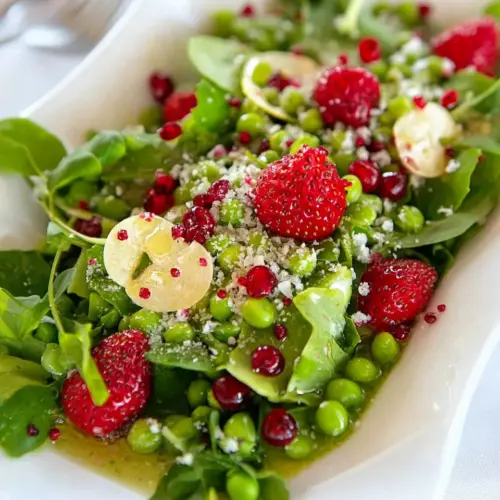
Pea and Strawberry Salad
Pea and Strawberry Salad is a bright spring salad with sweet strawberries, tender peas, crisp lettuce, and shaved parmesan cheese tossed in a floral elderberry vinaigrette. This easy, colorful salad is creamy and crisp at once, perfect for an easy weeknight dinner or a light picnic, and makes a persuasive case for seasonal simplicity.
Equipment
- Small pot
- Bowl
- Ice
- Fine mesh sieve
- Whisk
- Serving plate
Ingredients
- 1 tablespoon elderberry syrup Adds a sweet-tart floral note and binds dressing components together; elderberry syrup contributes complexity and a glossy finish to the vinaigrette, balancing acidity while offering subtle antioxidant-rich flavor.
- 1 teaspoon dijon mustard Provides sharp pungency and emulsifying power in the dressing; Dijon mustard helps stabilize oil and vinegar, adding depth and a gentle heat that enhances overall flavor.
- 3 tablespoons wine vinegar Delivers bright acidity and tang that lifts the salad flavors; wine vinegar brightens fruit and greens while cutting through the oil for a balanced dressing.
- 2 tablespoons extra virgin olive oil Imparts fruity richness and mouth-coating body to the dressing; extra virgin olive oil carries flavors across the salad and adds healthy monounsaturated fats.
- 1/4 teaspoons salt Season lightly to amplify flavors without overpowering; salt enhances sweetness of strawberries and the savory notes of peas and cheese when used sparingly.
- 1/8 teaspoon ground black pepper Adds subtle warmth and mild bite to flavor profile; ground black pepper complements the sweetness and acidity, bringing gentle heat and aromatic complexity.
- 1 cup peas Provides tender vegetal sweetness and a pop of color; peas contribute texture and fresh flavor while supplying protein and fiber to the salad.
- 1 cup wild strawberries can be replaced with regular strawberries, halved or quartered Offers juicy sweetness and bright aroma with fresh berry character; wild strawberries (or regular strawberries) supply acidity and natural sugars that balance the dressing and greens.
- 3 cups lettuce leaves Supplies crisp freshness and a leafy base for other ingredients; lettuce leaves create volume and a neutral backdrop that soaks up dressing and pairs well with fruit and cheese.
- 1/8 cup parmesan cheese shaved Contributes savory umami and creamy saltiness as a finishing touch; shaved Parmesan brings textural contrast and enhances overall savory balance of the salad.
Instructions
- Over high heat, boil a small pot of salted water to cook the peas. When it boils, add the peas and cook for two minutes. Transfer them to a bowl of water with ice to blanch. Drain and set aside.: The first sensory cue you should notice is the lively rolling boil and the steam carrying a faint mineral scent from the salt . Boiling the water vigorously helps it return to temperature quickly after adding the peas , which keeps cooking time precise. A common mistake is under-salting the water, which can lead to bland peas . If your pot is too small, the water temperature will drop too much when you add the peas , prolonging cooking and resulting in a softer texture than intended. Ensure the pot has enough room and a steady, high flame so you get that immediate sizzle when the peas hit the water.
- In a small bowl, whisk the elderflower syrup, vinegar, extra virgin olive oil, salt and pepper. Set aside.: You will hear a gentle hush as the water calms, then a soft simmer; the peas should turn vividly green in about two minutes and smell fresh and sweet. The brisk, short cook preserves a slight snap in the texture, preventing mushiness. If you let them go longer, they lose that pleasant pop and begin to release starch, which alters the salad mouthfeel. Time this step precisely and set a timer, because a difference of a minute can change the result significantly.
- On the serving plate, put the lettuce, peas and strawberries.: Dropping the hot peas into an ice bath should create a sharp hiss and immediate cooling, which locks in color and stops cooking. The sensation is eye-opening the first time you do it the right way, with bright green peas that remain tender yet firm. Skipping the ice bath will cause residual heat to carry on the cooking, making the peas soft and dull. Stir them briefly in the ice water for even cooling, then move on to draining.
- Sprinkle the Parmesan shavings on top.: Once cool, the peas should be shaken gently to remove excess water; they should not glisten with pools of liquid. The visual cue here is matte, plump peas that look fresh rather than waterlogged. If they retain too much ice bath water, that dilution will water down the vinaigrette on the plate. Use a fine mesh sieve and give them a light pat on a clean towel if needed to ensure they are ready to dress.
- Pour the elderflower vinaigrette on the salad right before serving.: When you combine these, the first thing you'll notice is the floral sweetness of the elderberry syrup followed by the bright tang of the wine vinegar . Whisking results in a glossy emulsion; the texture should be silky and cling lightly to the back of a spoon. If you add the extra virgin olive oil too quickly, the mixture may not emulsify properly and will separate. A common pitfall is over-salting before tasting; add salt in small increments and adjust at the end so the dressing is balanced and not briny.
- Set aside: Letting the dressing rest briefly allows the flavors to meld, and you may notice the aromatics calm and become more integrated. Leave it at room temperature so the oil does not solidify or separate. If you refrigerate the dressing before serving, give it a quick whisk to bring it back together. A mistake to avoid is making the dressing too far in advance without storing it properly, which can dull the fresh notes and alter the texture.
- On the serving plate, put the lettuce, peas and strawberries: As you assemble, arrange ingredients to showcase color contrast, placing the crisp, green lettuce first, scattering the bright peas , then tucking the ruby strawberries on top. The visual pop is part of the pleasure, and you want the flavors distributed so each forkful has balance. If you pile everything without thought, some bites may be all greens and others all fruit, which reduces the harmony. Aim for an even scatter for consistent flavor in every bite.
- Sprinkle the Parmesan shavings on top: The thin ribbons of parmesan cheese should sit lightly across the salad, offering a salty, umami counterpoint that you can both see and taste. The sound of the shaver against the block, and the way the curls rest, adds to the sensory experience. Over-shaving can overwhelm the delicate sweetness, so distribute sparingly for balance. If your cheese is too cold, it can clump; let it temper briefly for better presentation.
- Pour the elderflower vinaigrette on the salad right before serving: When the vinaigrette hits the bowl, you should see a sheen coat the leaves, with tiny droplets clinging to the strawberries and peas , releasing their aromas. The timing matters because dressing too early will make the lettuce soggy; dress just before serving to preserve texture. A common error is overdressing; err on the lighter side and offer extra on the side so guests can add more if desired. Toss gently so the dressing is distributed without bruising the strawberries .
Notes
- Choose ripe strawberries, but not overripe, so they hold their shape and provide concentrated sweetness instead of juice that dilutes the dressing.
- Use fresh or thawed peas and blanch only briefly to retain a bright green color and a pleasant pop in texture.
- Whisk slowly when emulsifying the dressing so the oil and vinegar bind into a silky vinaigrette that clings to leaves.
- Dry greens completely before dressing, because excess water will thin the vinaigrette and make the salad soggy.
- Serve the dressing on the side if you plan to transport the salad for a picnic, tossing just before eating to keep everything crisp.