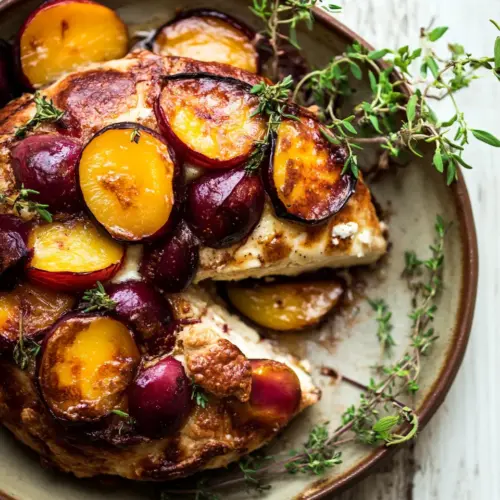
Pastry Wrapped Baked Brie with Thyme Butter Roasted Plums
Pastry Wrapped Baked Brie with Thyme Butter Roasted Plums delivers a creamy, crispy, and easy to assemble appetizer that dazzles guests. The caramelized plums and fig jam complement warm brie under a flaky puff pastry, creating an irresistible centerpiece for fall gatherings and easy weeknight entertaining. Make it for a cozy party and watch everyone dig in.
Equipment
- Oven
- Baking Dish
- Baking Sheet
- Parchment Paper
Ingredients
- 4 plums, sliced Sliced and roasted to release sweetness and provide a tender, slightly caramelized fruit topping that pairs with the creamy cheese; toss with butter, syrup, and thyme before roasting for concentrated flavor.
- 2 tablespoons salted butter Melted and browned to create a rich, nutty base that helps caramelize the plums and infuse the pastry with savory richness; use salted butter to balance the dessert’s sweetness.
- 3 tablespoons real maple syrup Drizzled over the plums and into the pan to intensify caramelization and add deep maple complexity; adds moisture and glossy finish to the roasted fruit.
- 2 sprigs fresh thyme, plus more for serving Bruised and added to the roasting liquid to impart fresh, aromatic herbal notes that complement both the plums and the cheese; reserve extra for garnish to echo the flavor.
- 1 sheet frozen puff pastry, thawed Thawed and rolled to enclose the brie, creating golden, flaky layers that crisp in the oven and present an attractive package; handle gently to avoid tearing the pastry.
- 18 ounce wheel brie cheese Placed whole in the center of the pastry to provide a warm, oozing, creamy focal point when baked; choose an 18-ounce wheel for shareable portions and even melting.
- 1 (rounded) tablespoon fig jam/preserves Spread onto the brie surface to introduce concentrated fruit sweetness and a sticky layer that helps the plums adhere; rounded tablespoon balances jam intensity with the other components.
- 1 egg, beaten Beaten and brushed over the pastry to promote even browning and a glossy finish; ensures an attractive crust and helps coarse sugar adhere during baking.
- coarse sugar, for sprinkling Sprinkled over the egg-washed pastry to add a sweet, crunchy finishing texture and sparkling appearance that contrasts with the soft cheese interior.
Instructions
- Preheat the oven to 425 degrees F. In a medium baking dish, combine the plums, butter, maple, and thyme. Transfer to the oven and roast for 20-25 minutes, until the plums caramelize. Meanwhile, lay the puff pastry flat on a parchment-lined baking sheet. Place the brie in the center of the pastry and remove a little of the rind from the top of the brie. I leave the rind on the bottom and sides intact. Spread the fig jam overtop of the brie and then fold the corners of the pastry over the brie. Brush the pastry with beaten egg and sprinkle lightly with sugar. Bake for 20-25 minutes or until the pastry is deep golden brown. To serve, spoon the plums over the brie. Top with fresh thyme. EAT and enjoy with your favorite bread or crackers…or just with a spoon.: You will notice a warm, dry heat fill the oven that is ideal for both roasting fruit and browning pastry. The high temperature helps the plums caramelize quickly, encouraging sugars to bubble and darken without evaporating all the juices. A common mistake is placing the oven rack too low, which can burn the bottom of the pastry, so position the rack in the center. If your oven runs hot, lower the temperature by 10 degrees to avoid overbrowning.
- In a medium baking dish, combine the plums, butter, maple, and thyme: As the ingredients meet, you will hear a faint hiss as the room temperature butter begins to soften around the sliced plums . The maple syrup will coat the fruit, creating a glossy exterior that will later bubble into a syrup. Using fresh thyme gives off a fragrant steam that hints at the final aroma. Avoid overcrowding the dish, because crowded fruit steams instead of caramelizing, leaving you with less concentrated flavor.
- Transfer to the oven and roast for 20 to 25 minutes, until the plums caramelize: During roasting you should see the edges of the plums darken and the juices thicken into a sticky glaze, while a sweet, nutty aroma develops from the maple. The sound is quiet, a gentle simmer as the sugars concentrate. If the fruit browns too quickly, tent loosely with foil to finish softening without burning. Overroasting will collapse the plum slices into an indistinguishable jam, so check at the earlier time if your plums are very ripe.
- Meanwhile, lay the puff pastry flat on a parchment lined baking sheet: The chilled puff pastry should feel firm yet pliable, and you will appreciate its smooth surface as you work. Laying it on parchment prevents sticking and makes transfer easier after assembly. If the pastry becomes sticky while you work, pop it in the refrigerator for a few minutes. A common slip is handling warm pastry, which can lose layers and fail to puff.
- Place the brie in the center of the pastry and remove a little of the rind from the top of the brie: When you remove the small top rind, you expose creamy interior that will begin to melt and mingle with the fig jam . I leave the bottom and side rinds intact to help the cheese hold its shape. You should feel the weight of the 18 ounce wheel and the slight tack of the rind. Cutting away too much rind will let the brie leak through the pastry as it melts, so only remove a modest portion.
- Spread the fig jam overtop of the brie: The fig jam forms a sweet cushion that complements both the brie and the roasted plums . Spread the rounded tablespoon evenly so each slice will include a bit of jam in the final bite. If you heap it too heavily in one spot, it can seep out and make the pastry soggy beneath, so distribute it gently and evenly.
- Fold the corners of the pastry over the brie: As you bring each corner up, the pastry layers will feel firm and cold, sealing the wheel into a tidy parcel. Crimp gently to make sure seams meet, and if there are small gaps, press lightly to close them. The tactile feedback is important here, because loose seams can open during baking, letting cheese escape. If the pastry gets soft while folding, chill briefly to firm up before continuing.
- Brush the pastry with beaten egg and sprinkle lightly with sugar: The beaten egg creates a glossy, browned finish while the coarse sugar adds tiny crunchy crystals on top. Brush evenly but avoid pools of egg wash that can drip down and burn. If you brush too heavily, sugar may sink into wet spots and not caramelize properly, so aim for a thin, even coat and a light dusting of sugar.
- Bake for 20 to 25 minutes or until the pastry is deep golden brown: In the oven the puff pastry puffs and turns an irresistible amber hue, and the aroma of melted brie mingles with roasted plums . The sound is quiet, but watch for bubbling juices at the seams as a sign the cheese is warm inside. A common error is underbaking which leaves pastry pale and doughy, so wait for a full golden color. If the top is browning too fast, tent with foil for a few minutes until the center warms through.
- To serve, spoon the plums over the brie: Spoon the glossy roasted fruit over the warm parcel, the syrup will trickle over the pastry and pool slightly, making each forkful vibrant and saucy. Garnish with additional sprigs of fresh thyme for aroma and color. A mistake some people make is letting it cool too long before serving, which causes the brie to firm up and lose that irresistibly oozy texture, so serve while still warm for best results.
Notes
- Adjust oven temperature carefully, if your oven runs hot reduce to 400 degrees F to avoid overbrowning while still allowing the plums to caramelize and the puff pastry to cook through. This adds a few extra minutes to baking but protects the color and texture.
- Make the roasted plums ahead, roast the fruit up to a day in advance and store it refrigerated. Reheat gently before spooning over the baked brie, which lets you focus on assembly and finishing at the last minute for a relaxed serving moment.
- Protect the bottom of the pastry, if your oven browns bottoms quickly, place the baking sheet on a second empty sheet pan to buffer direct heat. This prevents the bottom from burning while the pastry puffs and browns on top.
- Keep the pastry cold while assembling, working quickly and chilling briefly if needed helps maintain the layers so the pastry rises and becomes flaky during baking. Warm pastry will flatten and not achieve the same crisp texture.
- Control sweetness, if your fig jam or maple syrup is particularly sweet, reduce the amount slightly to preserve balance with the savory brie. Tasting the roasted plums before assembly will tell you how much jam is appropriate.
- Serve with room temperature cheese, allow the baked parcel to rest for five minutes after removing from the oven to avoid burns while keeping the center molten. This short rest also helps the juices settle so serving is cleaner and easier.