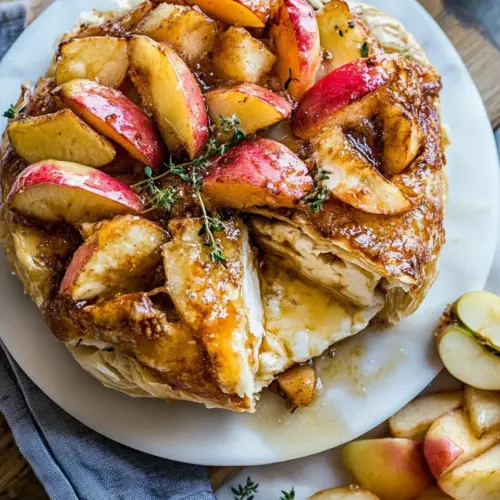
Pastry Wrapped Baked Brie with Maple Roasted Apples
Pastry Wrapped Baked Brie with Maple Roasted Apples brings together creamy brie, flaky puff pastry, and caramelized apples glazed in maple syrup for a warm, crowd pleasing appetizer. The combination of gooey cheese and crisp pastry offers crunchy, creamy, sweet contrast, making it an easy party favorite and a cozy addition to holiday spreads.
Equipment
- Oven
- Baking Dish
- Baking Sheet
- Parchment Paper
- Brush
Ingredients
- 2 Honeycrisp apples, sliced Slice and toss into the pan to create tender, caramelized apple pieces that contrast the creamy brie; Honeycrisp provides a firm texture and bright sweetness that holds up during roasting. Use evenly sliced pieces so they cook uniformly and develop golden edges without becoming mushy. Adjust slice thickness depending on desired bite and presentation for stuffing or topping the pastry.
- 3 tablespoons salted butter Melt and sauté with the apples to add a rich, savory backbone and help facilitate browning; salted butter contributes both fat for roasting and a subtle seasoning that enhances the fruit. Allow the butter to foam briefly before adding apples to encourage caramelization and depth of flavor. Monitor heat to prevent burning while allowing the butter to coat the apples evenly.
- 3 tablespoons maple syrup Drizzle over the apples while roasting to intensify sweetness and promote sticky, glazed edges; maple syrup adds warm, complex notes that pair beautifully with brie and pastry. Incorporate during the last stages of cooking so the syrup reduces and clings to the apple slices. Taste and adjust quantity to balance sweetness against the savory components of the dish.
- 1 sheet frozen puff pastry, thawed Thaw and envelope the brie to create a golden, flaky shell that crisps in the oven and contains the melted cheese. Roll out gently if needed to ensure even coverage and seal edges with beaten egg for a tight finish. Chill briefly after assembling if seams need firming to prevent leaks during baking.
- 1 wheel (8-12 ounce) brie Place at the center of the pastry to provide the creamy, molten centerpiece that oozes when sliced; an 8–12 ounce wheel delivers an ideal portion for sharing. Score or warm slightly before wrapping to promote even melting, and consider trimming the rind if you prefer partial removal for milder flavor. Bake until the pastry is deep golden and the cheese is soft but not fully collapsed.
- 2 tablespoons apple butter or fig preserves Spread over or under the brie to introduce concentrated fruity sweetness and a layer of flavor that complements roasted apples; apple butter or fig preserves add viscosity and aromatic nuance. Use thinly to avoid overpowering the cheese, and choose based on desired flavor profile—apple butter for continuity with the apples, fig for earthier contrast. Apply evenly to ensure balanced bites.
- 1 egg, beaten Brush over the assembled pastry to create a glossy, golden finish that helps coarse sugar and toppings adhere. Beat until uniform and apply with a gentle but thorough coating, sealing seams and contributing to an appealing crust. Reapply a light wash if necessary before baking to maintain color.
- coarse sugar, for sprinkling Sprinkle atop the egg-washed pastry to add a sparkling, sweet crunch and a finishing texture that contrasts the soft interior. Use sparingly to avoid excess sweetness and to ensure the sugar caramelizes slightly without burning. Select a coarse crystal sugar for visible sparkle and satisfying bite.
- fresh thyme, for serving Garnish the finished dish to impart fresh, herbaceous notes that cut through the richness and add aroma; fresh thyme pairs well with apple and cheese. Scatter small sprigs just before serving or tuck a few leaves into slices for visual appeal and brightness. Use leaves removed from stems for easier eating and distribution.
Instructions
- Preheat the oven to 425° F. In a baking dish, combine the apples, butter, and maple syrup. Transfer to the oven and roast for 25 minutes, until soft and caramelized. Layer the puff pastry flat on a parchment-lined baking sheet. Place the brie in the center of the pastry and remove a little of the rind from the top of the brie. I leave the rind on the bottom and sides intact. Spread the apple butter/fig preserves over top. Fold the corners of the pastry over the brie. Brush the pastry with beaten egg and sprinkle lightly with coarse sugar. Bake for 20-25 minutes or until the pastry is deep golden brown. Spoon the roasted apples over the brie. Top with thyme. Enjoy with your favorite crackers or just with a spoon. YUM!: As the oven comes up to temperature you will notice a faint warmth spreading through the kitchen, which helps create a steady, even bake for both the roasted apples and the wrapped brie . A properly preheated oven ensures the puff pastry puffs and browns rather than steaming, giving you crisp, flaky layers. If the oven is under preheated, the pastry may become soggy, so always wait until it reaches the full temperature before putting items in.
- In a baking dish, combine the apples, butter, and maple syrup.: The moment the butter melts and meets the maple syrup the mixture will begin to smell warmly sweet and slightly toasted, and the apples will start to take on a glossy sheen as they absorb the liquid. This mix creates the caramel base that will both flavor and slightly preserve the fruit, concentrating their sweetness as they roast. Avoid overcrowding the dish, which can cause the fruit to steam instead of roast.
- Transfer to the oven and roast for 25 minutes, until soft and caramelized.: During roasting you will hear tiny bubbling sounds as the syrup reduces and the apples surrender their juices, while a sticky, amber syrup forms at the bottom of the dish. Look for edges that darken to a deep golden and slices that yield when pierced with a fork, those are the cues that caramelization is complete. If the pan appears to be burning on the edges, reduce the oven temperature slightly and tent with foil to prevent excessive browning.
- Layer the puff pastry flat on a parchment-lined baking sheet.: The cool, layered sheet will feel slightly tacky but should hold its shape. Laying it on parchment reduces sticking and makes transfer easier. You want a clean work surface so you can center the brie without tearing the dough. If the dough springs back when you try to shape it, chill it briefly to relax the gluten so you can fold without ripping.
- Place the brie in the center of the pastry and remove a little of the rind from the top of the brie.: When you pare the top rind, the brie will begin to soften more readily and accept the preserves and roasted fruit. The exposed cheese will melt into a luscious pool beneath the pastry while the remaining rind on the sides keeps most of the wheel intact, which helps with presentation. Be careful not to remove too much rind or the cheese may flow out during baking.
- I leave the rind on the bottom and sides intact.: By maintaining the bottom and side rind you create a natural barrier that holds the melted interior together, making it easier to slice or scoop once baked. This also helps the brie keep a pleasing shape under the pastry. Removing too much rind can result in a runaway cheese, so keep a good portion in place.
- Spread the apple butter/fig preserves over top.: The jammy layer will nestle against the slightly exposed top of the brie and act as a sweet, acidic foil to the creamy cheese. Warming the preserves briefly makes them easier to spread and encourages them to meld with the roasted fruit flavor. Avoid using too much, which can cause excess moisture and sogginess in the pastry beneath.
- Fold the corners of the pastry over the brie.: As you bring the pastry up around the wheel you will feel the tension in the dough, and pressing the seams gently will create a neat package. The folds create layers that bake into crisp ridges and traps steam to help soften the interior. If seams look thin or are tearing, press and chill briefly, then patch with a small extra piece of pastry if necessary.
- Brush the pastry with beaten egg and sprinkle lightly with coarse sugar.: The egg wash transforms into a glossy, deeply colored crust while the coarse sugar melts into tiny caramelized crystals on the surface, offering a subtle crunch. Apply an even, thin coat so it does not drip and pool, which could create soggy spots. Over brushing can also weigh down the pastry layers.
- Bake for 20 to 25 minutes or until the pastry is deep golden brown.: In the oven you will see the pastry rise and the top develop that irresistible amber hues, and you may smell a toasty, buttery scent that signals the Maillard reaction. The interior should be warm and oozy, but not entirely liquefied. If the top browns too fast, tent loosely with foil to allow the inside to finish without burning the exterior.
- Spoon the roasted apples over the brie.: The glossy, caramelized apples will glisten as you heap them atop the baked wheel, adding both texture and sweet acidity. Their sticky juices mingle with the warm brie to create layers of flavor with each scoop. If the apples feel too wet, drain slightly before spooning so they do not make the pastry soggy.
- Top with thyme.: Fresh thyme releases aromatic oils when brushed against the hot fruit, adding a bright herbal note that cuts through the richness. Scatter leaves sparingly so they enhance rather than dominate the flavor. If you add too much herb, it can distract from the delicate qualities of the cheese and fruit.
- Enjoy with your favorite crackers or just with a spoon.: The final sensory reward is the contrast between the flaky pastry, the stringy warm brie , and the sticky-sweet roasted apples . Serving warm ensures the best texture, and pairing with a neutral cracker lets the flavors shine. A common mistake is serving it too cold, which causes the cheese to firm up and lose its luscious mouthfeel.
Notes
- Swap the preserves: Use fig preserves or a tangy apple butter to change the jammy layer beneath the brie, which subtly shifts the flavor profile without altering technique.
- Choose a different apple: Braeburn or Fuji can be used if Honeycrisp is not available, each offering slightly different sweetness and texture when roasted.
- Herb variation: Replace thyme with a few rosemary leaves for a piney aroma, but use sparingly since rosemary is stronger.
- Sugar finish: Omit the coarse sugar for a less sweet crust, or swap for finely grated raw sugar for a more subtle crunch that caramelizes gently.
- Size adjustments: For a smaller crowd, use a mini wheel of brie and a quarter sheet of pastry, adjusting bake time slightly downward to avoid overbrowning.