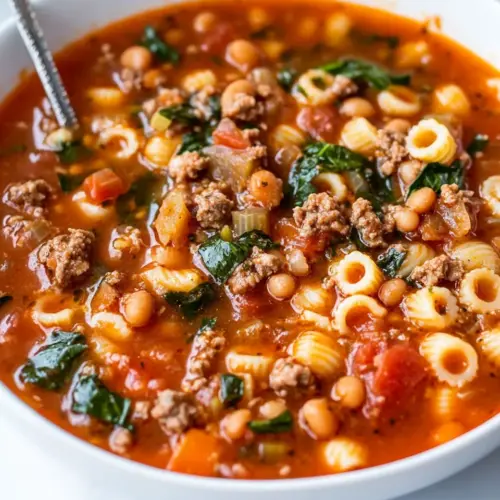
Pasta Fagioli Soup
Pasta Fagioli Soup is a creamy, hearty, and comforting Italian inspired soup with savory sausage, tender white beans, and chewy ditalini pasta. This easy weeknight dinner offers rich tomato broth, fresh herbs, and a satisfying texture contrast that makes it perfect for family meals and leftovers. Try it when you want a bowl that warms you from the inside out.
Equipment
- Large soup pot
- Small pot
- Wooden Spoon
- Colander
Ingredients
- 3 tablespoons olive oil Saute in the pan to create a flavorful base for the soup, providing healthy fats and helping to brown aromatics. Olive oil also carries and melds seasonings, enhancing the overall mouthfeel and richness of the broth.
- 1/4 teaspoon crushed red pepper flakes (optional) Add for a spicy kick and gentle heat, used sparingly if sensitivity to heat is a concern. Crushed red pepper flakes can be omitted without altering the soup structure but add depth when included.
- 1 large yellow onion, chopped Chop finely and sweat until translucent to build savory sweetness and aromatic complexity in the soup. Yellow onion breaks down during simmering to naturally thicken and flavor the broth.
- 1 lb Italian sausage (mild, sweet, or spicy will work) Brown thoroughly to develop deep, savory flavor and add protein and richness to the soup. Italian sausage contributes fat, seasoning, and a characteristic herb-spiced profile depending on the variety chosen.
- 4 large carrots, diced Dice and simmer to lend natural sweetness, texture, and body; carrots also add color and nutrients. Cooked carrots soften and release sugars that balance acidity from tomatoes and broth.
- 6 cloves garlic, minced Mince and add near the start of cooking to infuse pungent, savory aroma and umami into the soup. Garlic mellows with heat and becomes a key background flavor that complements herbs and tomato.
- 1/2 teaspoon fresh thyme, finely chopped Finely chop and stir in to bring an herbaceous, slightly floral note that brightens the soup. Fresh thyme withstands simmering and adds nuanced complexity to tomato-based broths.
- 1 teaspoon Italian seasoning Sprinkle for a blended herb profile that reinforces Italian flavors and saves prep time compared with individual herbs. Italian seasoning contributes oregano, basil, rosemary, and other dried herbs that unify the soup’s taste.
- (1) 32 ounce container chicken broth Pour in as the primary liquid to form the soup base and hydrate other ingredients while adding savory depth. Chicken broth supplies collagen-rich flavor and a meaty backbone that balances tomato acidity.
- (2) 28 ounce cans crushed tomatoes with basil Add crushed tomatoes for body, acidity, and concentrated tomato flavor that defines the soup’s character. Basil within the tomatoes provides a complementary herbaceous lift that pairs well with the sausage and beans.
- (2) 15 ounce cans white beans Drain and rinse, then fold in to supply creamy texture, protein, and fiber for heartiness. White beans become tender during simmering and help thicken the broth while contributing earthy flavor.
- 1 cup ditalini pasta Boil until al dente to introduce bite-sized pasta that soaks up surrounding flavors and adds carbohydrate-based heft. Ditalini holds sauce and small ingredients well, providing pleasant texture in each spoonful.
- 2 cups baby spinach, roughly chopped Roughly chop and stir in at the end to introduce fresh, leafy brightness and a tender green element. Baby spinach wilts quickly into the hot soup, adding color, vitamins, and a subtle vegetal taste.
- Salt and Pepper, to taste Season gradually to balance flavors, added toward the end to taste and adjust as the soup reduces. Salt and freshly cracked pepper enhance sweetness, control acidity, and define seasoning levels.
- Parmesan cheese, for serving Grate over individual bowls to add savory, nutty complexity and a salty finishing touch. Parmesan cheese melts into the hot soup, enriching texture and lending a rounded umami finish.
Instructions
- Add oil to a large soup pot and bring to a simmer over medium heat. Add in the crushed red pepper and onion and cook until the onion is very soft, about 10 minutes. Add in the sausage and, using a wooden spoon, break it into small pieces. Cook until sausage is brown and no pink color remains.: The first sensory cue you will notice is the shimmer of olive oil when it warms, and a faint fruity aroma as it heats. Once the oil is shimmering but not smoking, it signals the right temperature for sautéing, which ensures the subsequent onion softens gently without charring. The sound is subtle, a low sizzle as you add ingredients, and you should keep heat steady rather than cranking it up. Why this step matters is simple, gentle heating extracts sweetness from the onion and allows spices to bloom into the fat. A common mistake is overheating the oil and burning aromatics, which introduces bitterness that is hard to mask later. If that happens, start over with fresh oil in a clean pot for best flavor.
- Add in the carrots and cook until they begin to soften, about 5 to 6 minutes. Add in the garlic, thyme, and Italian seasoning, cook for 1 minute, or until fragrant.: You will hear a soft sizzling as the onion hits the oil and begin to smell a sweet, savory perfume develop. As the onion turns translucent and then tender, it releases sugars that deepen the soup base. Stir occasionally to prevent sticking, and reduce heat if edges start to brown too quickly. This slow softening is crucial because raw onion would leave a sharp, raw edge in the finished soup. A common error is rushing this stage, which results in underdeveloped flavor, so give it the full time to sweeten and mellow.
- Pour in chicken broth and crushed tomatoes and stir to combine. Increase heat to medium-high and bring soup to a boil. Reduce to a simmer and cook for at least 30 minutes. This is where the soup develops its flavor!: As you add the Italian sausage , you will hear a louder sizzle and smell spices bloom from the meat. Breaking it into small pieces ensures even distribution and that each bite has little pockets of savory fat and seasoning. Browning the sausage creates fond on the pot bottom which contributes depth when deglazed by the liquids later. Keep the sausage moving so it browns rather than clumps, and check that no pink remains to ensure it is fully cooked. A frequent misstep is stirring too little, which leaves large pieces uncooked inside, so tend the pan until the meat is uniformly browned.
- Stir in the beans and continue cooking the soup for another 10 minutes.: The visual cue here is key beige to golden brown edges on the sausage , and the smell becomes robust and savory. This browning step develops concentrated meaty flavors through the Maillard reaction, which you cannot replicate once the liquid is added. You will notice a richer aroma and slight caramelization on the meat. If moisture accumulates, increase heat briefly to encourage evaporation, but avoid burning. A common mistake is rushing with high heat which can char the outside while leaving the inside undercooked, so maintain medium to medium high heat until uniformly brown.
- In the meantime, bring a small pot to a rolling boil. Add a dash of salt, then add the pasta into the boiling water and cook for 7 to 8 minutes, or until al dente.: The carrots add a subtle sweetness and their edges should start to glisten and yield when pierced with a fork. The sound is a quieter simmer, and the pot gives off a layered aroma as the carrot sugars begin to mellow. This stage is important because carrots release natural sweetness that balances the acidity of the crushed tomatoes later. Avoid cutting them too large, or they will remain firm; a common oversight is underdicing, which leads to inconsistent texture in the final bowl.
- Drain the pasta and quickly rinse it under cold water. Toss the pasta into soup the pot, then stir in the spinach. Taste and season with salt and pepper. Cook for another 5 minutes, or until the spinach has softened.: The moment you add minced garlic and herbs, the aroma intensifies dramatically, with bright herbal notes and savory garlic scent. Cook very briefly so the garlic softens and becomes aromatic without turning bitter, which happens quickly if it burns. This quick flourish is why herbs and garlic are timed carefully, to marry with the cooked vegetables and browned meat. A typical mistake is leaving them too long in the hot pan, which produces a bitter taste, so watch closely and stir constantly during this short step.
- Remove from heat and divide among serving bowls. Top with cheese and serve at once!: When you add the chicken broth and crushed tomatoes , the pot releases steam and the aromas lift into a bright tomato and savory broth scent. Use a wooden spoon to scrape up any browned bits from the bottom, because those are concentrated flavor. Bringing the mixture together transforms the pan into a simmering stew, and you should see a gentle rolling of the surface as it heats. If your broth is overly salty, add water to balance; conversely, underseasoned broth may need more salt later. A common mistake is failing to deglaze the pot, which leaves flavor stuck to the bottom.
- Increase heat to medium-high and bring soup to a boil: As the soup approaches a boil, you will hear a steady bubbling and see steam rising. This vigorous movement is important to kickstart the extraction of flavors from the tomatoes and herbs. Once boiling, reduce to a simmer to allow flavors to concentrate without over reducing. Boiling too long at high heat can break down the beans and pasta later, so control the simmer. Folks sometimes let it boil too long which flattens fresh herbs, so aim for a controlled, gentle boil then an active simmer.
- Reduce to a simmer and cook for at least 30 minutes: During this long simmer the soup deepens in aroma and color, becoming richer and more cohesive. You will notice the broth thickening slightly and the flavors rounding out, which is the reward for patience. Stir occasionally to keep ingredients moving and to prevent sticking, and taste periodically to adjust seasoning. A common oversight is skimping on simmer time, which keeps the finished soup tasting thin rather than layered and integrated.
- Stir in the beans and continue cooking the soup for another 10 minutes: Adding the white beans brings creaminess and body, and a gentle simmer allows them to warm through and meld with the broth. You will see small white shapes soften further and the broth gain a heartier mouthfeel. Beans absorb some liquid, so monitor consistency and add a splash of broth if it appears too thick. A typical mistake is adding beans too early, which causes them to break down excessively, turning the broth mushy.
- In the meantime, bring a small pot to a rolling boil: The audible rapid bubbling of a rolling boil signals the right intensity to cook the ditalini pasta . Salt the water so the pasta picks up seasoning, which is important because the pasta absorbs flavor and will contribute that to the soup. Use a separate pot to avoid the starch clouding the main soup early. A common error is adding pasta directly to the soup too early, which can overcook it or release too much starch into the broth.
- Add a dash of salt, then add the pasta into the boiling water and cook for 7 to 8 minutes, or until al dente: As the ditalini pasta cooks you will notice it swell and the center remain slightly firm when bitten at al dente. Timing matters here because overcooked pasta becomes mushy in the soup, while undercooked pasta will be hard in the finished bowl. Taste a piece at around 7 minutes to check texture. A frequent mistake is following package time blindly; always taste to confirm doneness.
- Drain the pasta and quickly rinse it under cold water: Draining stops the cooking process and a quick rinse removes excess surface starch so the pasta does not continue to absorb liquid in the soup. The rinsed pasta will feel cool and separate rather than sticky, which is the cue you want before adding it to the hot pot. Skipping the rinse can lead to clumpy pasta that soaks up too much broth.
- Toss the pasta into soup the pot, then stir in the spinach: When the warm ditalini pasta hits the pot, it brings an immediate textural contrast, and the baby spinach wilts quickly into the hot broth, releasing a fresh green aroma. Stir gently to combine so the pasta and greens integrate without breaking the beans. The visual change is instant as the spinach turns from bright green to a slightly darker, tender leaf. A common mistake is overcrowding the pot at this stage, which can prevent even heating; stir gently and allow the soup to settle.
- Taste and season with salt and pepper: This tasting moment is critical because the flavors have concentrated and you can now fine tune the balance. Use small amounts of salt and pepper , tasting after each pinch, so you do not overshoot. The soup should feel rounded, with acidity, savory meatiness, and a touch of herbaceousness. A common pitfall is adding too much salt at once, which is difficult to correct later; adjust gradually.
- Cook for another 5 minutes, or until the spinach has softened: In these final minutes the spinach will fully wilt and the pasta will warm through, and the pot will release a final lift of steam and aroma. This short finish preserves the spinach texture while harmonizing all components. Avoid overcooking here because the greens can become mushy and lose color. If the spinach looks overly limp, remove the pot from heat right away.
- Remove from heat and divide among serving bowls: The last sensory cue is the settled steam and the sight of a richly colored, aromatic bowl awaiting garnish. Serve hot to capture the aromas and textures at their peak. Leaving it to sit too long before serving can dull the brightness and affect temperature, so plate promptly. A common mistake is letting it cool too much before serving, which reduces enjoyment.
- Top with cheese and serve at once: The final flourish of grated parmesan cheese melts into warm pockets of umami and adds a salty, nutty finish. The contrast between the creamy cheese, tender pasta, and robust broth is what makes each spoonful memorable. Serve immediately so the cheese has a chance to melt into the surface. A common oversight is adding cheese too far in advance, which can clump or sink.
Notes
- Swap sausage style - Try mild, sweet, or spicy Italian sausage depending on your heat tolerance; each delivers a different spice and fat profile that shifts the overall balance.
- Bean texture - If you prefer a creamier mouthfeel, mash a portion of the white beans against the pot wall before adding the pasta to thicken the broth naturally.
- Pasta timing - Cook ditalini pasta slightly under al dente if you plan to refrigerate leftovers, so it does not become overly soft when reheated.
- Herb adjustments - Increase fresh thyme or sprinkle torn basil over bowls at the end for a brighter herbal finish that contrasts the tomato base.
- Cheese finish - Grate fresh parmesan cheese over each serving for immediate melting and a savory lift, rather than adding pregrated pellets which do not melt as smoothly.