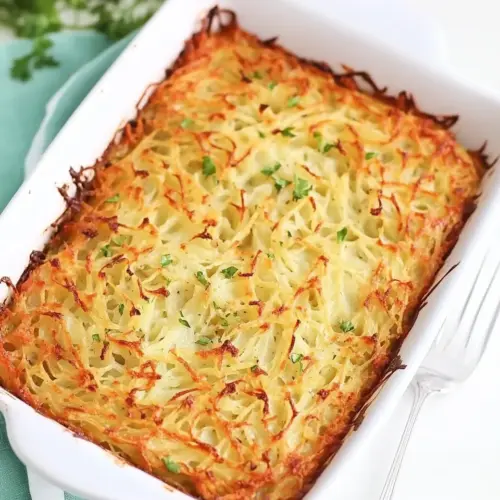
Passover Potato Kugel
Passover Potato Kugel is a creamy yet crispy baked potato casserole with shredded potatoes, savory onions, and a golden crust. This easy crowd pleasing side shines at holiday dinners and makes a comforting weeknight addition. The contrast of tender interior and crunchy top delivers comforting texture and hearty flavor, making it an irresistible reason to make it for gatherings.
Equipment
- 9 X 13 baking dish
- Oven
- Food processor or hand grater
- Mixing Bowls
- Silicone pastry brush
Ingredients
- 5 pounds russet potatoes (about 10 medium-sized potatoes) Shred and bind the kugel by providing bulk, starchy body, and a tender interior once baked; when grated finely, potatoes crisp at the edges while remaining creamy inside.
- 2 whole large onions Caramelize or grate into the potato mix to add sweet, savory depth and moisture; when cooked, onions contribute flavor complexity and help balance the starchy texture.
- 6 eggs Whisk into the potato-onion mixture to coagulate proteins and set the kugel’s structure; eggs also add richness, color, and help the kugel hold together when sliced.
- 2 teaspoons salt Season the mixture to enhance and balance flavors throughout the kugel; salt brings out savory notes and intensifies both potato and onion tastes.
- 1/2 teaspoon black pepper Season lightly to add a subtle pungent warmth and contrast; freshly ground black pepper lifts the overall flavor profile without overpowering other ingredients.
- 6 tablespoons potato starch (if not serving for Passover you may substitute corn starch) Thicken and stabilize the mixture by absorbing excess moisture and binding ingredients together; potato starch yields a firmer, cohesive texture while keeping the kugel tender.
- 1/4 cups schmaltz or extra virgin olive oil, divided (schmaltz gives amazing flavor; use olive oil to keep it vegetarian) Fat for frying and baking that adds moisture, promotes browning, and contributes mouthfeel; schmaltz gives rich, savory flavor while olive oil keeps the dish vegetarian and lighter.
Instructions
- Place a 9 x 13 baking dish or pan in the oven and preheat oven to 400 degrees, letting the dish heat up inside. Peel the potatoes, then use a food processor or hand grater to grate them into large shreds.: You'll notice the oven beginning to hum and the air filling with a faint warm starch scent as the space reaches 400 degrees . Heating the pan inside the oven is crucial because when you add fat and the potato mixture it will sizzle immediately, initiating that golden crust formation on contact. If you skip preheating the dish the fat soaks in more and the crust will be less crisp. A common mistake is not using a sturdy pan; glass can shatter from rapid temperature change, so follow the recipe note and use ceramic, metal, or cast iron instead.
- Place the potato shreds in a large mixing bowl and cover with cold water. Let the shreds sit for a few minutes.: As you grate, the air will take on a fresh, starchy aroma and you may see thin ribbons of potato that glisten slightly from released starch. Large shreds provide contrast between tender interior and crisp exterior once baked. Grating too finely results in a denser, uniform texture that can become gummy; too coarse and the kugel may not hold together as well. If using a processor, pulse carefully to avoid over processing into a mash.
- Meanwhile, peel and shred the two large onions in the food processor or with a hand grater. Reserve.: The water will cloud as it draws out some surface starch and any tiny bits of peel. Letting the shreds sit for a few minutes helps loosen grit and tempers the starch, which affects texture. You may see the water turn slightly cloudy; that is normal. A mistake here is leaving them soaking too long, which can leach too much flavor, so a brief rest is ideal.
- In a medium mixing bowl, whisk together the eggs, salt and pepper until fluffy.: As you shred the onions , a sharp, sweet scent will fill the kitchen and small strands will form. This preparation ensures the onions integrate evenly, melting into the potato matrix as it bakes. If you shred unevenly, some bites may be overly wet or pungent; uniform shredding avoids that. If your eyes water, chill the onion briefly before grating.
- Drain the potato shreds in a colander, pushing down firmly on top of the shreds with your hands to push out the excess liquid.: Whisking the eggs introduces air and gives the mixture a lighter lift, plus it evenly disperses the salt and black pepper . The batter will look pale and slightly frothy, signaling good incorporation. Under mixing leaves pockets of unseasoned egg, while over mixing is unnecessary; aim for even texture. Avoid adding cold ingredients directly to hot eggs which could affect texture.
- Place grated potatoes in a large bowl. Add the seasoned eggs, grated onions and potato starch to the bowl. Use your hands to mix all ingredients together until well combined.: When you press the shreds, you will see clear water release and the mass will compact, indicating less moisture to interfere with browning. Removing this liquid prevents a soggy center and helps the starch bind properly. A common error is insufficient draining, which leaves the kugel loose and heavy. Be sure to catch drips and discard the water, then transfer the drained shreds promptly.
- Take the preheated baking dish out of the oven. Quickly pour in 3 tbsp schmaltz or olive oil, then use a pastry brush to carefully spread the fat around the bottom and sides of the hot dish. Careful, don't burn yourself! The hot dish, while a bit difficult to navigate, will help to form a beautiful brown and crisp crust for the kugel.: At this stage you will see the mixture take on a cohesive sheen as the eggs coat the shredded potatoes and onions . The potato starch will begin to absorb moisture, thickening the mixture and signaling good structure. Mixing by hand lets you feel the consistency; it should be moist but not soupy. If it feels too wet, pressing more liquid out or adding a touch more starch can help, but avoid adding too much which can make it gummy.
- Carefully and quickly spread the potato mixture into an even layer in the baking dish (it should sizzle!), then drizzle remaining 1 tbsp of melted schmaltz or olive oil across the top.: Working with your hands gives you tactile feedback, allowing you to ensure even distribution of the eggs and potato starch . You should feel the mixture binding together and see no large dry pockets. This contact also warms the mix slightly, which can make spreading easier. A common mistake is over mixing aggressively, which can bruise the shreds; gentle, thorough combining is best.
- Bake uncovered at 400 degrees for 60-70 minutes until the top is nicely browned all across the top. If it seems to be browning too fast (before the center is cooked), cover the kugel to keep it from over-browning. You really want it to have a nice golden crust-- at the end of cooking, if it's not quite brown enough, you can put it 6 inches below the broiler for a minute or two to evenly brown it all across the top. This kugel tastes best served hot directly from the oven. Let it sit for 5-10 minutes before slicing and serving.: When you retrieve the hot dish the heat will rise in a small wave; wear oven mitts and set it on a heat resistant surface. The hot pan helps render fat quickly into a crisping agent when combined with the next step, so timing is important. If you let the dish cool before adding fat and mixture, you lose the immediate sizzle benefit. Be careful handling the hot metal or ceramic to avoid burns.
- Quickly pour in 3 tbsp schmaltz or olive oil, then use a pastry brush to carefully spread the fat around the bottom and sides of the hot dish: The fat will shimmer and may briefly smoke as it hits the hot surface, creating a savory, toasty aroma. Spreading it evenly ensures the bottom and edges brown uniformly. If you skimp on fat or brush unevenly, you risk patchy browning. Work swiftly but safely to avoid splatters, and use a heat safe brush.
- Carefully and quickly spread the potato mixture into an even layer in the baking dish: As you press the mixture in, you should hear a soft sizzle and see some steam rise, signs the exterior is beginning to set. An even thickness helps the center and edges cook at the same rate, yielding consistent doneness and color. Uneven spreading leads to undercooked center or overbrowned sides. If you notice thin spots, gently redistribute rather than packing too tightly.
- Drizzle remaining 1 tbsp of melted schmaltz or olive oil across the top: That final drizzle enhances browning and imparts a glossy finish. As the oil meets the surface it will bead slightly and then level out, promising an attractive crust. Skipping this step can yield a paler top, and too much fat can lead to pooling and soggy spots. Aim for a light, even coating.
- Bake uncovered at 400 degrees for 60 to 70 minutes until the top is nicely browned all across the top: During baking you will hear gentle crackles as moisture escapes and smell the deepening aroma of roasted potatoes and caramelized onions . The goal is a golden brown top and a set center; if the surface browns too fast, tent the kugel to protect it while the interior finishes. A common error is removing it too soon; the center should be set and slightly springy, not liquid. If not browned enough at the end, place it 6 inches below the broiler for a minute or two to finish evenly.
- Let it sit for 5 to 10 minutes before slicing and serving: Resting allows steam to redistribute so slices will hold together cleanly. You will notice the scent mellow and the texture firm slightly, making it easier to serve perfect wedges. Cutting too early can cause the kugel to fall apart, while waiting longer is fine but you may lose some of the fresh crispness. Serve warm for the best balance of texture and flavor.
Notes
- Schmaltz versus olive oil: If you want the most traditional flavor profile, schmaltz adds savory depth and a slightly meaty aroma. For a vegetarian option, extra virgin olive oil yields a fruity, aromatic crust. Choose based on your audience and prefered flavor, remembering that schmaltz will brown faster and more intensely.
- Potato starch is key: The 6 tablespoons of potato starch act as a binder and moisture regulator. If you skip it, the kugel can be loose and difficult to slice. For non Passover meals, corn starch is an acceptable substitute with nearly identical behavior, but do not omit the starch entirely.
- Shred size matters: Large shreds give a pleasing contrast of textures, with tender pockets and crispy edges. If you grate too finely, the kugel becomes dense and sometimes gummy. Stick to large shreds for the classic result.
- Even spreading prevents uneven cooking: Spread the mixture into a uniform layer in the pan so the edges do not overcook while the center finishes. Use gentle pressure to level it without compacting the shreds excessively.
- Rest before slicing: Let the kugel rest 5 to 10 minutes after baking so it firms up and slices cleanly. Cutting while piping hot often causes it to fall apart, while slightly cooled slices keep their shape.
- Broiler finish for color: If the top is not as brown as you like after full cooking, move the pan 6 inches from the broiler for 1 to 2 minutes, watching carefully to avoid burning. This short blast creates an even, appetizing crust.