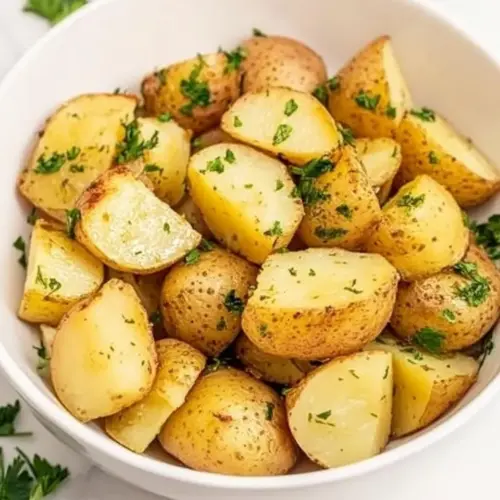
Parsley Potatoes
Parsley Potatoes are a simple and creamy side of tender red potatoes tossed with butter and fresh parsley, offering a bright, comforting bite. This easy weeknight dinner side is flaky yet buttery, perfect for family meals and potlucks. Make it for its effortless technique and satisfying texture, a reliable reason to bring it to the table.
Equipment
- Large saucepan
- Colander
Ingredients
- 3 pounds red potatoes, scrubbed clean Provide bulk and hearty texture to the dish, contributing a creamy interior when boiled and a thin skin that holds seasoning well. Act as the primary starch and base for absorbing butter and parsley flavors while offering comforting substance.
- 1 tablespoon kosher salt, + more for seasoning potatoes Enhance overall seasoning and help bring out the natural flavors of the potatoes; used both in the cooking water to properly season the flesh and sprinkled later for finish. Provide a controlled salty backbone that balances richness from the butter.
- 3 tablespoons unsalted butter Add richness and a silky mouthfeel as it melts into the hot potatoes, coating pieces and carrying flavor. Contribute buttery aroma and a smooth finish that complements the herbs and salt.
- 2 tablespoons fresh parsley, minced Offer fresh herbal brightness and a hint of green color when minced and folded into hot potatoes, cutting through richness and adding a subtle peppery, grassy note. Provide aromatic lift and a clean finish to each bite.
Instructions
- Scrub the potatoes well and then cube them into 2-inch chunks. Place the potatoes in a large saucepan, and cover by 1-inch with COLD water. Season the water with 1 tablespoon kosher salt.: As you scrub and slice, you will feel the potatoes firm under your hands and see their skins gleam. Cutting into uniform 2 inch chunks ensures even cooking so some pieces do not overcook while others remain hard. Why it matters is simple, even sized pieces give consistent doneness and texture when boiling. A common mistake is leaving pieces too large which causes uneven results, so take a minute to make them similar in size. The sound of the knife hitting the board will be steady when chunks are uniform, and visually they should look like matching bite size pieces ready to become tender.
- Bring the water to a boil over high heat. Once boiling, reduce the heat to medium and simmer for 15-18 minutes, or until the potatoes are fork-tender.: Using cold water helps the potatoes cook through more evenly, as the interior and exterior warm together. You will notice that starting in cold water prevents the outside from overcooking while the center remains underdone. A typical error is adding boiling water which can cause the exterior to break down too fast. Watch the water level and make sure it sits about one inch above the potatoes so they simmer rather than steam, producing a consistent creamy interior.
- Once the potatoes are tender, drain them in a colander and then immediately return the potatoes to the hot saucepan. Place over low heat for 1-2 minutes, to absorb any water remaining on the potatoes.: Salting the cooking water is an efficient way to infuse the potatoes with seasoning from the inside out. As the water warms, the salt dissolves and seasons every piece uniformly, giving a base layer of flavor you cannot achieve by salting only at the end. Avoid the trap of under-salting the water, which leads to bland potatoes no matter how much you add later. You should be able to detect a faint salted aroma from the pot as it heats.
- Turn off the heat, add butter, chopped fresh parsley, and 1/2 teaspoon kosher salt and toss to combine. Taste and add additional salt if necessary. Serve warm.: When the pot reaches a rolling boil you will hear vigorous bubbling and see steam shoot from the surface, signaling it is time to reduce the heat. Rapid boiling rushes the cooking process, so once boiling reduces to medium to maintain a gentle simmer. A common problem is keeping the heat too high which can break up the potatoes and make them waterlogged, so listen for a quieter simmer and lower the flame accordingly.
- Once boiling, reduce the heat to medium and simmer for 15 to 18 minutes, or until the potatoes are fork-tender: During simmering, the pot gives off a steady soft bubbling sound and a comforting starchy scent fills the kitchen. Fork tenderness is your cue, the fork should slide into the potato with little resistance. The reason we simmer rather than rapidly boil is to keep the pieces intact and achieve a creamy interior. If you overcook, the potatoes will become mealy and fall apart, so check at 15 minutes and test multiple pieces for consistent doneness.
- Once the potatoes are tender, drain them in a colander and then immediately return the potatoes to the hot saucepan: Draining quickly removes excess water and returning them to the hot saucepan allows residual heat to evaporate surface moisture. You will hear a faint sizzle as the steam lifts off, and the potatoes will look dry and glossy rather than wet. This drying step helps the butter cling to the potatoes instead of sliding off. A common oversight is leaving the potatoes to sit wet, which dilutes flavor and prevents the desired coating.
- Place over low heat for 1 to 2 minutes, to absorb any water remaining on the potatoes: With the pot over low heat you will feel a gentle warmth and see wisps of steam; this removes lingering moisture and concentrates flavor. The low heat helps the potatoes develop a slightly firmer exterior while keeping the inside tender. Skip this step and the potatoes can end up watery when you add butter. If you get impatient and crank the heat, you risk scorching, so keep it low and watch the steam subside.
- Turn off the heat, add butter, chopped fresh parsley, and 1/2 teaspoon kosher salt and toss to combine: As soon as the heat is off, add the butter and minced parsley , and the warm potatoes will release a buttery aroma and the herbs will perfume the dish. Tossing coats each piece evenly so every bite has a balance of fat and herb. The why here is texture and flavor distribution, butter adds silk while parsley brightens. A frequent mistake is adding too much salt now, so add the half teaspoon, toss, then taste before adding more.
- Taste and add additional salt if necessary: After tossing, pause and sample a small piece. You will be able to detect if the dish needs a touch more salt or if the butter is sufficient. Tasting at the end ensures you do not over season early in the process, and it gives you control over the final balance. Avoid the habit of heavy salting before tasting, because different batches of potatoes absorb salt differently. The final flavor should be buttery, slightly savory, and herb bright.
- Serve warm: Warm potatoes feel comforting on the plate, with the butter gently melting and releasing aroma. Serve immediately to preserve the texture and temperature, and you will notice each bite is soft yet structured, with parsley flecks throughout. A common mistake is letting them cool too long, which dulls the butter and mutes the herb notes, so aim to bring them to the table promptly.
Notes
- Extra buttery finish Add up to 2 additional tablespoons of unsalted butter at the end for a silkier mouthfeel, tossing gently so it melts into the warm potatoes without making them greasy.
- Dairy free swap Replace the butter with your favorite non dairy spread to keep the same creamy coating while making the dish suitable for dairy free diets, ensuring you stir until fully melted and distributed.
- Herb boost Increase the minced parsley slightly or mix with another fresh herb you enjoy, adding it right at the end so the herbs stay bright and aromatic rather than wilting.
- Salt control Use unsalted butter and add seasoning gradually, tasting after each small addition to avoid oversalting and to match your personal preference.
- Texture variation For a slightly firmer exterior, drain and then let the potatoes sit in the hot pan a minute longer over low heat before adding butter and parsley, which helps evaporate surface moisture and concentrate flavor.