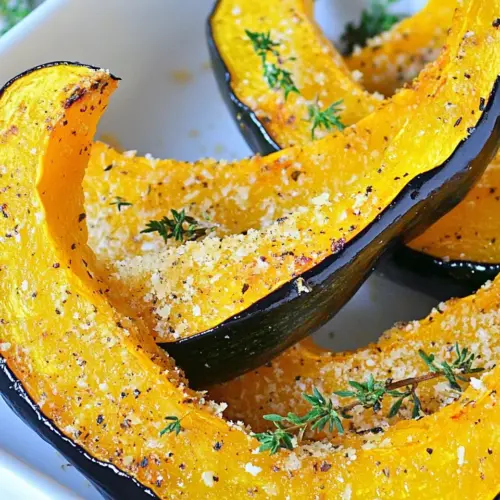
Parmesan Roasted Acorn Squash
Parmesan Roasted Acorn Squash is a cozy, crispy edged side with tender sweet flesh and toasted Parmesan pockets. This easy weeknight dinner side is simple to prepare, showcasing savory herb notes and caramelized edges, making it a perfect fall dish to serve alongside roasted mains or as a vegetarian centerpiece. Try it for its effortless flavor and comforting texture.
Equipment
- Baking Sheet
- Mixing Bowl
- Chef's Knife
- Fork
- Brush
Ingredients
- 1 fresh acorn squash Halve and clean before roasting to concentrate natural sweetness; flesh becomes tender and caramelized when baked, providing the base and hearty texture for the dish. Pair with savory toppings to balance its mild, slightly nutty flavor and to hold fillings or cheeses during roasting. Retain seeds for roasting separately or discard for a cleaner presentation.
- 2 tbsp olive oil Coat squash evenly to promote browning and crisp edges; oil transfers heat and helps carry flavors of herbs and cheese while preventing sticking. Use enough to lightly glaze the cut surfaces so seasonings adhere and the Parmesan melts into a golden crust. Choose a neutral oil to let squash and cheese flavors remain prominent.
- 8 sprigs fresh thyme Tuck sprigs among squash halves to infuse subtle herbal aroma during roasting; thyme releases savory, slightly minty and lemony notes that complement roasted squash and Parmesan. Remove woody stems if preferred, or leave whole for easy removal before serving. Crush lightly to boost aromatic oils without overpowering the dish.
- 1/4 cup grated Parmesan cheese Sprinkle over squash to create a savory, umami-rich crust as it melts and browns in the oven; Parmesan adds salty depth and a pleasing granular texture when baked. Combine with oil and herbs so it crisps into a golden topping that contrasts the tender squash flesh. Grate finely for even melting and distribution.
- salt and black pepper Season to taste to enhance overall flavor balance; salt elevates natural sweetness while black pepper provides mild heat and aromatic lift. Apply evenly before roasting so flavors penetrate and complement the Parmesan and thyme. Adjust quantities based on preference to avoid overpowering delicate squash.
Instructions
- Preheat oven to 400 degrees.: You should feel warmth in the kitchen as the oven comes up to temperature, and a stable, hot environment is key for even roasting and caramelization. Preheating ensures the slices begin browning immediately rather than steaming, which preserves texture and enhances flavor. A common mistake is not waiting for the oven to fully preheat, which can yield limp, unevenly cooked squash.
- Slice acorn squash in half and scoop out and discard seeds.: As you cut through the rind you will notice a firm resistance, then the soft pale flesh inside. Scoop the seeds into a bowl, taking care to remove the stringy bits so the center is clean. The cavity should look fresh and moist, not dried out. If you leave seeds or strings, they can burn in the oven and create bitter notes, so take your time here for a cleaner roast.
- Slice squash into 1/2" slices and place into a mixing bowl.: The tactile feedback of slicing should give you uniform wedges that hold their shape. Aim for consistent thickness so each piece cooks evenly. When they are in the bowl, they should sit snugly without overlapping too much. Uneven slices lead to some pieces overcooking while others remain underdone, so steady, measured cuts help avoid that pitfall.
- Drizzle squash with olive oil and use a brush to coat evenly.: As you brush the oil over each slice, notice the shine that develops and how the edges become glazed. Even coating promotes uniform browning and prevents drying out. Using too much oil can make the slices greasy and hinder crisping, while too little leaves them pale, so aim for a thin, even film that enhances caramelization.
- Remove leaves from sprig of thyme by holding to the uncut end and sliding your fingers between the stem. Leaves should slide right off. Sprinkle thyme on squash.: When you slide the leaves off, inhale the herbaceous scent that lifts from the leaves, and sprinkle them across the squash to distribute flavor. Properly stripped leaves release their oils directly onto the surface, improving aroma and taste. A mistake to avoid is leaving woody stems on the slices, which can be unpleasant to bite into and do not release the same fragrance.
- Sprinkle squash with half of the grated Parmesan cheese and mix the spices well.: Freshly scattered leaves should cling to the oiled surface and release their scent as they warm. The visual of tiny green flecks against the golden flesh is a good cue that the herb is well distributed. If you pile the leaves in one spot, the flavor will be lopsided; spread them so each bite benefits from the herb note.
- Place squash slices in a single layer on a baking sheet. Sprinkle with any remaining Parmesan cheese.: As the grated Parmesan touches the oiled surface it will begin to meld and create a light coating. Toss gently so the seasoning envelops each slice, and you will notice the cheese adhering to the oil and thyme. Overmixing can crush the slices, while under seasoning can leave the flavors flat, so aim for a gentle, thorough toss.
- Season everything with salt and pepper.: Arrange the pieces so edges have room to crisp and air circulates beneath them. The remaining Parmesan will sit on top and transform into toasted pockets during roasting. Crowding the pan is a common slip that causes steaming rather than browning, so use two sheets if needed rather than piling the slices.
- Roast acorn squash in the oven for 25-30 minutes or until tender. Serve hot.: When you season now, the grains sit on the surface and intensify during roasting. You should see tiny flecks of seasoning and feel a balanced seasoning when you taste a finished piece. Over salting can dominate the delicate squash, so err on the side of light seasoning and adjust after roasting if necessary.
- Roast acorn squash in the oven for 25 to 30 minutes or until tender. Serve hot.: During roasting you will hear a faint sizzling and smell a rich, toasty aroma as sugars caramelize and the Parmesan crisps. Edges will deepen to a golden brown and the flesh will yield when pierced with a fork. If the pieces are still firm at 30 minutes, give them a few more minutes, but avoid leaving them so long they dry out. Serving while hot preserves the contrast between crisp edges and tender interior.
Notes
- Adjust the cheese level: If you prefer a lighter finish, reduce the Parmesan to a sprinkle rather than a quarter cup. For a bolder crust, add the second half of the cheese earlier so it melds more thoroughly with the oil and thyme.
- Boost herb flavor: Increase the number of thyme sprigs or gently press a few leaves into each slice before roasting to intensify the herbal note without overpowering the squash.
- Control browning: To encourage deeper caramelization, place the rack in the upper third of the oven for the last five minutes of cooking, watching closely so the Parmesan does not burn.
- Make ahead guidance: You can roast the slices until just tender, then cool and store in the refrigerator. Reheat in a hot oven to restore crisp edges before serving.
- Adjust portion size: For more servings, roast in batches to keep slices single layered, or use a larger baking sheet to avoid crowding and steaming.