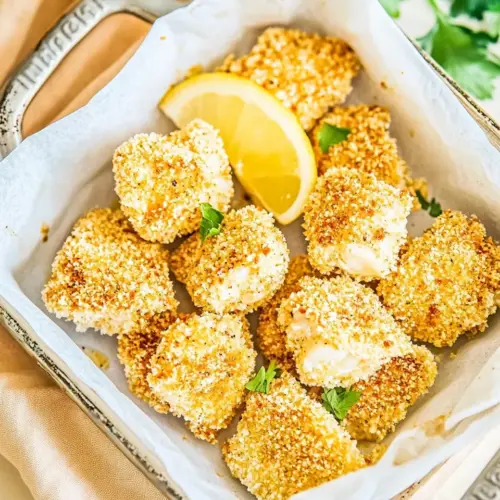
Parmesan Fish Nuggets
Parmesan Fish Nuggets are crispy, cheesy bites of flaky tilapia coated in a golden panko and parmesan crust, served with a tangy tartar sauce. This easy weeknight dinner uses simple pantry staples to create a crunchy, satisfying texture and bright flavors. Quick to assemble and oven friendly, it makes a great family meal or party appetizer you will want to make again and again.
Equipment
- Oven
- Baking Sheet
- Mixing Bowls
- Whisk
- Knife
Ingredients
- 1/3 cup all-purpose flour Coat the fish lightly to provide a base layer for the breading, helping the crumbs adhere and creating a thin, crispy exterior when cooked. Use the flour sparingly and evenly to avoid a gummy texture, shaking off excess before dredging.
- 1/2 teaspoons salt. Season evenly to enhance overall flavor balance and bring out natural taste in the fish and coatings. Sprinkle into dry and wet components as needed to ensure the seasoning is well-distributed throughout the recipe.
- 1/4 teaspoon pepper Season sparingly to add mild heat and depth without overpowering delicate fish flavors. Mix into the flour or breadcrumbs to create a subtle peppery undertone in each nugget.
- 2 large eggs, lightly beaten Bind coatings and help the parmesan and panko adhere to the fish while providing moisture that transforms into a golden crust when cooked. Beat gently to combine yolks and whites for an even dipping consistency.
- 1 cup grated parmesan Add savory, nutty umami to the coating, contributing both flavor and a slightly granular texture that browns nicely. Combine with breadcrumbs to create a rich, cheesy crust that complements mild white fish.
- 1 cup panko breadcrumbs Provide light, airy crunch to the outer layer, yielding a crisp texture that contrasts the tender fish interior. Mix with parmesan and seasonings to form the primary crispy coating for the nuggets.
- 1 teaspoon dried parsley flakes Impart a mild herby note and visual flecks within the coating, enhancing aromatic complexity without dominating other flavors. Stir into the breadcrumb mixture for consistent pops of herb flavor.
- 1.25 to 1.50 pounds tilapia filets, about 4 large filets Serve as the mild, flaky protein base that absorbs surrounding flavors and cooks quickly into tender pieces. Cut into nugget-sized portions for even cooking and to match the coating-to-fish ratio.
- Olive oil cooking spray Help prevent sticking and encourage even browning by lightly misting the coated fish before cooking, promoting a crisp exterior without deep-frying. Use sparingly to avoid excess oil while achieving a golden finish.
- 1/3 cup mayonnaise Bind and enrich the dipping sauce with a creamy, slightly tangy base that adds silkiness and flavor depth. Combine with sour cream and other condiments to create a smooth, balanced sauce.
- 1/3 cup sour cream Contribute tangy creaminess and a subtle acidity to the sauce, balancing the richness of mayonnaise and enhancing overall mouthfeel. Chill with other sauce ingredients to meld flavors before serving.
- 2 tablespoons ketchup Add sweetness and acidity to the dipping sauce, rounding out flavors and adding a familiar ketchup tang that complements savory fish. Whisk into the mayo-sour cream base until fully incorporated for uniform taste.
- 2 tablespoons dill pickle relish Introduce briny, sweet-pickled notes and a crunchy contrast in the sauce, lending brightness and texture to each bite. Fold in gently to distribute bursts of pickle flavor without overwhelming the blend.
- 1 tablespoon Dijon mustard Bring sharp, piquant mustard flavor to the sauce, adding complexity and a slight bite that cuts through the richness. Whisk in thoroughly to ensure the sauce has an even, tangy finish.
Instructions
- Preheat oven to 400 F, optionally line a baking sheet with foil, and spray the foil or the baking sheet with olive oil cooking spray; set aside.: As the oven warms you should feel the heat building behind the door, and the air will carry a faint toasty scent once it reaches temperature; this is your signal the oven is ready. Lining the sheet with foil makes cleanup effortless and reflects heat to promote even browning, while a light coat of the olive oil cooking spray helps the crumbs crisp without sogginess. Place the rack in the center so the nuggets brown evenly. A common mistake is crowding the pan, which traps steam and prevents crisping, so give each piece room. If you skip the spray, the underside may stay pale and soft rather than golden.
- To a medium bowl, add the flour, salt, pepper, and stir to combine; set aside.: The dry mixture should look uniform, the salt and pepper distributed through the flour , and when you whisk it you can smell the faint mineral saltiness coming forward. This base dries the fish surface slightly, which improves adhesion for the eggs and crumb mixture. If the seasoning sits clumped, break it apart with a fork. A common misstep is adding too much salt here without tasting the final breading, so measure carefully.
- To a separate small bowl, add the eggs and lightly beat; set aside.: The eggs should be homogenous, with streaks of yolk blended into the whites; their glossy surface signals they are ready to act as glue. When you dip the fish, the eggs keep the crumbs from sliding off during transfer. If the eggs are overbeaten and frothy, they may not coat as thickly; gentle beating is best. Avoid double dipping into the egg bowl with a contaminated utensil, which can thin the mixture and make the coating less effective.
- To a separate medium bowl, add the Parmesan, panko breadcrumbs, parsley, and stir to combine; set aside.: The breadcrumb mix should look coarse and slightly speckled with the parmesan and dried parsley flakes . When you press a handful, it should compact slightly then fall apart, indicating the right texture for adhesion. The aroma of the parmesan will be nutty and savory, a preview of the browned crust to come. If the crumbs feel damp, spread them on a tray and air them briefly; damp crumbs will clump and not crisp properly. Overpowering the mix with too much parmesan can make the crust overly salty, so keep proportions as listed.
- Cut the fish into bite-sized nugget shapes or strips/sticks.: As you work the tilapia , notice its firm but flaky texture and clean scent; aim for uniform pieces so they cook evenly. Smaller pieces will brown more quickly and have more surface relative to volume, maximizing crunch. Use a sharp knife and steady hand to maintain consistent sizes; inconsistent pieces will lead to some nuggets overcooking while others remain underdone. A common error is leaving very thick pieces that require longer cooking and risk drying out the interior.
- Dredge each piece through the flour, then the egg, and then the panko mixture.: When you touch a properly dredged piece after the flour stage it should feel lightly coated but not caked, then glossy after the eggs , and finally textured after the breadcrumb stage. Press the crumbs gently so they adhere, and shake off excess to avoid clumps that burn. This three stage coating builds the structure that yields a golden, crunchy crust while protecting the delicate tilapia inside. Avoid letting pieces sit too long between stations, which can cause the coating to slump off, and don’t overload the crumbs or the coating will be thick and heavy.
- Place breaded and battered fish on the prepared baking sheet and bake for 10 to 12 minutes, or until done* (See Notes). While fish bakes, make the tartar sauce.: As the nuggets roast you should hear a faint crackle from the crumbs and see the edges turn a warm golden brown; the parmesan will deepen in color and exude a toasty aroma. The timing yields flaky tilapia that flakes easily with a fork yet remains moist inside. Rotate the pan halfway if your oven has hot spots to ensure even browning. A common pitfall is opening the oven too frequently which reduces temperature and increases cooking time, potentially leading to soggy crusts.
- To a medium bowl, add all the ingredients, and whisk to combine; set aside until ready to use.: The tartar sauce will be smooth and slightly tangy, the mayonnaise and sour cream creating a creamy base while the dill pickle relish adds bursts of vinegar and crunch. Whisking until just combined preserves small pockets of relish for texture. Taste and adjust balance with a touch more ketchup or Dijon mustard if you like it sweeter or sharper. A typical mistake is over thinning the sauce with extra liquid which dilutes flavor; keep it thick enough to cling to the nuggets.
- Serve fish nuggets immediately with tartar sauce, as desired.: Serve when the crust is crisp and the interior flakes easily; the contrast between hot, crunchy nuggets and the cool, tangy sauce is what makes each bite satisfying. Plate on a warmed dish to keep them from cooling too fast, and encourage diners to dip right away so the texture shines. Be mindful that leftover nuggets will soften in the fridge, so plan to enjoy them fresh. Avoid letting them sit uncovered, which dries the interior and dulls the flavors.
Notes
- Swap the breadcrumbs intensity Try mixing half panko breadcrumbs with a handful of finely crushed crackers for a different crunch profile.
- Boost the herb notes Stir a pinch more dried parsley flakes into the breadcrumb mix to brighten the crust without altering cooking time.
- Adjust sauce tang Add an extra teaspoon of Dijon mustard if you want the tartar sauce to cut more sharply through the richness.
- Make it lighter Use low fat sour cream or light mayonnaise if you prefer a lighter sauce while keeping texture similar.
- Air fryer finish After baking, briefly air fry for a minute or two to revive crispness if your nuggets have sat for a short time.
- Scale for company Double the breadcrumb and parmesan mixture ahead of time and store airtight for quick assembly when guests arrive.