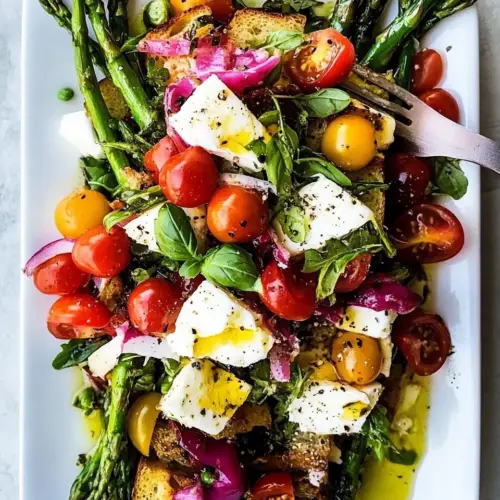
Panzanella Style Caprese Asparagus Salad
Panzanella Style Caprese Asparagus Salad is a bright, textural spring salad that combines crispy toasted ciabatta, charred asparagus, creamy mozzarella and ripe tomatoes with a lemony olive oil vinaigrette. This easy weeknight salad delivers crunchy, creamy and briny contrasts in every bite and makes an excellent shareable side or light main, perfect for market fresh produce.
Equipment
- Oven
- Baking Sheet
- Grill pan
- Whisk
Ingredients
- 1 piece smallish loaf of ciabatta bread roughly torn into Torn into bite-sized pieces to provide a crunchy, absorbent base that soaks up dressing and juices, creating the classic panzanella texture. Toast or lightly pan-fry pieces in a little oil for extra crispness and to prevent sogginess. Combine with other salad components just before serving to maintain some chew while allowing flavors to meld.
- olive oil Used to coat bread and vegetables before cooking, adding a silky mouthfeel and helping to brown and crisp surfaces. Drizzle or brush lightly to control richness and encourage caramelization during roasting or grilling. Also serves as the vehicle for vinaigrette when combined with lemon juice and seasoning.
- kosher salt and pepper Added sparingly to enhance and balance flavors, providing savory depth and bright contrast. Grind pepper freshly for aromatic heat and use kosher salt for even seasoning and better adherence to salads and vegetables. Season in layers: on asparagus before cooking and on the final assembled salad to taste.
- 1 bunch fresh asparagus Prepared as the primary green element, trimmed and typically blanched, roasted, or grilled to develop tender-crisp texture and charred flavor. Cut into bite-sized lengths to integrate with bread and tomatoes while retaining structure. Toss with oil, salt, and pepper before cooking to highlight natural sweetness and add savory complexity.
- 1 tablespoon olive oil Measured to dress asparagus or to be incorporated into the vinaigrette, contributing richness and helping other flavors adhere. Use sparingly when pan-searing or roasting to avoid excessive oiliness; it also aids in achieving a golden finish. Combine with lemon juice and seasoning to create a bright, balanced dressing.
- kosher salt and pepper Used again to season vegetables and final salad components, ensuring consistent flavor throughout the dish. Sprinkle on asparagus before cooking and adjust on the finished salad to taste. Balancing salt and pepper across steps builds depth without over-salting any single element.
- 1 -2 large heirloom tomatoes sliced Sliced to contribute juicy, meaty slices that add sweetness, acidity, and body reminiscent of Caprese. Choose ripe but firm specimens to hold shape and prevent excess water release that could sog the bread. Layer onto the salad to showcase vibrant color and fresh tomato flavor.
- 2 cups heirloom or regular cherry tomatoes halved Halved to provide bursts of concentrated sweetness and acidity, adding texture contrast and small pockets of juice throughout the salad. Use cherry tomatoes to diversify tomato variety and distribute tomato flavor evenly among bread and greens. Toss gently to avoid crushing and releasing too much liquid.
- 2 ripe but firm avocados, sliced Sliced to add creamy, buttery texture and mild richness that balances acidity from tomatoes and lemon. Keep slices firm to maintain shape and prevent browning by tossing with a little lemon juice if needed. Integrate among other components for luxurious mouthfeel without overpowering delicate flavors.
- 1 cup kalamata olives pitted Pitted and added for briny, savory pops that cut through richness and add Mediterranean character. Chop or leave whole depending on desired salt distribution and to create contrast with milder ingredients like mozzarella and avocado. Rinse if using especially salty olives, then distribute evenly through the salad.
- 1 bunch fresh basil roughly chopped Roughly chopped to release aromatic oils and a fresh, peppery-herb note that lifts the entire dish. Scatter through the salad to infuse bites with basil fragrance and to complement tomatoes and cheese in a Caprese-inspired profile. Adjust quantity to taste for herb-forward brightness without overwhelming other flavors.
- 8 ounces fresh buffalo mozzarella regular mozzarella or burrata, torn Torn into pieces to provide creamy, milky texture and rich dairy flavor that anchors the salad like a classic Caprese. Choose buffalo mozzarella or burrata for extra creaminess, tearing gently to allow soft curds to mingle with bread and juices. Add toward the end to preserve delicate texture and temperature.
- handful of microgreens + mint Added as a final fresh garnish to introduce delicate texture variations and a hint of cool mint for aromatic contrast. Sprinkle microgreens for visual appeal and slight pepperiness; include mint sparingly to brighten and complement basil. Use immediately before serving to retain crispness and vibrant color.
- 1/3 cup olive oil Used in the dressing to add fruity body and help emulsify lemon juice and seasonings, contributing smoothness and shine to salad components. Pour over torn bread and vegetables so it can be absorbed, bringing cohesion to the panzanella structure. Select good-quality olive oil for best flavor impact.
- 2 tablespoons fresh lemon juice Squeezed to supply vibrant acidity that balances olive oil and cuts through richness from cheese and avocado, brightening the overall flavor profile. Emulsify with olive oil to create a simple, bright vinaigrette for tossing the salad. Taste and adjust quantity to achieve a lively, balanced tang.
- kosher salt and pepper Sprinkled to fine-tune and lift overall seasoning, enhancing flavors and providing finishing savory balance. Use a light hand, tasting as you go, since salt can intensify as ingredients meld. Combine with pepper and lemon to ensure the salad reads bright and well-seasoned.
- crushed red pepper flakes Used as an optional heat element to add subtle warmth and a hint of spice that complements the bright, herbaceous flavors. Sprinkle lightly over the finished salad to avoid overpowering delicate ingredients like mozzarella and avocado. Adjust to taste for a gentle piquant finish.
Instructions
- Preheat the oven to 375 degrees F.: Warmth in the oven creates even toasting and a fragrant, nutty scent as the ciabatta begins to brown. You should hear a gentle hiss if the bread releases moisture, and the smell will shift from raw dough to toasted grain. Preheating ensures predictable timing, which matters because under-toasted pieces stay soft, while over-toasted ones turn too brittle. A common mistake is not waiting for the oven to reach temperature, resulting in inconsistent texture.
- Add the bread cubes to a baking sheet and drizzle with olive oil. Sprinkle with salt and pepper and toss well to coat, making sure all the bread has been coated in olive oil and seasoned.: As you drizzle olive oil and toss, the bread should gleam slightly, each piece showing an even sheen. The oil helps the crust crisp and encourages golden edges that deliver toasty aroma and crunch. Tossing ensures seasoning is distributed so every bite is flavorful. Avoid piling the bread too tightly, which causes steaming instead of crisping, and will yield limp centers.
- Bake for 10 minutes, toss and bake another 5-10 minutes or until the bread is golden and crisp.: During baking watch the color deepen to a warm golden brown and smell the toasty, almost sweet scent of baked bread. Tossing halfway promotes even browning so corners do not burn while other bits remain pale. The timing can vary by oven, so check visually; the bread should be crisp but still slightly tender in the center. A common error is leaving it unattended, which can quickly turn golden to burnt.
- Heat an outdoor grill, skillet or grill pan to medium high heat. Drizzle the asparagus with olive oil and sprinkle with salt and pepper. Transfer the asparagus to the grill pan and grill until charred, about 4-5 minutes. Remove from the grill and season lightly with salt and pepper or to taste.: When the pan is hot, you should hear the asparagus sizzle, and the surface will develop smoky char lines and a glossy sheen. The aroma becomes vegetal with a hint of caramelization. Grilling briefly preserves snap while adding complexity. Overcooking will make the stalks limp and dull their color, while undercooking leaves fibrous texture. Avoid crowding the pan, which reduces searing and prevents proper charring.
- In a large bowl or on a platter, arrange the tomatoes, avocados, olives and asparagus. Season the tomatoes lightly with salt and pepper. Top with basil. Scatter the mozzarella and toasty bread over top. Finish with a sprinkle of microgreens. Serve with the Vinaigrette (see below).: At this stage the visual payoff is important, the platter should show a mix of colors and shapes, with glossy tomatoes and creamy avocado contrasting the charred asparagus and torn mozzarella . Seasoning the tomatoes early draws out juices that mingle with the vinaigrette. When you scatter the toasted ciabatta , listen for that dry crunch against softer components. A typical mistake is tossing everything too early, which makes the bread soggy; assemble close to serving time for best texture.
- Whisk all ingredients together in a bowl. Taste and adjust as needed.: As you whisk the olive oil , lemon juice , salt, pepper and crushed red pepper flakes , you should see the dressing emulsify into a glossy, slightly thickened sauce that smells bright and citrusy. Tasting lets you calibrate acid and salt so the dressing lifts without overpowering. Emulsifying properly helps the vinaigrette cling to tomatoes and bread instead of pooling. A frequent misstep is under-seasoning or failing to taste, which results in a flat dressing; always adjust incrementally.
Notes
- Use burrata instead of mozzarella: Swap in burrata for an ultra creamy center that pairs beautifully with roasted tomatoes and adds a luxurious mouthfeel.
- Grill the tomatoes: Give cherry tomatoes a quick char to deepen sweetness and add smoky complexity that complements the asparagus.
- Make it vegan: Omit the mozzarella and add extra olives and avocado for richness while preserving the salad's structure.
- Add toasted nuts: A sprinkle of toasted pine nuts or almonds brings extra crunch and a nutty note that pairs with the toasted ciabatta.
- Switch citrus: Use a splash of orange juice instead of lemon for a sweeter, fruitier vinaigrette that brightens the tomatoes.